
Multivariate amplitude analysis of the cascade particle decays based on the Nearest Neighbors fitting
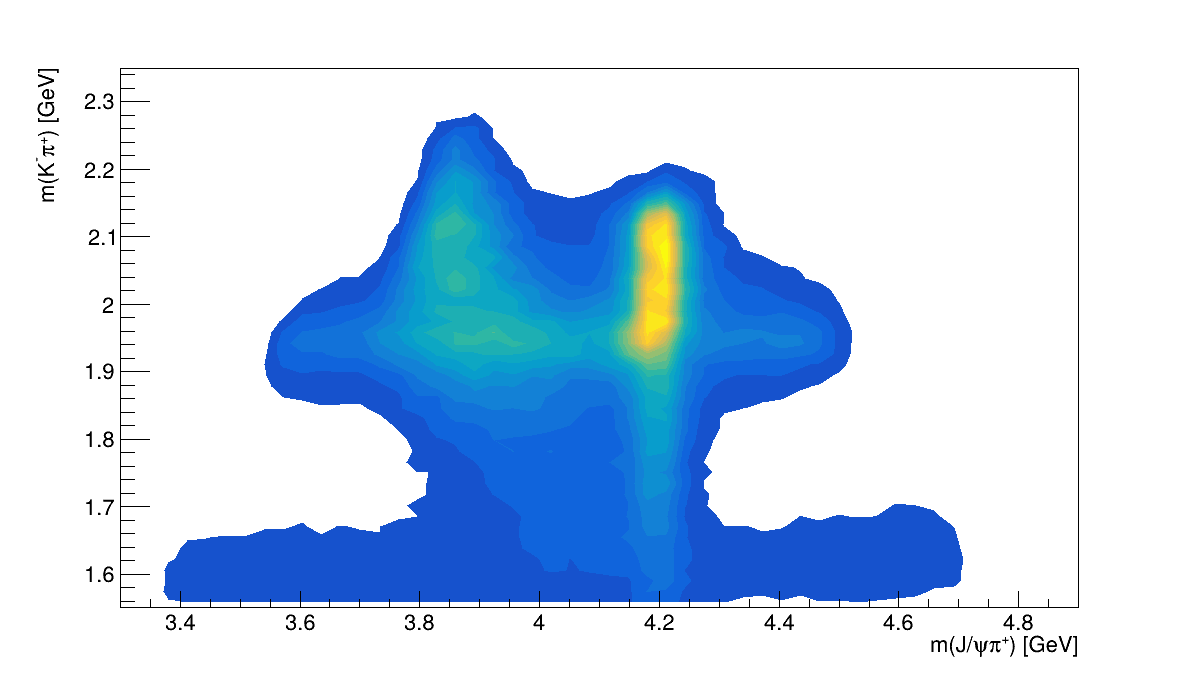
The Nearest Neighbors estimation of likelihood is implemented for the multivariate amplitude analysis of the cascades of particle decays. In this approach Monte Carlo simulated events that are used to describe data are assigned weights dependent on the parameters of the theoretical fitting model. Each of such weighted events is considered as contributing to N-dimensional probability density function (p.d.f.) in its neighborhood in the parameter space. No analytic p.d.f. or cpu-intensive re-generation of N-dimensional p.d.f. at each fit step are required. The method allows accurate accounting for reconstruction effects, demands modest cpu resources and can be effectively multi-threaded. General setup of the fit as well as toy example of the amplitude analysis of B-meson decays are demonstrated.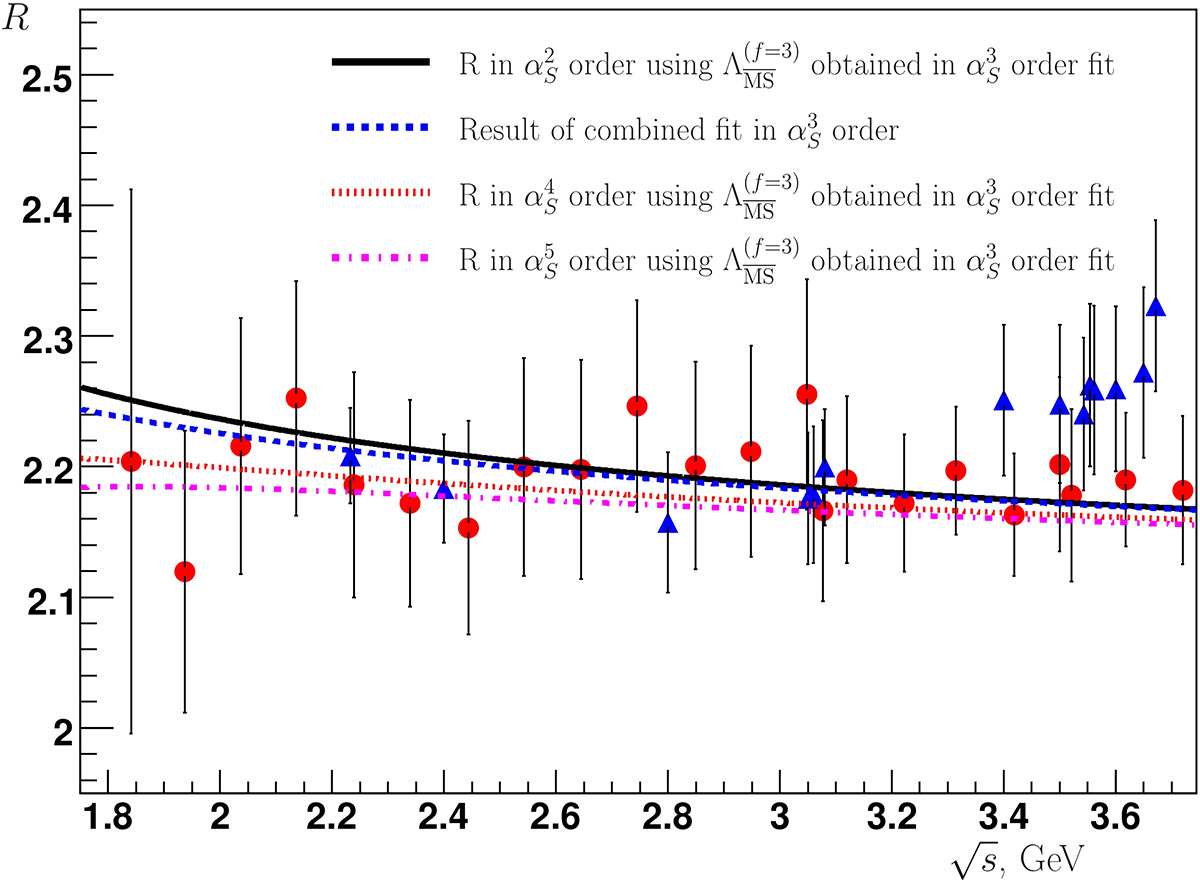
Perturbative QCD fitting of KEDR and BESIII ℯ+ℯ- data for R(s) and αs determination
The experimental data collected by KEDR and BESIII collaborations at the energies below charm quark thresholds are compared with the massless QCD expressions for the \(e^+e^-\) annihilation R-ratio truncated at different orders of perturbation theory. The fits demonstrate the dependence of the extracted \(\alpha_s(M_Z)\) values on the orders of truncation of the corresponding approximations. The next-to-leading order, next-to-next-to-leading order and next-to-next-to-next-to-leading order fits of the combined KEDR data and BESIII data , truncated at the scale of mass of \(J/\Psi\) meson, give the following results \(\alpha_s(M_Z)=0.1151_{-0.0069}^{+0.0052}\), \(\alpha_s(M_Z)=0.1190_{-0.0081}^{+0.0064}\) and \(\alpha_s(M_Z)=0.1283_{-0.0075}^{+0.0028}\). The increasing tendency of fitted \(\alpha_s(M_Z)\) value is associated with the effects of not totally controlled within asymptotic perturbation theory expansions kinematical \(\pi^2\) contributions to R-ratio coefficients due to analytical continuation from the space-like to time-like energy regions. The applications of the fixed orders of perturbation theory expansions and careful treatment of the analytical continuation effects are commented. Corrected: 28 July 2026 (changes have been made in Eqs. (12)–(14) and an expression has been added after them)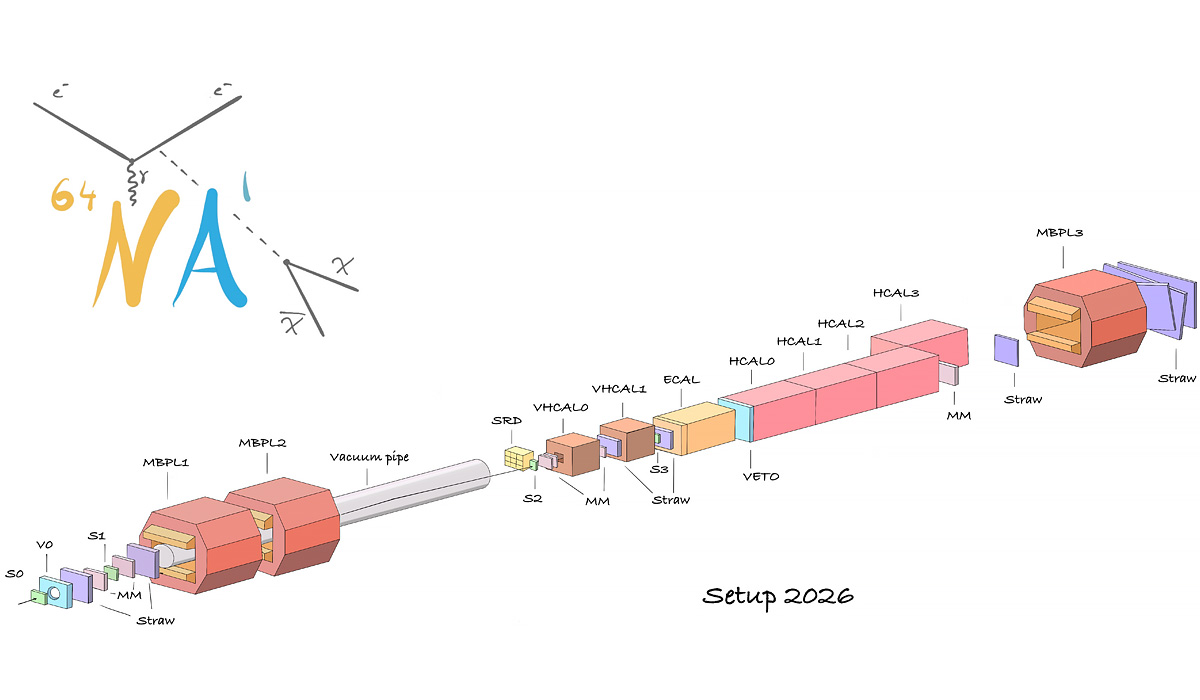
Searching for Light Dark Matter and Dark Sectors with the NA64 experiment at the CERN SPS: et al.
Since its approval in 2016, NA64 has pioneered Light Dark Matter (LDM) searches with electron [1], positron [2], muon [3], and hadron [4] beams. The experiment has successfully met its primary objectives, as outlined in the EPPS input (2018), and even exceed them producing results that demonstrate its ability to operate in a near background-free environment. The Physics Beyond Collider (PBC) initiative at CERN recognizes NA64’s contributions as complementary and worthy of continued exploration. Its key advantage over beam dump approaches is that the signal rate scales as (coupling) 2 rather than (coupling) 4 , reducing the required beam particles for the same sensitivity. To fully exploit the NA64 physics potential, an upgrade during LS3 will enable NA64 to run in background-free mode at higher SPS beam rates. Planned upgrades include (a) improved detector hermeticity with a new veto hadron calorimeter, (b) enhanced particle identification with a synchrotron radiation detector, and (c) increased beam rates via upgraded electronics. With the recently strengthened NA64 collaboration, stable operations and timely data analysis are planned for LHC Run 4. The expected ∼ 10 13 electrons, ∼ 10 11 positrons (40 and 60 GeV), and ∼ 2×10 13 muons on target will allow NA64 to explore new light dark matter regions, with the potential for discovery or conclusive exclusion of many well-motivated LDM models.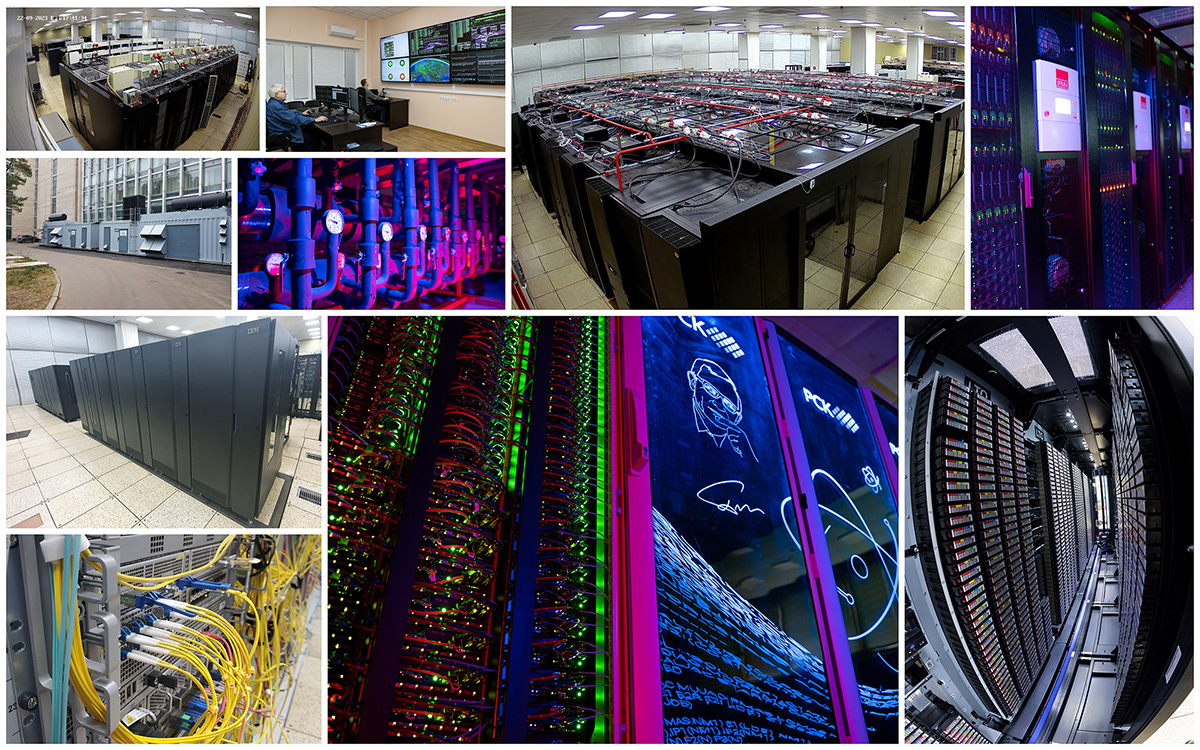
Multifunctional Information and Computing Complex of JINR
The Multifunctional Information and Computing Complex (MICC) of the JINR Meshcheryakov Laboratory of Information Technologies (MLIT) is a key element of the JINR network and information and computing infrastructures. The MICC is regarded as JINR’s unique basic facility and plays a decisive role in scientific research, which entails advanced computing power and storage systems. Its uniqueness is ensured by the consolidation of all state-of-the-art information technologies for data processing and storage, united by the network infrastructure with a bandwidth of up to 4 × 100 Gbps. It consists of distributed data processing and storage systems based on both grid and cloud technologies and the hyperconverged computing infrastructure with liquid cooling. Multifunctionality, high reliability, and availability in 24 × 7 × 365 mode, scalability and high performance, information security and an advanced software environment are the main requirements that the MICC meets. The reliability and availability are ensured by the enhanced high-speed telecommunication system and the modern local network infrastructure, as well as by the reliable engineering infrastructure that provides guaranteed power supply and cooling for server hardware. This infrastructure is a staple for computing the experiments at the NICA accelerator complex. The BM@N, MPD, and SPD experiments intensively use all computational components and storage systems. Being part of the Worldwide LHC Computing Grid, the MICC serves as the Tier1 grid site for the CMS experiment at the LHC and as the Tier2 grid site that provides support for the experiments at the LHC and other world’s large-scale experiments in high-energy physics. The integrated cloud environment of the JINR Member States focuses on supporting users and experiments in Russia, China, the USA, etc. (e.g., NICA, NOvA, BaikalGVD, JUNO). The HybriLIT platform comprising the Govorun supercomputer provides capabilities for elaborating mathematical models and algorithms and performing resource-intensive computations, including on graphics accelerators that enable the development of the ecosystem for machine and deep learning tasks, Big Data analysis, and quantum computing on simulators.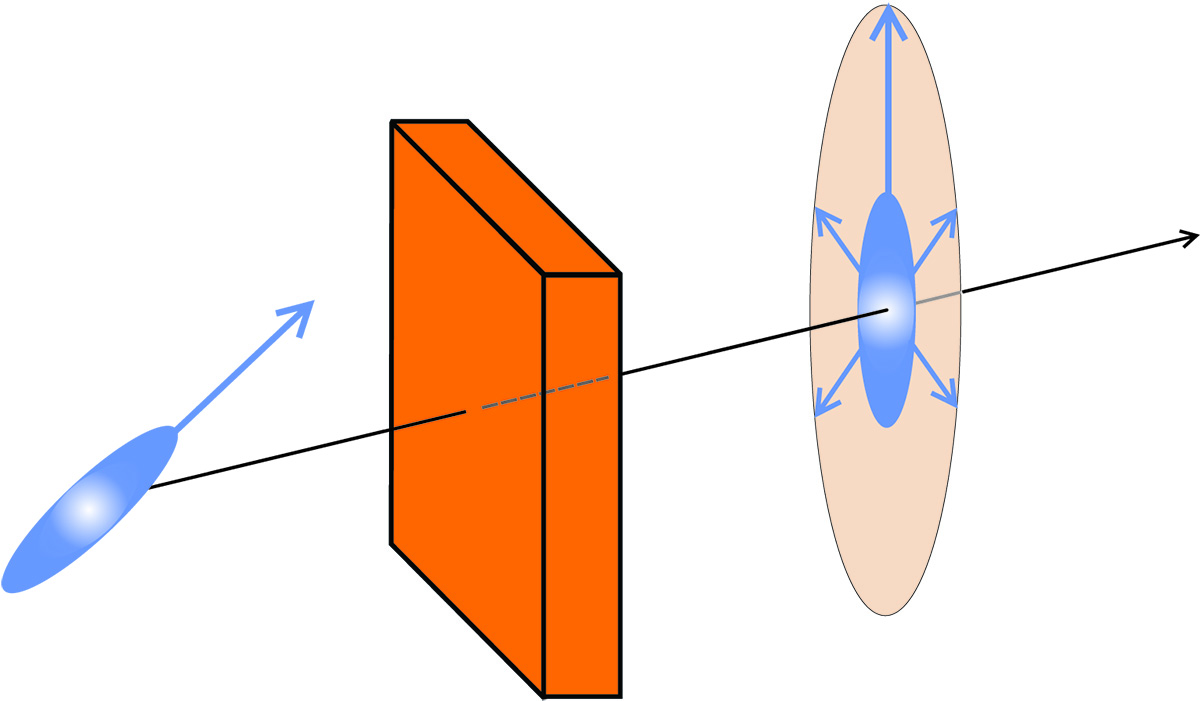
High Energy Nuclear Optics of polarized nucleons and nuclei: research at the Nuclotron-M/NICA complex
Refracton of particles (nucleons, nuclei, γ -quanta) in matter with polarized protons (nuclei) results in revealing coherent quasi-optical phenomenon of nuclear spin precession of particles (nuclei) in the pseudomagnetic field of matter with polarized spins and the phenomenon of birefringence of particles (nuclei) with spin S ⩾ 1. These phenomena can be observed and studied at the Nuclotron-M/NICA complex. The similar effects for γ -quanta could be observed at the LINAC accelerator.Quasi-optical coherent phenomena of spin rotation and dichroism are not caused by strong interactions only, the T-odd P-odd, T-odd P-even, and T-even P-odd interactions also contribute. Limits on the values of these contributions at the energies available at the Nuclotron-M/NICA complex can be obtained by investigating all these phenomena. When studying polarized particle collisions, it is necessary to consider possible influences of quasi-optical phenomena of spin rotation and spin dichroism caused by nuclear precession and birefringence.
Optical transmittance of silica aerogel
This paper presents the investigation of aerogel Cherenkov radiation detectors and the optical characterization of aerogel samples within the framework of the SPD experiment at the NICA accelerator complex, which is under construction at the Joint Institute for Nuclear Research (Dubna, Russia). The transmittance of aerogel samples was measured at the A. Alikhanyan National Science Laboratory (AANL) (Yerevan Physics Institute). Longitudinal transmittance measurements were performed for two distinct aerogel samples. Data analysis and visualization of results were carried out using the OriginPro 8.5 and ROOT software packages. The obtained results were compared with analogous studies performed at other research centers in order to evaluate the reliability, consistency and accuracy of the measurements.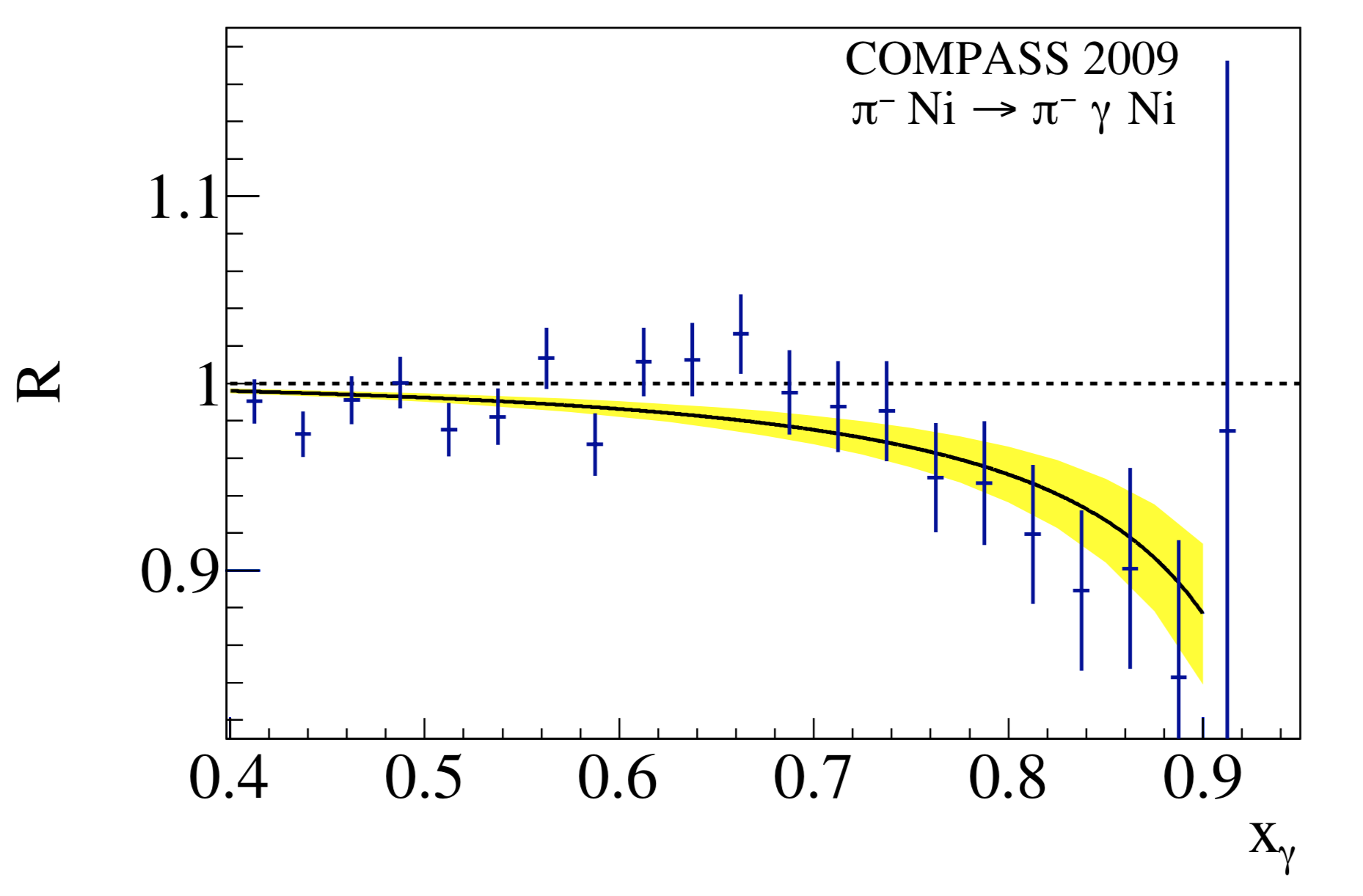
Study of low-energy QCD in meson reactions with the Coulomb field of atomic nuclei
This paper reviews the development of theoretical and experimental studies of low-energy QCD parameters starting from early investigations at the JINR Laboratory of Theoretical Physics and ending with modern measurements at CERN. We summarize the historical background and the pioneering theoretical approaches used at JINR to calculate meson parameters in various hadronic models which have laid the foundation for the experimental proposal to investigate the pion polarizability via radiative scattering off nuclei. The first observation of the Compton effect on the pion and the first measurements of the charged pion polarizability and the γ → 3 π constant performed with the U-70 accelerator are discussed as key milestones enabling quantitative studies of the meson structure and highlighting their impact on the low-energy QCD phenomenology. Continued advances in theoretical predictions have underscored the need for higher-precision experimental data and motivated new measurements carried out with pion beams in the COMPASS experiment at CERN. Finally, we outline the prospects for future studies within the AMBER experiment where kaon beams will enable a precision determination of kaon polarizabilities and related low-energy constants further advancing our understanding of dynamics of the strong interaction.
ZFITTER: Theoretical calculations and precision tests of the Standard Model
The development of the ZFITTER computer code is described in the context of high-precision tests of the Standard Model during the LEP era. The features of the code that allowed it to become a standard tool for the theoretical interpretation of electroweak observables are analyzed. Prospects for further development of ZFITTER and its contribution to research projects at future electron–positron colliders are discussed. Numerical illustrations are provided of the effects of parameter shifts and the addition of new results for higher-order radiative corrections.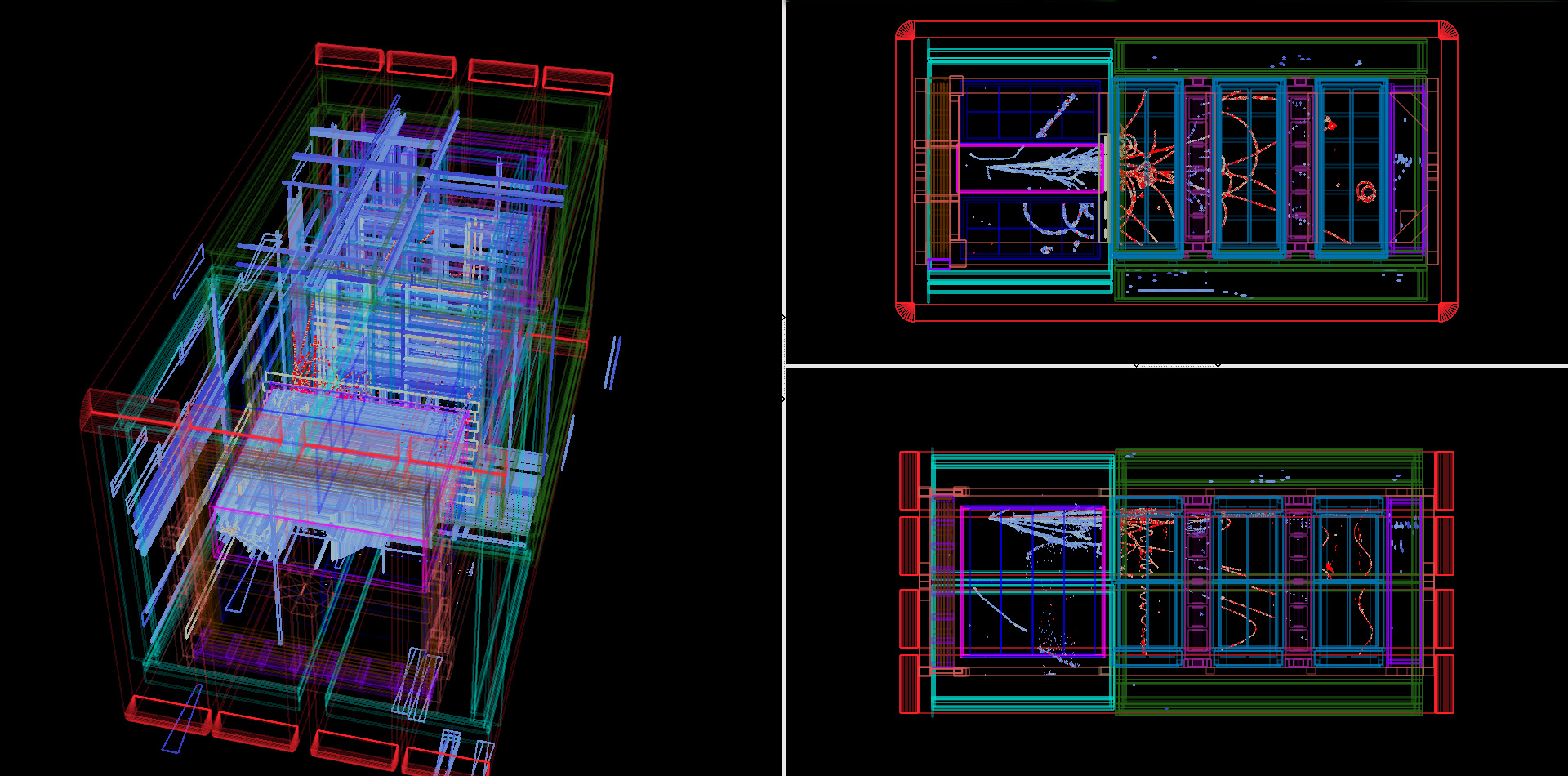
3D segmented neutrino detector SuperFGD
The near neutrino detector ND280 of the long-baseline accelerator experiment T2K has been upgraded to improve the precision of measurement of the neutrino oscillation parameters. A key component of the upgrade is a novel segmented plastic scintillator detector, Super Fine Grained Detector (SuperFGD), made of approximately 2 million optically isolated 1 cm 3 cubes read out by three orthogonal wavelength-shifting fibres and multi-pixel photon counters. The SuperFGD provides 3D images of neutrino interactions by tracking the final-state charged particles including protons down to a threshold of about 300 MeV/c. Due to the fine segmentation and the sub-nanosecond time resolution, the SuperFGD is able to detect neutrons from neutrino interactions and to reconstruct their kinetic energy by measuring the time of flight. In this paper, the details of the detector design, construction and performance in the T2K neutrino beam are described.
Technical Design Report of the Spin Physics Detector at NICA: et al. (SPD Collaboration).
The Spin Physics Detector Collaboration proposes to install a universal detector in the second interaction point of the NICA collider under construction (JINR, Dubna) to study the spin structure of the proton and deuteron and other spin-related phenomena using a unique possibility to operate with polarized proton and deuteron beams at a collision energy up to 27 GeV and a luminosity up to 10 32 cm −2 s −1 . As the main goal, the experiment aims to provide access to the gluon TMD PDFs in the proton and deuteron, as well as the gluon transversity distribution and tensor PDFs in the deuteron, via the measurement of specific single- and double-spin asymmetries using different complementary probes, such as charmonia, open charm, and prompt photon production processes. Other polarized and unpolarized physics is possible, especially at the first stage of NICA operation with reduced luminosity and collision energy of the proton and ion beams. This paper is dedicated exclusively to technical issues of the SPD setup construction. Corrected: 5 February 2025 (the surname of one of the authors was initially misspelled (M. Bolsunovskya), the correct spelling is M. Bolsunovskaya). 23 April 2025 (the surname of one of the authors was initially misspelled (A. Seleznev), the correct spelling is A. Selezenev).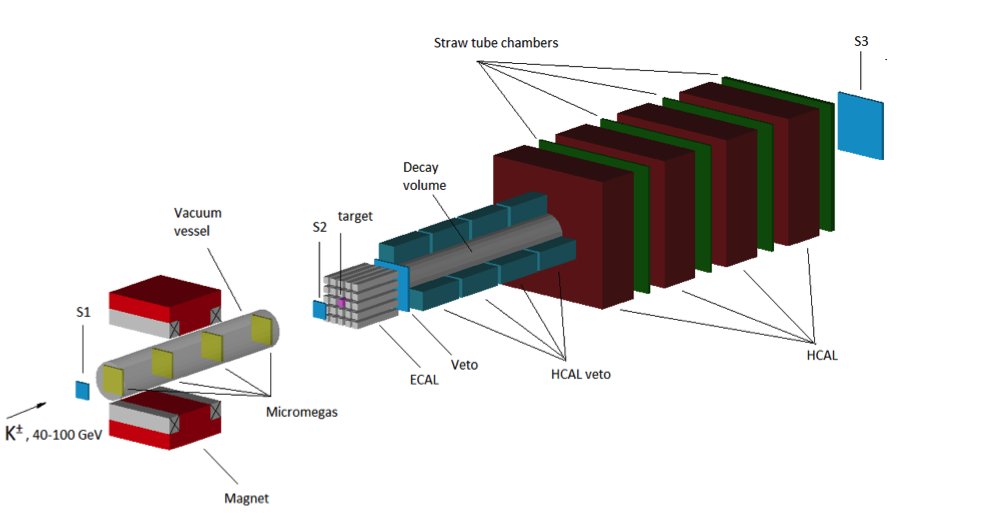
Search for KS,L oscillations and invisible decays into the dark sector at NA64
The decays K S,L → invisible have never been experimentally tested. In the Standard Model (SM), their branching ratios for the decay into two neutrinos are predicted to be extremely small, Br ( K S,L → νν̄ ) ≲ 10 −16 . We consider several natural extensions of the SM, such as two-Higgs-doublet (2HDM), 2HDM and light scalar, and dark mirror sector models, that allow one to enhance the Br ( K S,L → invisible ) up to a measurable level. We briefly discuss the possible search for K S,L → invisible decays and K S,L oscillations into the dark sector at the NA64 experiment at CERN with the sensitivity to Br ( K S,L → invisible ) ≲ 10 −7 −10 −5 .