

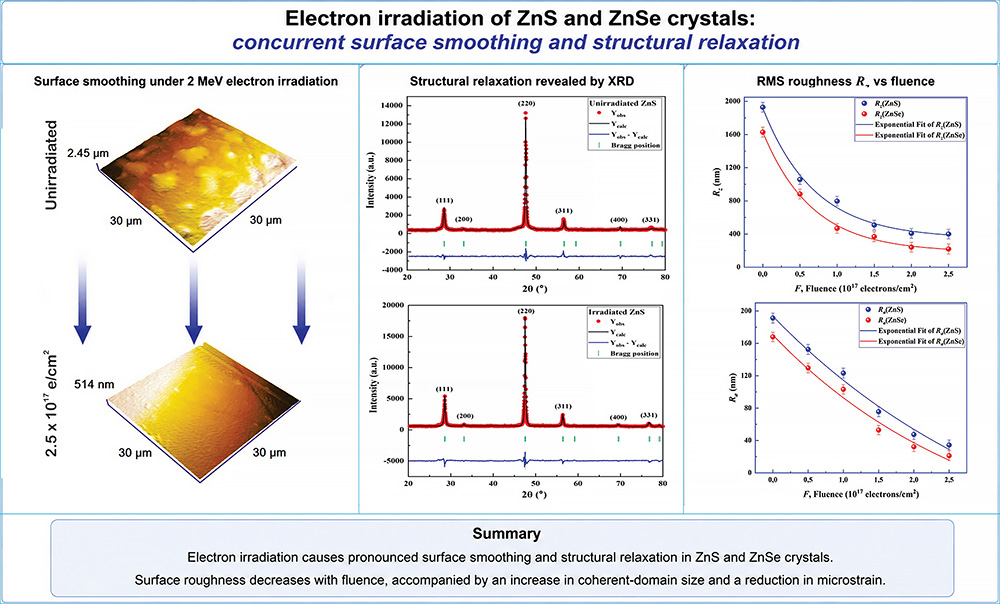
Physics 70th anniversary of JINR DOI: 10.54546/NaturalSciRev.200804 Radiation-induced surface smoothing and structural relaxation in electron-irradiated ZnS and ZnSe crystals The evolution of surface morphology and structural parameters in ZnS and ZnSe crystals under highenergy electron irradiation was investigated using a phenomenological modeling approach based on experimentally obtained irradiation-dependent structural and morphological data. The analysis focused on the fluence dependence of the surface roughness parameters R a and R z , coherent-domain size, and lattice parameter in the electron fluence range of (0−2.5) · 10 17 electrons/cm 2 . It was found that the surface roughness parameters R a and R z decrease according to an exponential law, indicating the occurrence of radiation-induced surface smoothing. A phenomenological kinetic equation describing roughness relaxation as a function of electron fluence was proposed and solved analytically. The obtained model demonstrates that the smoothing rate is proportional to the excess surface roughness relative to the limiting relaxed state. In contrast, the coherent-domain size generally increases with increasing fluence, whereas the lattice parameter decreases nearly linearly, indicating radiation-induced structural relaxation, lattice compaction, and defect rearrangement processes. Comparative analysis of ZnS and ZnSe crystals revealed differences in the smoothing kinetics and structural evolution parameters, which may be associated with differences in defect mobility and irradiation-assisted relaxation processes. Correlations were observed between the fluence-dependent evolution of surface roughness and bulk structural parameters, indicating concurrent morphological and structural changes under electron irradiation. The proposed phenomenological description provides a framework for comparing these irradiation-induced responses in ZnS and ZnSe crystals. M. Yu. Tashmetov, B. N. Madaminov 11.09.2026
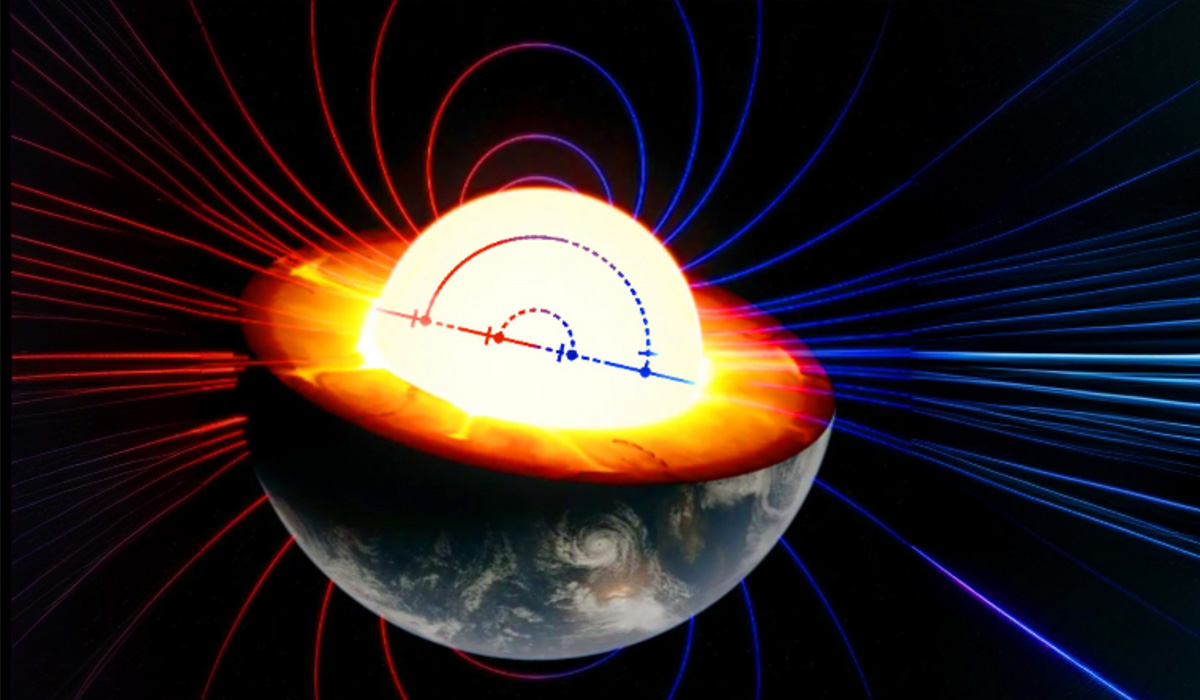
Historical / Anniversary Reviews 70th anniversary of JINR DOI: 10.54546/NaturalSciRev.200604 Statistical field theory of forced magnetohydrodynamic turbulence We review the results of applying the statistical field-theoretic approach to the problem of fully developed turbulence in nonrelativistic three-dimensional magnetohydrodynamics (MHD), which have been obtained over the past forty years. The review covers both general aspects of the physics of MHD turbulence and the necessary mathematical machinery of statistical field theory, including elements of renormalization theory and the renormalization-group (RG) method. The approach is illustrated using a stochastic model of stationary, locally homogeneous, fully developed three-dimensional MHD turbulence in the general case of a medium with broken spatial parity (helical MHD). In this model, RG techniques make it possible to establish the existence of several infrared-stable scaling regimes and to calculate the critical dimensions of various composite operators, the infrared asymptotics of correlation functions, and the amplitude factors in scaling laws, as well as to incorporate the effects of compressibility, anisotropy, etc. For an important class of helical MHD systems, the field-theoretic approach provides an elegant formulation of the fundamental problem of large-scale turbulent dynamo action — namely, the generation of a large-scale magnetic field ⟨ b ⟩ = B (where b denotes magnetic fluctuations) at the expense of the energy of turbulent fluctuations — via the decay of the initial unstable vacuum state ⟨ b ⟩ = 0 as a result of dynamical spontaneous symmetry breaking in the spirit of the Coleman-Weinberg mechanism, followed by stabilization of the theory in the vicinity of the new ground state ⟨ b ⟩ = B (the dynamo regime). The field-theoretic formulation we developed, together with a generalization of the standard Feynman diagrammatic technique to the dynamo regime, not only makes it possible to treat within a unified framework the existing theoretical approaches to helical magnetohydrodynamics (kinematic MHD, large-scale dynamo theory), but also extends the RG formalism to the dynamo regime, which — unlike closure procedures still common in dynamo theory — is particularly well suited for studying statistically stationary turbulent states. The richness of MHD physics in the dynamo regime is illustrated both in the emergence of new effects (Goldstone-type corrections to Alfvén waves, anisotropic corrections associated with the transport of the large-scale field) and in the theoretically predicted strong dependence of the magnetic energy-spectrum slope on the degree of mirror-symmetry breaking. M. Hnatič, T. Lučivjanský, L. Mižišin, Yu. Molotkov, A. Ovsiannikov 11.03.2026
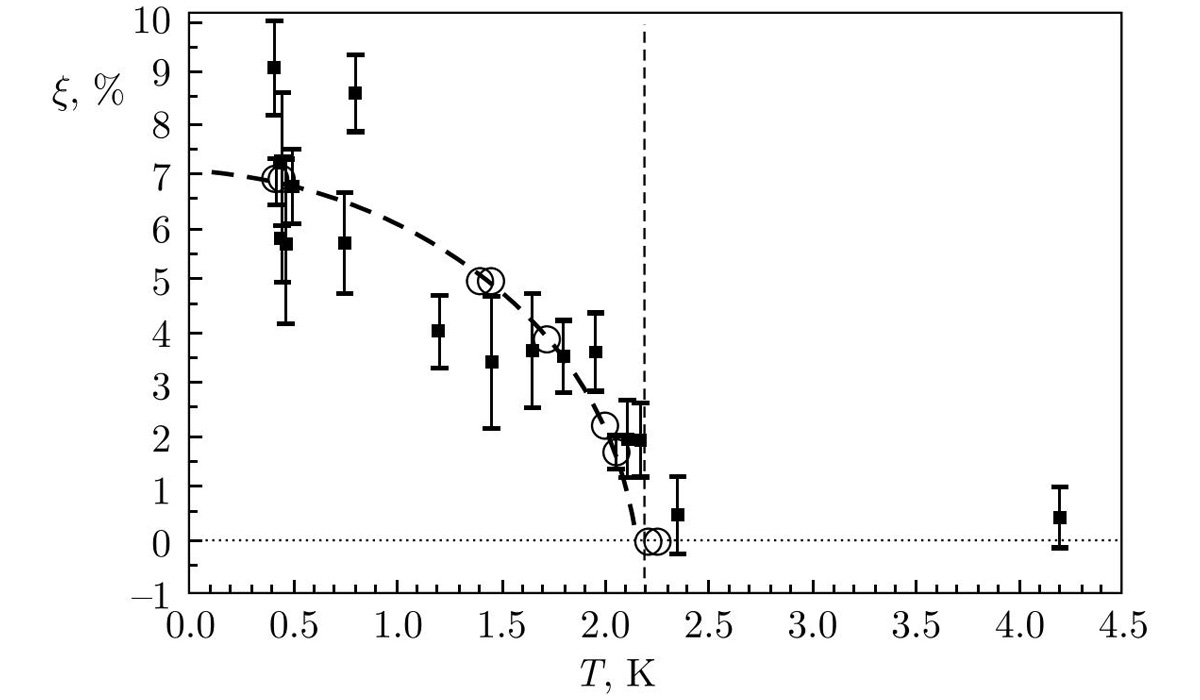
Physics Historical / Anniversary Reviews DOI: 10.54546/NaturalSciRev.100504 A century of the Bose–Einstein condensation concept and half a century of the JINR experiments for observation of condensate in superfluid 4He (He II) This short review is devoted to the celebration of two major events in quantum physics. The first one is the birth of the concept of Bose–Einstein condensation (1925) and the second is the experimental proof that it does exist and appears in liquid 4 He simultaneously with superfluidity below the λ-point (1975). Both of these events are tightly related to the Bogoliubov theory of superfluidity (1947). The existence of condensate in the system of interacting bosons is the key ansatz of this theory. Therefore, the experiments started at JINR-Dubna in 1975 confirmed this prediction of the Bogoliubov theory that superfluidity of liquid 4 He (He II) should emerge at the same time as the Bose–Einstein condensation. Corrected: 13 November 2025 (the captions to Figures 1 and 2 were changed) 26 November 2025 (changes were made in formulas (53) and (55)) V. A. Zagrebnov 26.11.2025
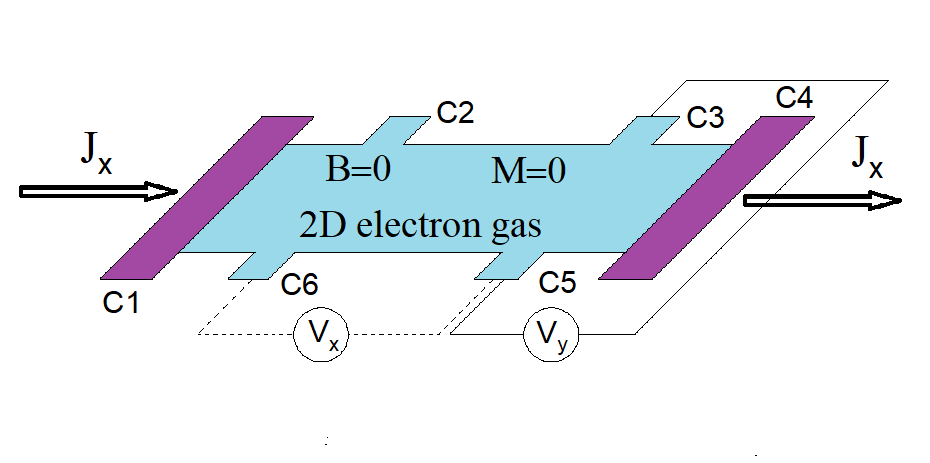
Physics DOI: 10.54546/NaturalSciRev.100203 New classical Hall-type effect in the absence of magnetic field The non-Markovian two-dimensional dynamics of charge carriers in a dissipative non-magnetic medium is studied. The possibility of observing a new classical Hall-type effect in the absence of a magnetic field is predicted. E. Kh. Alpomishev, G. G. Adamian, N. V. Antonenko 27.03.2025