Information Technology
Multifunctional Information and Computing Complex of JINR
A. I. Balandin , N. A. Balashov , O. Yu. Derenovskaya , A. G. Dolbilov , A. P. Gavrish , A. O. Golunov , N. I. Gromova , A. V. Evlanov , I. A. Kashunin , V. V. Korenkov , N. A. Kutovskiy , V. V. Mitsyn , A. N. Moibenko , I. S. Pelevanyuk , D. V. Podgainy , O. I. Streltsova , S. V. Shmatov , T. A. Strizh , V. V. Trofimov , A. S. Vorontsov , N. N. Voytishin , M. I. Zuev
Natural Science Review 3 200701 (2026) Published 15.04.2026
DOI: 10.54546/NaturalSciRev.200701

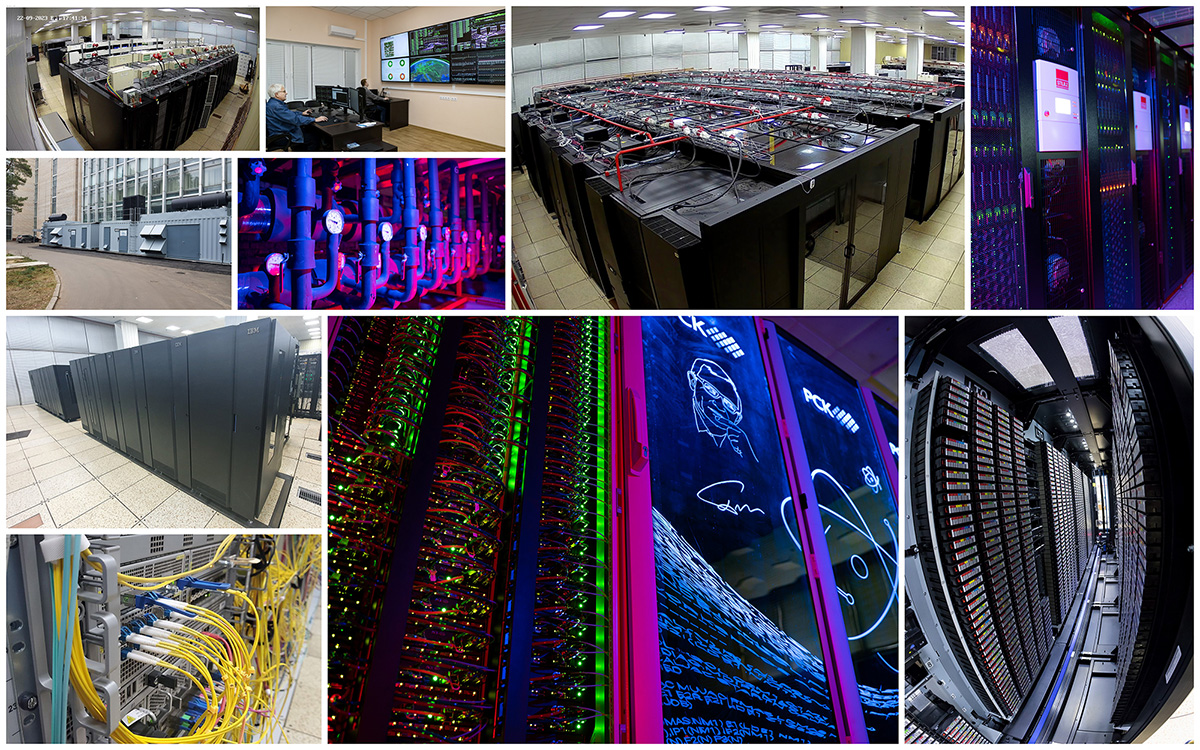
The Multifunctional Information and Computing Complex (MICC) of the JINR Meshcheryakov Laboratory of Information Technologies (MLIT) is a key element of the JINR network and information and computing infrastructures. The MICC is regarded as JINR’s unique basic facility and plays a decisive role in scientific research, which entails advanced computing power and storage systems. Its uniqueness is ensured by the consolidation of all state-of-the-art information technologies for data processing and storage, united by the network infrastructure with a bandwidth of up to 4 × 100 Gbps. It consists of distributed data processing and storage systems based on both grid and cloud technologies and the hyperconverged computing infrastructure with liquid cooling. Multifunctionality, high reliability, and availability in 24 × 7 × 365 mode, scalability and high performance, information security and an advanced software environment are the main requirements that the MICC meets. The reliability and availability are ensured by the enhanced high-speed telecommunication system and the modern local network infrastructure, as well as by the reliable engineering infrastructure that provides guaranteed power supply and cooling for server hardware. This infrastructure is a staple for computing the experiments at the NICA accelerator complex. The BM@N, MPD, and SPD experiments intensively use all computational components and storage systems. Being part of the Worldwide LHC Computing Grid, the MICC serves as the Tier1 grid site for the CMS experiment at the LHC and as the Tier2 grid site that provides support for the experiments at the LHC and other world’s large-scale experiments in high-energy physics. The integrated cloud environment of the JINR Member States focuses on supporting users and experiments in Russia, China, the USA, etc. (e.g., NICA, NOvA, BaikalGVD, JUNO). The HybriLIT platform comprising the Govorun supercomputer provides capabilities for elaborating mathematical models and algorithms and performing resource-intensive computations, including on graphics accelerators that enable the development of the ecosystem for machine and deep learning tasks, Big Data analysis, and quantum computing on simulators.

Efficient pipeline for plant disease classification
A. Uzhinskiy
Natural Science Review 2 100201 (2025) Published 12.02.2025
DOI: 10.54546/NaturalSciRev.100201

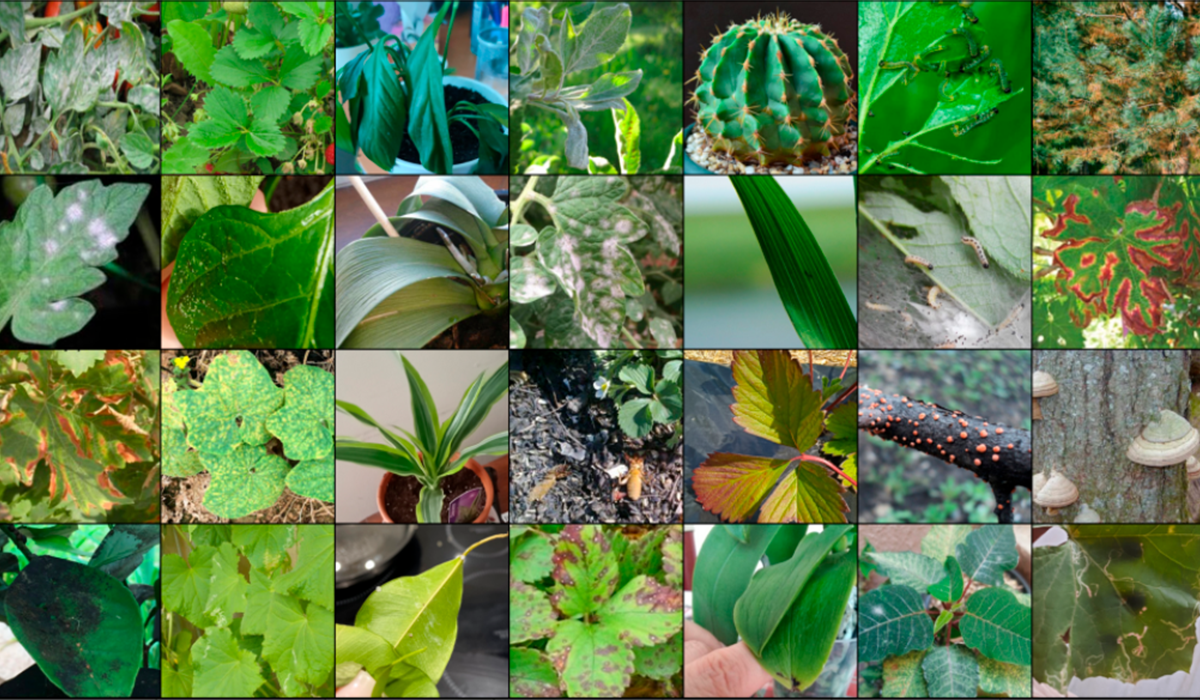
Accurate identification of disease and correct treatment policy can save and increase yield. Different deep learning methods have emerged as an effective solution to this problem. Still, the challenges posed by limited datasets and the similarities in disease symptoms make traditional methods, such as transfer learning from models pre-trained on large-scale datasets like ImageNet, less effective. In this study, a self-collected dataset from the DoctorP project, consisting of 46 distinct classes and 2615 images, was utilized. DoctorP is a multifunctional platform for plant disease detection oriented on agricultural and ornamental crop. The platform has different interfaces like mobile applications for iOS and Android, a Telegram bot, and an API for external services. Users and services send photos of the diseased plants in to the platform and can get prediction and treatment recommendation for their case. The platform supports a wide range of disease classification models. MobileNet_v2 and a Triplet loss function were previously used to create models. Extensive increase in the number of disease classes forces new experiment with architectures and training approaches. In the current research, an effective solution based on ConvNeXt architecture and Large Margin Cosine Loss is proposed to classify 46 different plant diseases. The training is executed in limited training dataset conditions. The number of images per class ranges from a minimum of 30 to a maximum of 130. The accuracy and F1-score of the suggested architecture equal to 88.35% and 0.9 that is much better than pure transfer learning or old approach based on Triplet loss. New improved pipeline has been successfully implemented in the DoctorP platform, enhancing its ability to diagnose plant diseases with greater accuracy and reliability.