
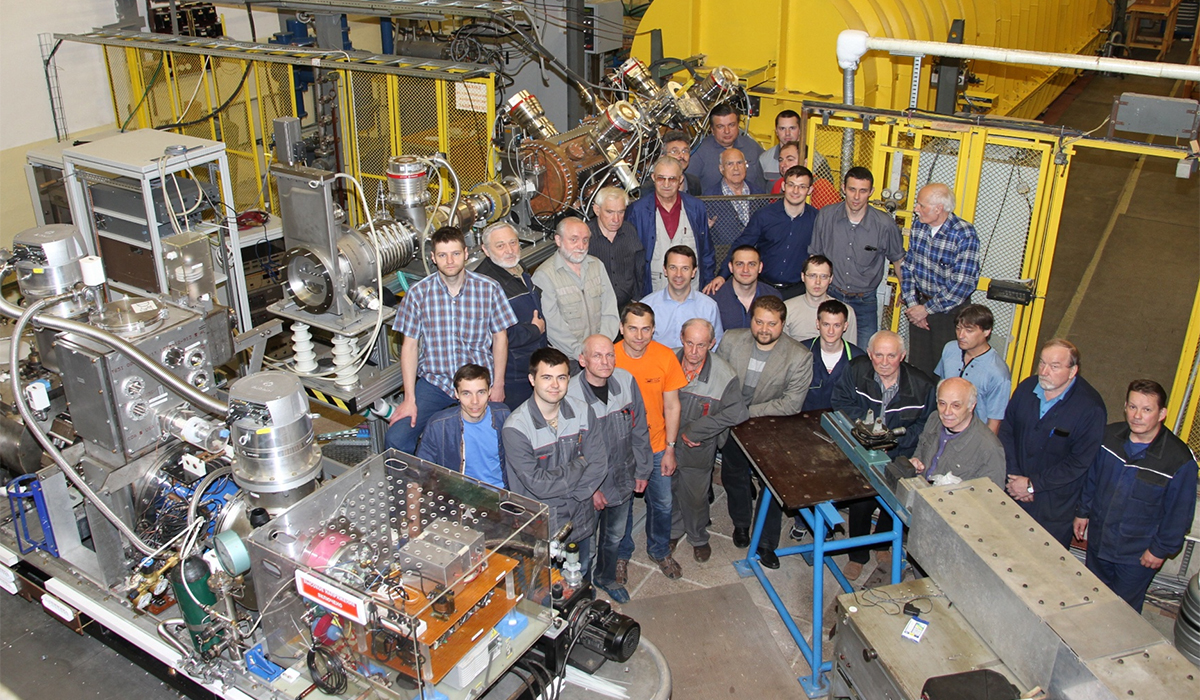
Synchrophasotron and Nuclotron Equipment for Investigation of Polarization Phenomena
The development of the unique cryogenic source of polarized deuterons, POLARIS, in the late 1970s was very fruitful and significantly enhanced JINR’s instrumental base for studies of nucleon-nucleon interactions as well as interactions of lightest nuclei with heavier nuclei. Experimental data on polarization-dependent effects, obtained at the Synchrophasotron and the Nuclotron, significantly influenced the worldwide understanding of strong interactions between hadrons as well as the structure of lightest nuclei (the deuteron, first of all) at short inter-nucleon distances. Experiments with polarized deuteron, proton and neutron beams at intermediate (several GeV) energies resulted in creation of wide collaborations between VBLHEP of JINR and other world centers (in the USSR and Russia, France, the USA, Germany, Japan, China). Many new and unexpected experimental results were obtained by those collaborations. In particular, many new unique results were obtained for the nucleon electromagnetic formfactors of nucleons, thanks to results of works within the ALPOM/ALPOM2 project. In addition, new ways became opened for experimental investigations with polarized 3 He beams. In this direction, new unique results were obtained. The necessary developments of the techniques for the spin program at the Nuclotron/NICA are discussed in the paper.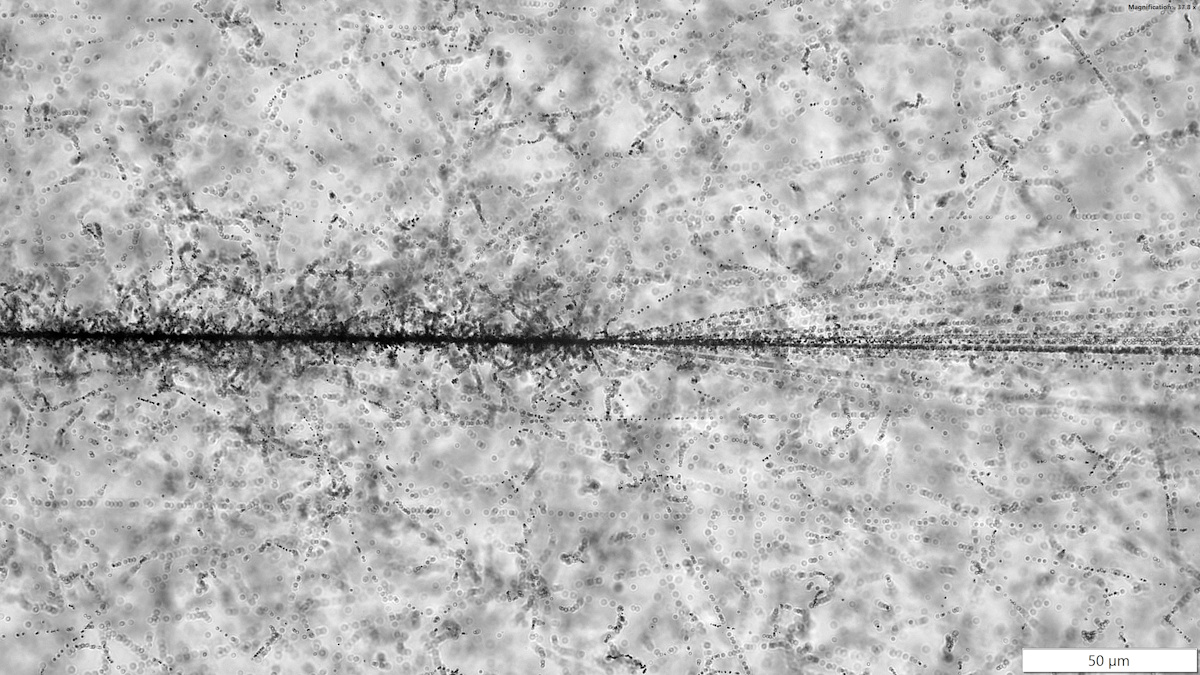
The 8Be nucleus and the Hoyle state in dissociation of relativistic nuclei
Having become observable since the pioneering era of cosmic ray physics fragmentation, the events of relativistic nuclei in nuclear emulsions highlight the potential of this method to study extremely cold ensembles of H and He nuclei, thereby advancing the physics of nuclear clustering and, potentially, expanding nuclear astrophysics. Following the presentation of the progress of this method and orientation to the current problems, this review presents the key results and generalizations of the BECQUEREL experiment at JINR, obtained in the study of unstable nuclear states in the relativistic dissociation of a wide variety of nuclei. The productivity of this method is ensured by record-breaking spatial resolution and full sensitivity to relativistic fragments. According to invariant masses based on the most accurate measurements of emission angles in the extremely narrow fragmentation cone, the contributions of the decays of 8 Be(0 + ), 8 Be(2 + ), 9 Be(1.7), 9 B, 6 Be, 12 С(0 + 2 ) or the Hoyle state and 12 C(3 – ) have been identified now. The increase in the contribution of 8 Be(0 + ) with the multiplicity of accompanying α-particles, followed by 9 B and 12 C(0 + 2 ), has been established. The structure of these states and the diversity of parent nuclei without the influence of the initial energy assume the coalescence of α-particles and nucleons which appear in dissociation. The initial density and duration of the secondary interaction of the latter may be sufficient up to the lowest-energy fusion reactions. Such a scenario requires low-energy physics concepts to interpret the relativistic fragmentation. The usage of automated microscopy for the analysis of irradiation beams from the JINR NICA accelerator complex becomes a modern basis to apply the nuclear emulsion method which has become fundamental in the physics of the micro-world.