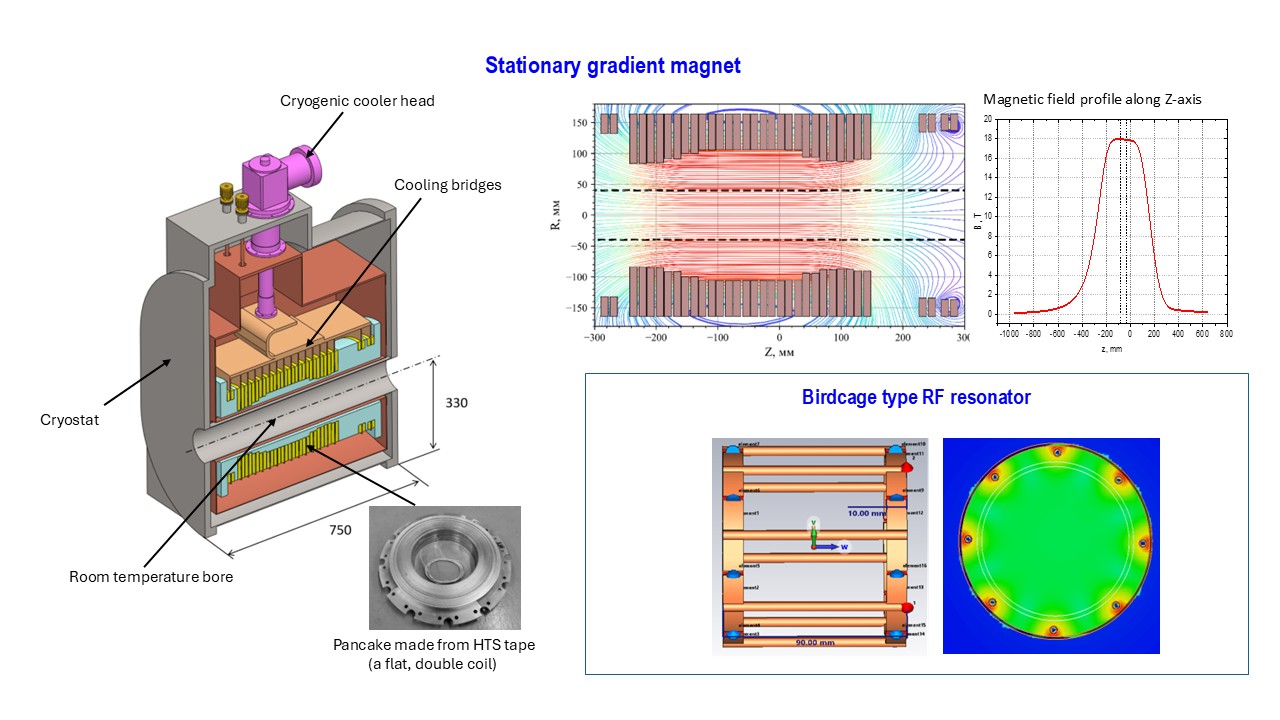
Natural Sci. Rev. 2 100305 (2025) DOI: 10.54546/NaturalSciRev.100305 Physics DOI: 10.54546/NaturalSciRev.100305 The concept of a superconducting spin flipper – neutron decelerator for a UCN source at a pulsed reactor The work is devoted to the development of a conceptual design for a gradient spin flipper — neutron decelerator, which is the main component of a designed UCN source for a pulsed reactor. In close cooperation between the JINR group and SuperOx, a preliminary design of a stationary gradient magnet for the adiabatic spin flipper has been developed. A thorough calculation of the magnetic field configuration has been performed. The movement of neutrons in the magnetic field generated by the designed magnetic system has been simulated, and the deceleration time of neutrons in the spin flipper has been analyzed. The results obtained give grounds for hope that the idea of creating a UCN source based on pulsed accumulation in a trap using non-stationary neutron deceleration is feasible. A. A. Popov, K. S. Osipenko, V. I. Scherbakov, A. I. Frank, G. V. Kulin, M. A. Zakharov, V. A. Kurylev, D. A. Kolomentseva 25.06.2025
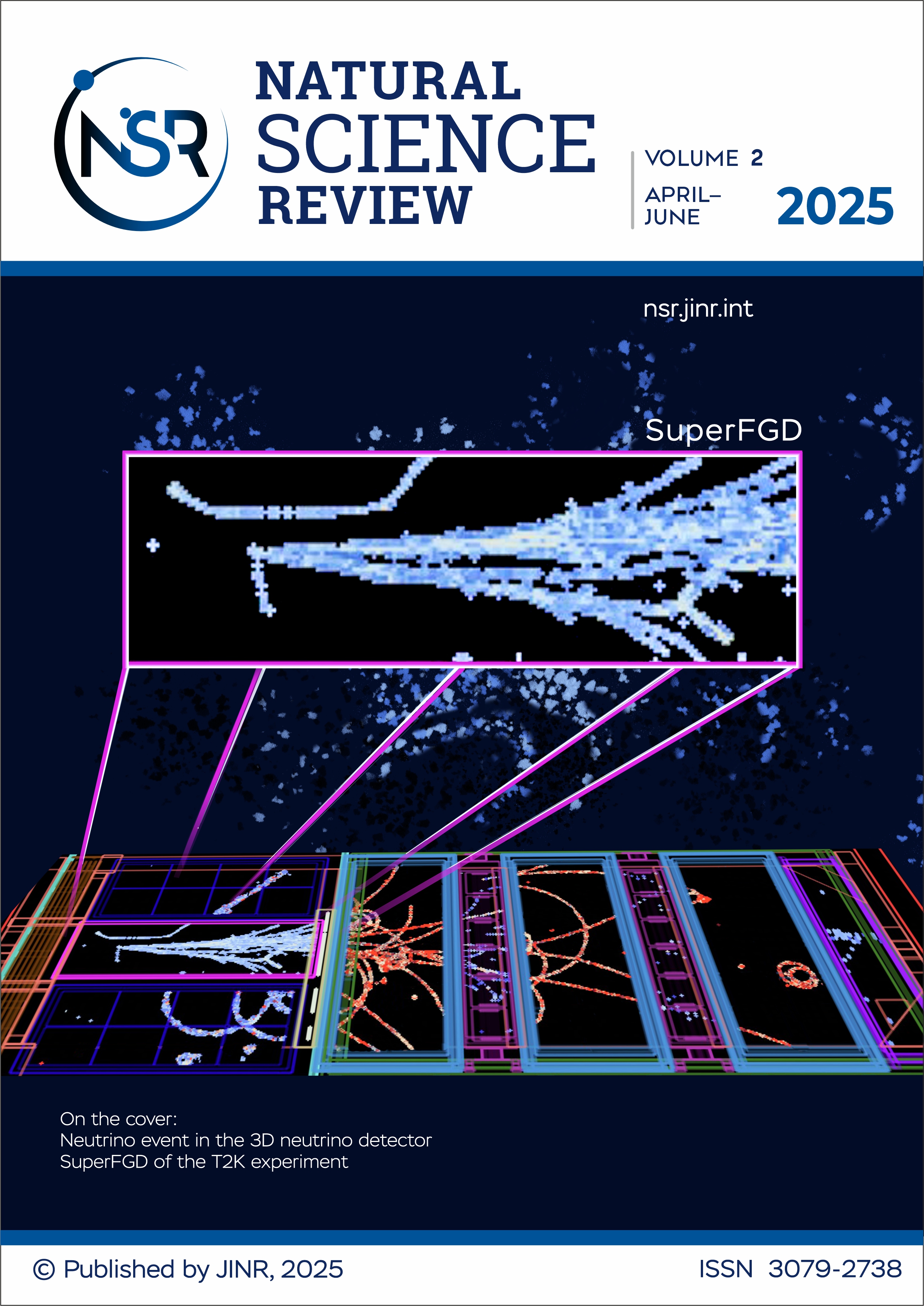
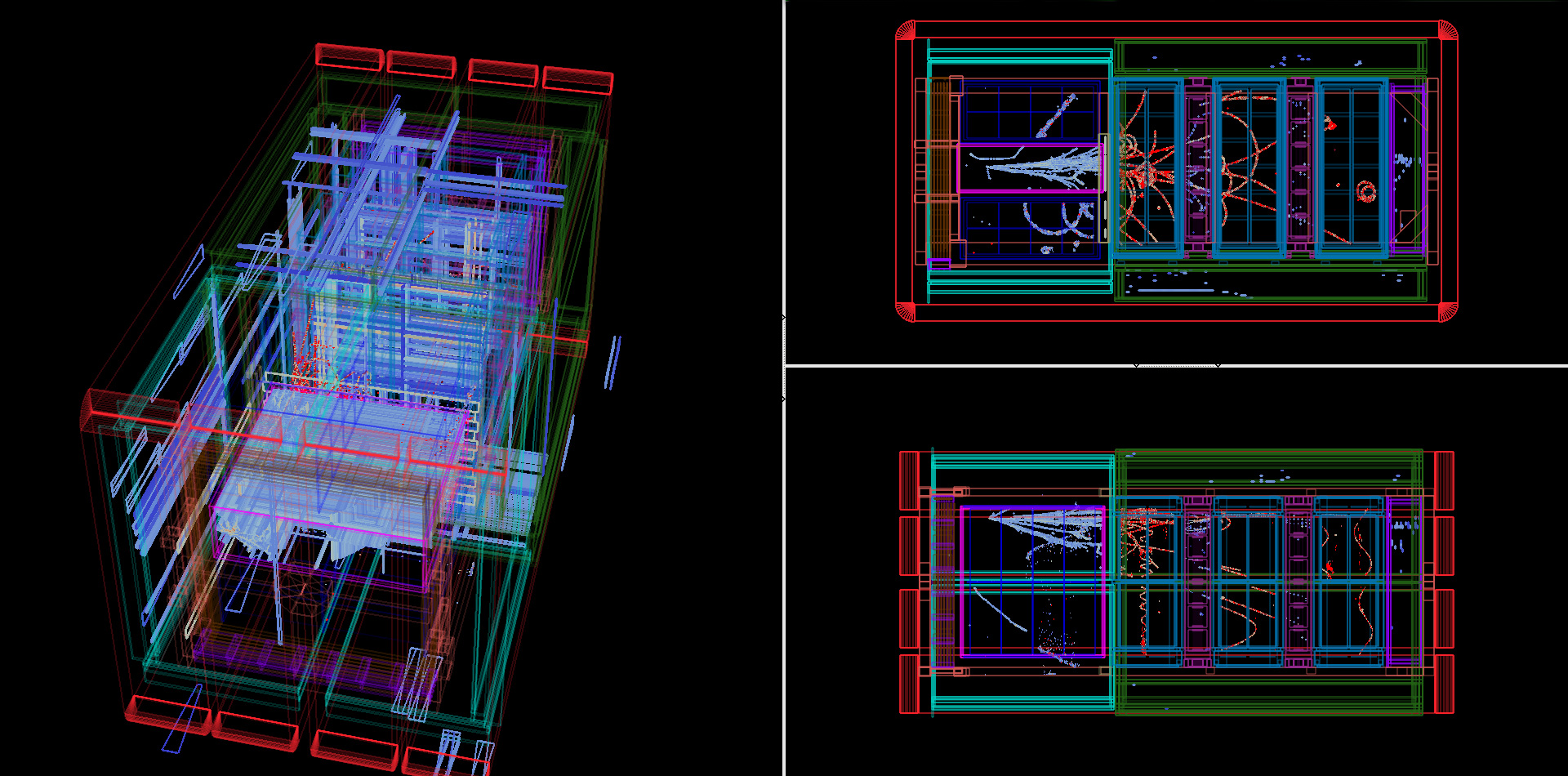
Natural Sci. Rev. 2 100304 (2025) DOI: 10.54546/NaturalSciRev.100304 Physics DOI: 10.54546/NaturalSciRev.100304 3D segmented neutrino detector SuperFGD The near neutrino detector ND280 of the long-baseline accelerator experiment T2K has been upgraded to improve the precision of measurement of the neutrino oscillation parameters. A key component of the upgrade is a novel segmented plastic scintillator detector, Super Fine Grained Detector (SuperFGD), made of approximately 2 million optically isolated 1 cm 3 cubes read out by three orthogonal wavelength-shifting fibres and multi-pixel photon counters. The SuperFGD provides 3D images of neutrino interactions by tracking the final-state charged particles including protons down to a threshold of about 300 MeV/c. Due to the fine segmentation and the sub-nanosecond time resolution, the SuperFGD is able to detect neutrons from neutrino interactions and to reconstruct their kinetic energy by measuring the time of flight. In this paper, the details of the detector design, construction and performance in the T2K neutrino beam are described. Yu. Kudenko 20.06.2025
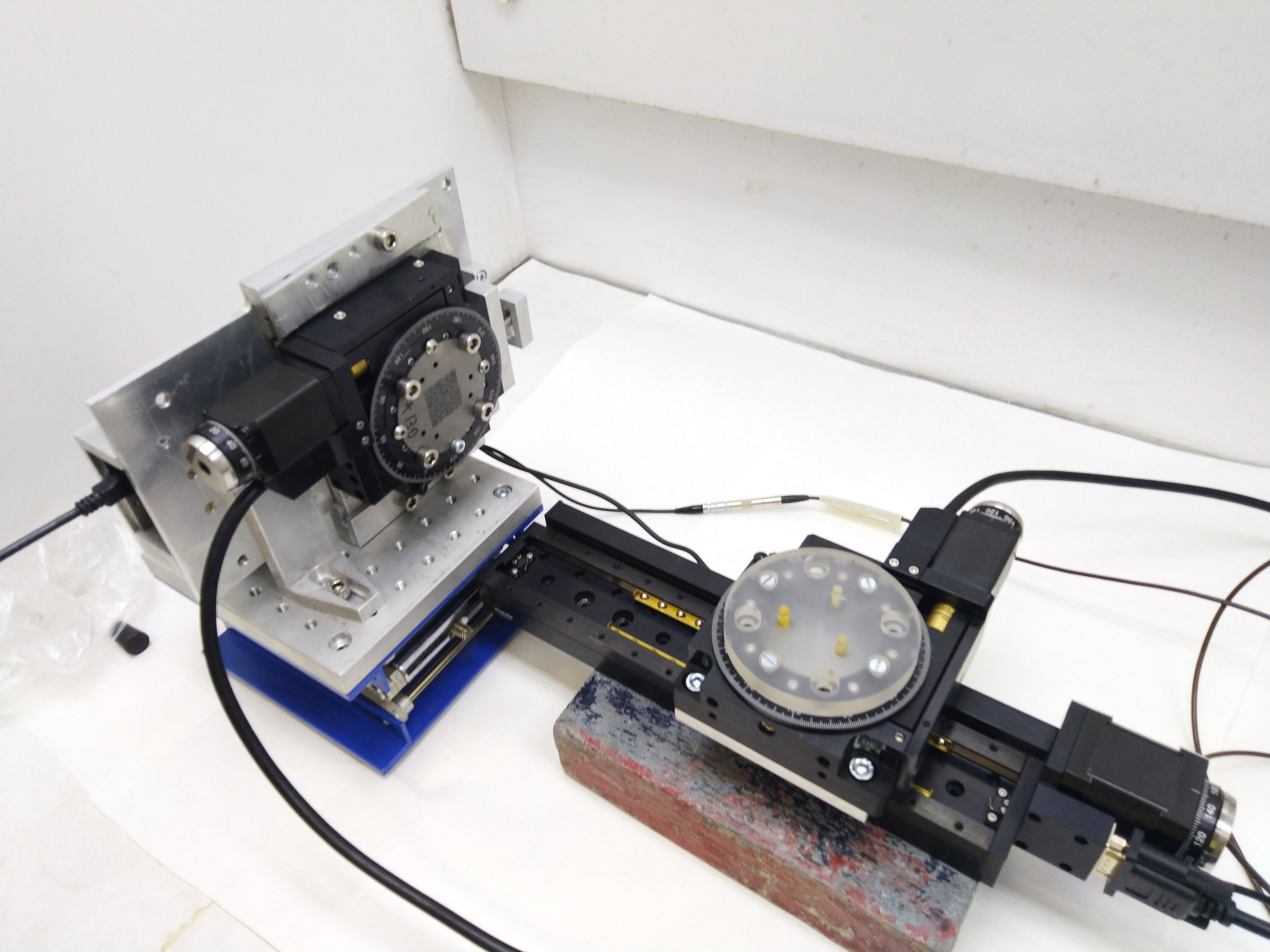
Natural Sci. Rev. 2 100303 (2025) DOI: 10.54546/NaturalSciRev.100303 Applied Research Physics Life Sciences DOI: 10.54546/NaturalSciRev.100303 Characterization of micro-SPECT system based on Timepix detector In this work, the characteristics of a prototype SPECT system based on the Timepix readout chip, with a MURA-type encoding mask, were evaluated. The setup has a small FoV and can be used in preclinical studies of drugs on small laboratory animals. Despite many existing test protocols developed and described in pertinent documents of national standard bodies and IAEA recommendations, they are not suitable for microtomographic systems based on semiconductor pixel detectors due to different detector technology, high spatial resolution and small area of interest. To measure their characteristics, special phantoms were developed, with a small “hot region”. Such micro-SPECT parameters as spatial resolution, contrast, linearity, and system efficiency were studied using 99m Tc source. The detector calibration and data preprocessing are described. V. Rozhkov, I. Hernа́ndez, A. Leyva, A. Zhemchugov 17.06.2025
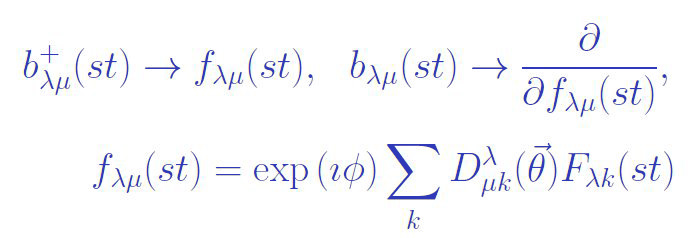
Natural Sci. Rev. 2 100302 (2025) DOI: 10.54546/NaturalSciRev.100302 Physics DOI: 10.54546/NaturalSciRev.100302 Bogoliubov method in description of nuclear rotation The problem of identifying and extracting the dynamic variables associated with symmetry transformations from the full set of dynamic variables is considered. It is demonstrated that employing a boson representation of bifermion operators enables the problem to be solved using the canonical transformation of dynamic variables proposed by N. N. Bogoliubov. The results obtained justify the application of the cranking model for the description of the rotational excitations of nuclei. R. V. Jolos, E. A. Kolganova 09.06.2025
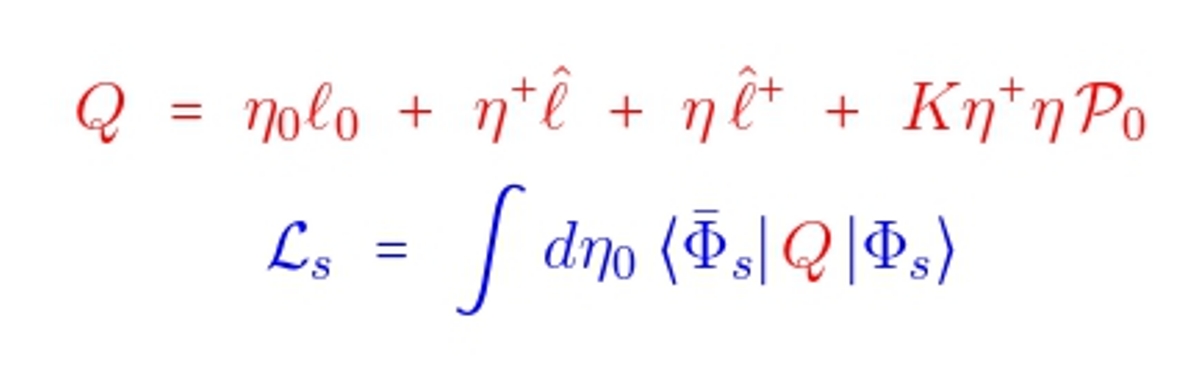
Natural Sci. Rev. 2 100301 (2025) DOI: 10.54546/NaturalSciRev.100301 Physics DOI: 10.54546/NaturalSciRev.100301 On BRST Lagrangian formulation for massive higher-spin fields in 4D Minkowski space We give a brief overview of the BRST approach to the gauge-invariant Lagrangian formulation for free massive higher-spin bosonic fields, focusing on two specific aspects. First, the theory is considered in four-dimensional flat space in terms of spin-tensor fields with two-component undotted and dotted indices. This leads to a significant simplification of the whole approach in comparison with the one where the fields with vector indices were used, since now there is no need to introduce a constraint responsible for the traces of the fields into the BRST charge. Second, we develop an extremely simple and clear procedure to eliminate all the auxiliary fields and prove that the BRST equations of motion identically reproduce the basic conditions for irreducible representations of the Poincáre group with a given mass and spin. Similar to the massless theory, the final Lagrangian for massive higher-spin fields is formulated in triplet form. The BRST formulation leads to a system of fields that are clearly subdivided into the basic spin s field, Zinoviev-like auxiliary fields, Singh–Hagen-like auxiliary fields, and special BRST auxiliary fields. The auxiliary fields can be partially eliminated by gauge fixing and/or using the equations of motion. This allows one to obtain formally different (with different numbers of auxiliary fields) but equivalent Lagrangian formulations. I. L. Buchbinder, S. A. Fedoruk, V. A. Krykhtin 05.05.2025