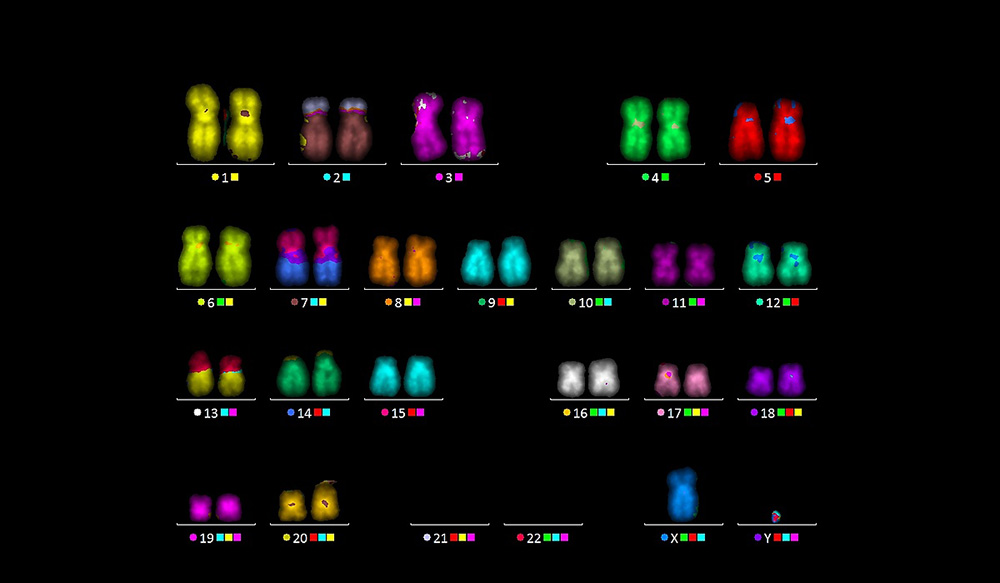
Natural Sci. Rev. 3 200805 (2026) DOI: 10.54546/NaturalSciRev.200805 Life Sciences 70th anniversary of JINR DOI: 10.54546/NaturalSciRev.200805 Comparative chromosome analysis of human and rhesus macaque (Macaca mulatta) using human multicolor FISH probes We established chromosome homology between human and the rhesus macaque ( Macaca mulatta ) using a powerful modern molecular cytogenetic technique: multicolor fluorescence in situ hybridization (mFISH). mFISH allows the classification of mammalian chromosomes based on their DNA content rather than solely on morphological features such as banding patterns. The Macaca mulatta karyotype consists of 42 chromosomes: 20 pairs of autosomes and the X and Y sex chromosomes. We confirmed a pronounced similarity between the human ( Homo sapiens , HSA) and macaque ( Macaca mulatta, MMU ) genomes: 16 out of 22 macaque chromosomes showed homology to a single human chromosome, and 13 of them have human homologs with the same numbers. Only three macaque chromosomes show hybridization signals from two human chromosomes, and a single human probe for chromosome 2 labels two pairs of acrocentric monkey chromosomes. Altogether, mFISH is expected to become an indispensable tool in comparative chromosome studies. E. Nasonova, N. Koshlan, I. Koshlan 11.09.2026
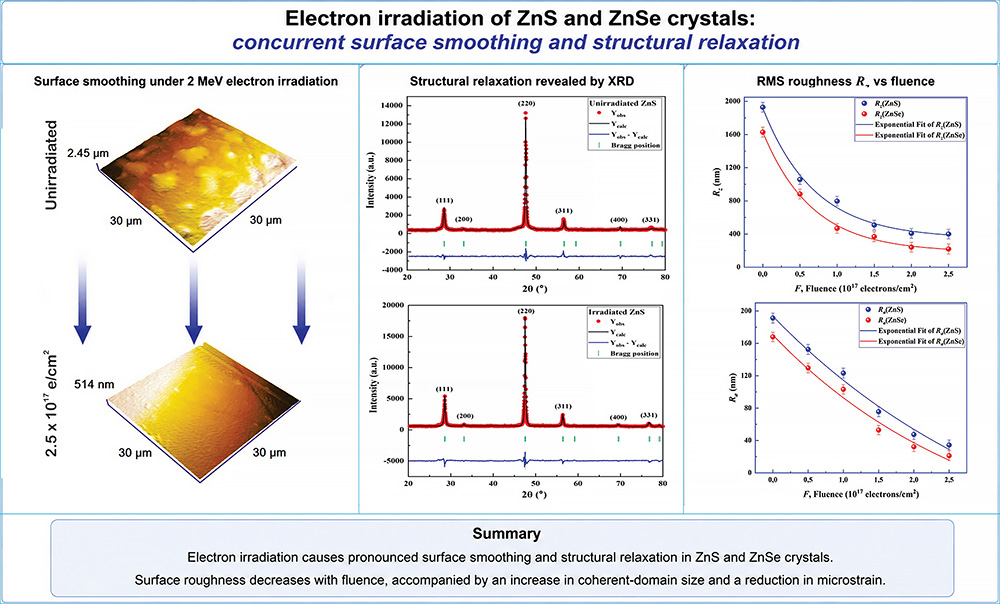
Natural Sci. Rev. 3 200804 (2026) DOI: 10.54546/NaturalSciRev.200804 Physics 70th anniversary of JINR DOI: 10.54546/NaturalSciRev.200804 Radiation-induced surface smoothing and structural relaxation in electron-irradiated ZnS and ZnSe crystals The evolution of surface morphology and structural parameters in ZnS and ZnSe crystals under highenergy electron irradiation was investigated using a phenomenological modeling approach based on experimentally obtained irradiation-dependent structural and morphological data. The analysis focused on the fluence dependence of the surface roughness parameters R a and R z , coherent-domain size, and lattice parameter in the electron fluence range of (0−2.5) · 10 17 electrons/cm 2 . It was found that the surface roughness parameters R a and R z decrease according to an exponential law, indicating the occurrence of radiation-induced surface smoothing. A phenomenological kinetic equation describing roughness relaxation as a function of electron fluence was proposed and solved analytically. The obtained model demonstrates that the smoothing rate is proportional to the excess surface roughness relative to the limiting relaxed state. In contrast, the coherent-domain size generally increases with increasing fluence, whereas the lattice parameter decreases nearly linearly, indicating radiation-induced structural relaxation, lattice compaction, and defect rearrangement processes. Comparative analysis of ZnS and ZnSe crystals revealed differences in the smoothing kinetics and structural evolution parameters, which may be associated with differences in defect mobility and irradiation-assisted relaxation processes. Correlations were observed between the fluence-dependent evolution of surface roughness and bulk structural parameters, indicating concurrent morphological and structural changes under electron irradiation. The proposed phenomenological description provides a framework for comparing these irradiation-induced responses in ZnS and ZnSe crystals. M. Yu. Tashmetov, B. N. Madaminov 11.09.2026
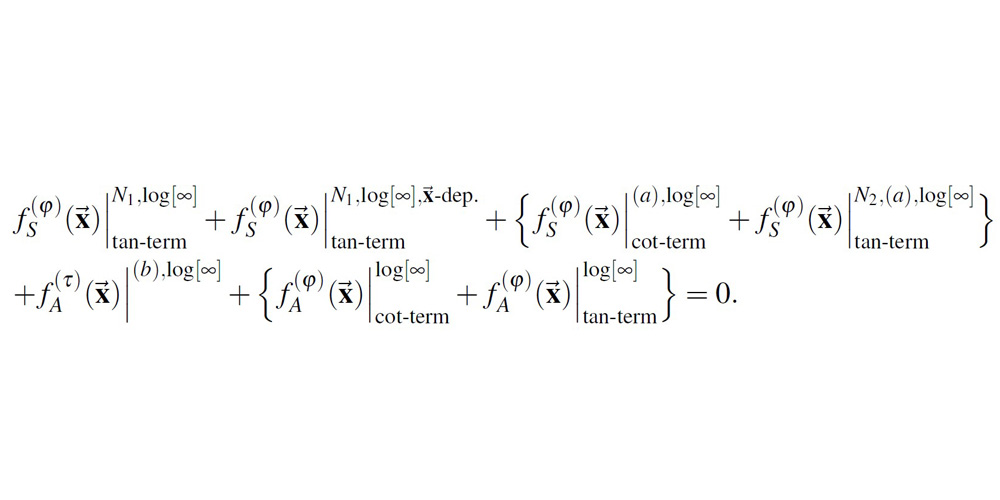
Natural Sci. Rev. 3 100803 (2026) DOI: 10.54546/NaturalSciRev.100803 Mathematical and Computer Sciences DOI: 10.54546/NaturalSciRev.100803 Non-integral geometry: Additional term fA as a regularizing term In the present paper, we first describe the principal basis of non-integral geometry. Non-integral geometry is a new field of generalized function (distribution) theory, where the effects breaking the symmetry of integration measure have been investigated. In turn, the non-symmetric integration measure (the non-invariant measure) leads to the complex form of the universal, dimension-independent inverse operator with the additional contributions compared to the methods of integral geometry. The additional term with the complex integration measure serves to the extension that improves the image reconstruction procedure. Then, we prove that this additional term f A in the universal inverse Radon transforms plays a role of the regularizing contribution. In particular, we show that owing to the presence of f A , the corresponding complex singularities can be eliminated in the image reconstruction process. I. V. Anikin 02.09.2026
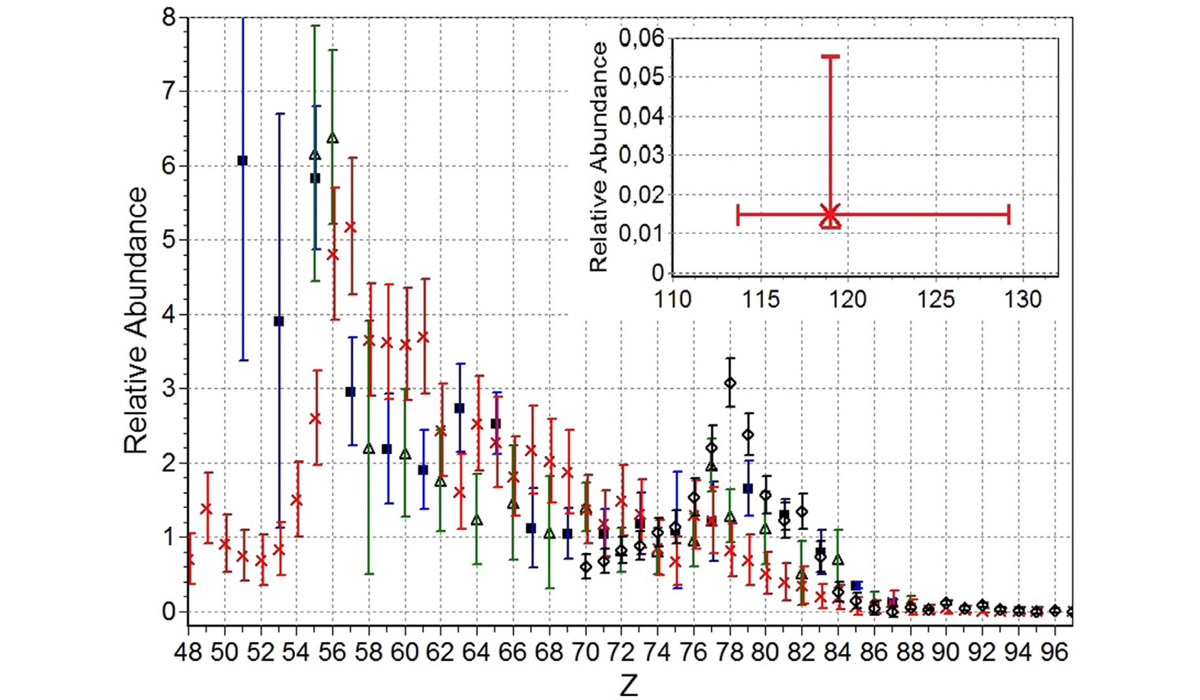
Natural Sci. Rev. 3 200803 (2026) DOI: 10.54546/NaturalSciRev.200803 Physics Historical / Anniversary Reviews 70th anniversary of JINR DOI: 10.54546/NaturalSciRev.200803 Methodology, applications, and results of dielectric track detectors in heavy nuclei identification The results of the research partnership between the Flerov Laboratory of Nuclear Reactions of the Joint Institute for Nuclear Research (FLNR JINR) and the Laboratory of Fundamental Particles of the Lebedev Physical Institute (LFP LPI) are presented. The publication focuses on two areas: the search for tracks of superheavy nuclei in pallasite meteorites (OLIMPIYA experiment) and testing of various dielectric materials (glasses and micas) as detectors of heavy charged particles. S. A. Gorbunov , N. S. Konovalova , N. M. Okateva , N. G. Polukhina, T. V. Shchedrina, N. I. Starkov, E. N. Starkova, A. E. Volkov 20.08.2026
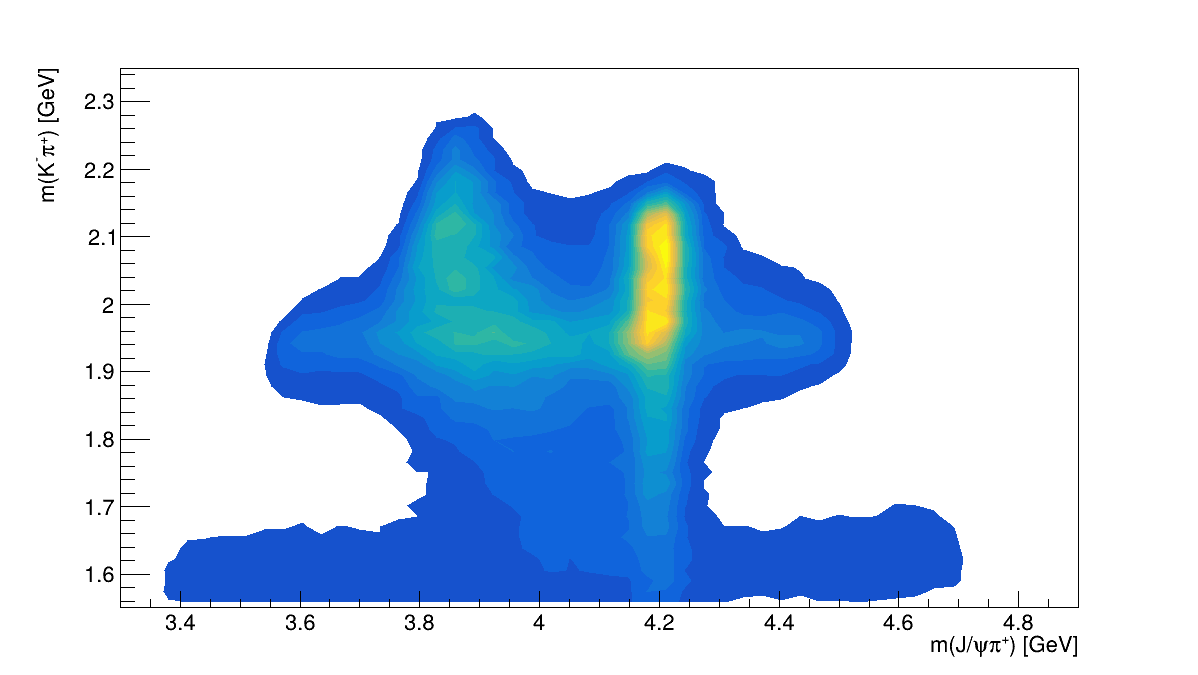
Natural Sci. Rev. 3 100802 (2026) DOI: 10.54546/NaturalSciRev.100802 Physics Mathematical and Computer Sciences DOI: 10.54546/NaturalSciRev.100802 Multivariate amplitude analysis of the cascade particle decays based on the Nearest Neighbors fitting The Nearest Neighbors estimation of likelihood is implemented for the multivariate amplitude analysis of the cascades of particle decays. In this approach Monte Carlo simulated events that are used to describe data are assigned weights dependent on the parameters of the theoretical fitting model. Each of such weighted events is considered as contributing to N-dimensional probability density function (p.d.f.) in its neighborhood in the parameter space. No analytic p.d.f. or cpu-intensive re-generation of N-dimensional p.d.f. at each fit step are required. The method allows accurate accounting for reconstruction effects, demands modest cpu resources and can be effectively multi-threaded. General setup of the fit as well as toy example of the amplitude analysis of B-meson decays are demonstrated. I. V. Yeletskikh, A. O. Vasyukov 13.08.2026
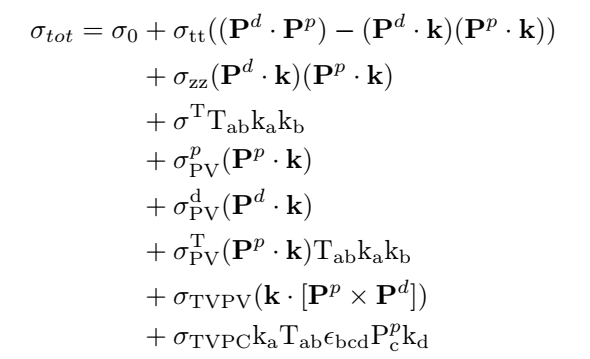
Natural Sci. Rev. 3 200802 (2026) DOI: 10.54546/NaturalSciRev.200802 70th anniversary of JINR DOI: 10.54546/NaturalSciRev.200802 Fresh look at polarized deuterons at the Nuclotron/NICA & HIAF and beyond Being a spin-1 particle, the deuteron, when polarized, offers access to a wide range of interesting tensor observables. A quest for tensor asymmetries is at the heart of the spin physics with polarized deuterons at future colliders, and calls for frequent tensor polarization flips in storage rings or in deuterium targets. Here we focus on the JEDI developed technique of the Fourier analysis of the horizontal polarization oscillations under continuous radiofrequency-driven spin flips. The generated in this way time-stamped oscillating helicity of stored particles paves the way to the nucleon/nucleus spin structure studies and to the search for the parity violation. Simultaneously, a whole set of tensor spin asymmetries, including the off-diagonal ones needed for searches for the T-violation beyond the Standard Model, will be produced. A crucial ingredient is a long polarization lifetime, and we report the first analytic treatment of decoherence of the tensor polarization under continuous radiofrequency spin flips. Our principal conclusion is that at low- and intermediate-energy accelerators the deuteron polarization lifetime could be in the ballpark of several hours, making the oscillating polarization approach viable at the Nuclotron/NICA and HIAF. We comment on a utility of the flattop spin-tensor dichroism via oscillations in the cross section of interaction of deuterons in the internal target as a monitor of the tensor polarization. Simultaneously, the dichroism effect can be used for measuring the spin precession frequences and as a comagnetometer to synchronize spin phases of colliding bunches in a collider. Corrected: 11 August 2026 (Eq. (28) was revised; typos and grammar were corrected) B. Gou, V. P. Ladygin, N. N. Nikolaev, F. Rathmann, A. J. Silenko, Yu. N. Uzikov 11.08.2026
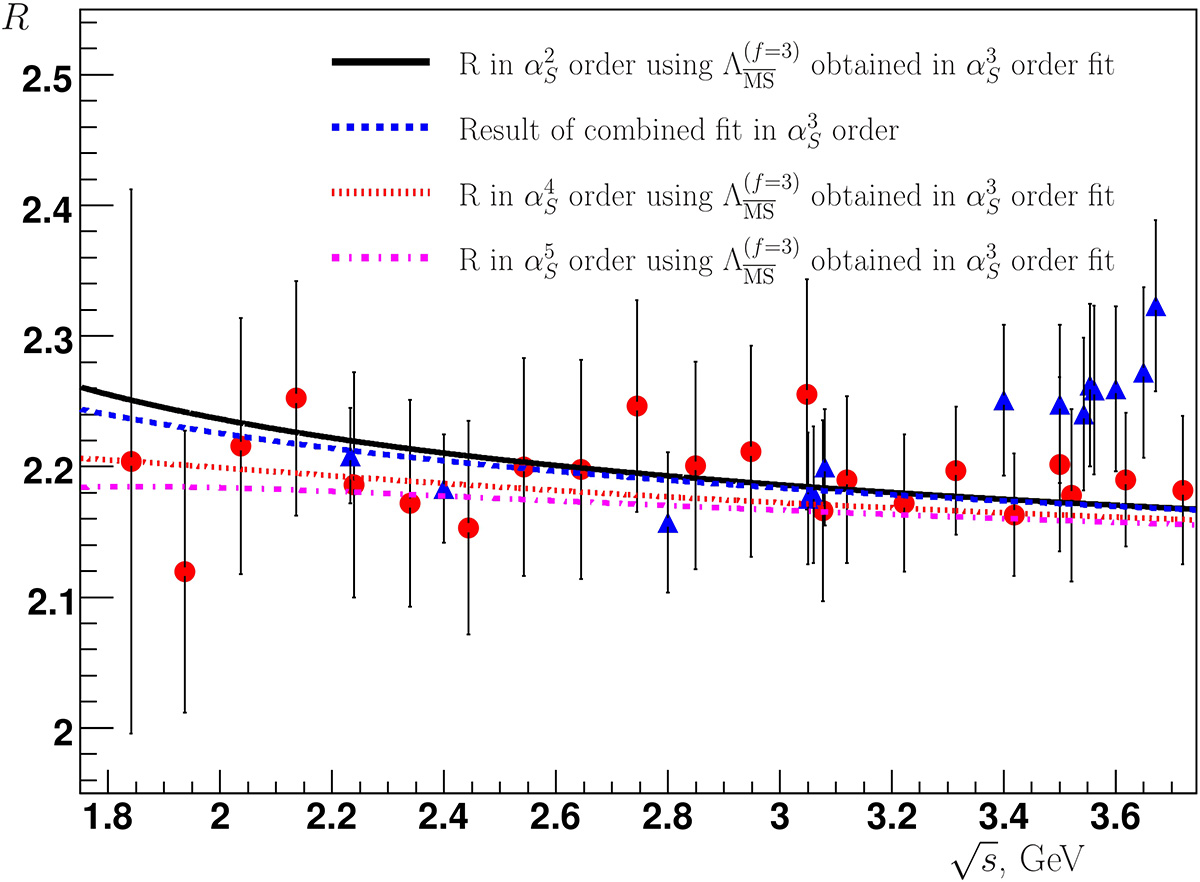
Natural Sci. Rev. 3 100801 (2026) DOI: 10.54546/NaturalSciRev.100801 Physics DOI: 10.54546/NaturalSciRev.100801 Perturbative QCD fitting of KEDR and BESIII ℯ+ℯ- data for R(s) and αs determination The experimental data collected by KEDR and BESIII collaborations at the energies below charm quark thresholds are compared with the massless QCD expressions for the \(e^+e^-\) annihilation R-ratio truncated at different orders of perturbation theory. The fits demonstrate the dependence of the extracted \(\alpha_s(M_Z)\) values on the orders of truncation of the corresponding approximations. The next-to-leading order, next-to-next-to-leading order and next-to-next-to-next-to-leading order fits of the combined KEDR data and BESIII data , truncated at the scale of mass of \(J/\Psi\) meson, give the following results \(\alpha_s(M_Z)=0.1151_{-0.0069}^{+0.0052}\), \(\alpha_s(M_Z)=0.1190_{-0.0081}^{+0.0064}\) and \(\alpha_s(M_Z)=0.1283_{-0.0075}^{+0.0028}\). The increasing tendency of fitted \(\alpha_s(M_Z)\) value is associated with the effects of not totally controlled within asymptotic perturbation theory expansions kinematical \(\pi^2\) contributions to R-ratio coefficients due to analytical continuation from the space-like to time-like energy regions. The applications of the fixed orders of perturbation theory expansions and careful treatment of the analytical continuation effects are commented. Corrected: 28 July 2026 (changes have been made in Eqs. (12)–(14) and an expression has been added after them) A. L. Kataev, K. Yu. Todyshev 28.07.2026
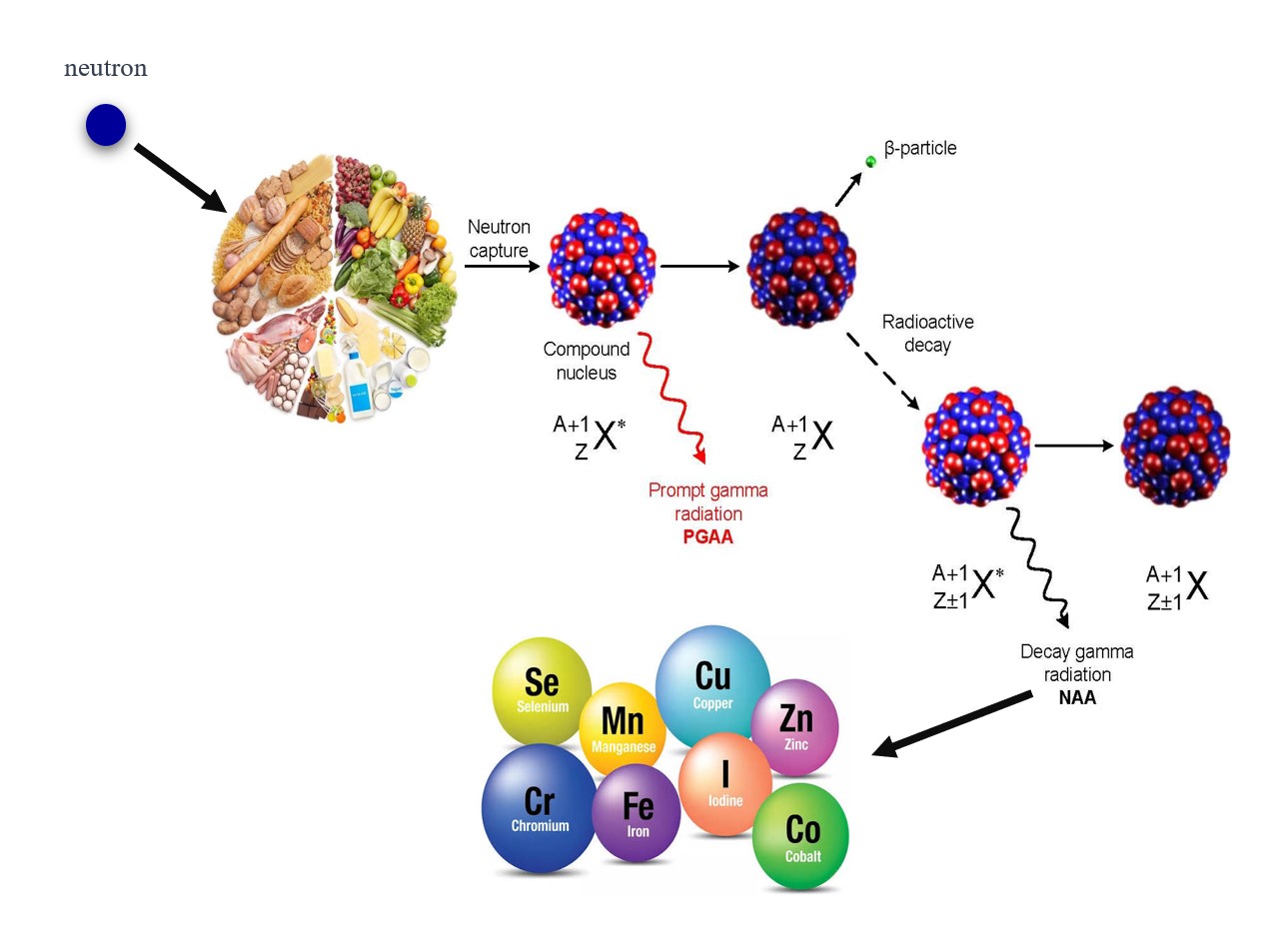
Natural Sci. Rev. 3 200801 (2026) DOI: 10.54546/NaturalSciRev.200801 Earth and Environmental Sciences DOI: 10.54546/NaturalSciRev.200801 Trace element analysis in food and beverages by neutronactivation analysis: A review of fundamentals,performance, and practical utility As a high-priority issue for sustainable global development, food security requires attention to both the quantity and quality of food. Trace elements pose a complex challenge for food security in this context; they can be beneficial as essential micronutrients or harmful as toxic contaminants that compromise food safety and public health. Consequently, advanced analytical tools, particularly elemental analysis, are employed to verify food quality, authenticity, and traceability. Since its first application in 1936 neutron activation analysis has proven to be a powerful analytical technique for determining the elemental composition of a wide variety of samples. The method's widespread adoption is due to its numerous benefits, including its multi-element character, non-destructive nature, high sensitivity and precision, ultra-low detection limits, and simple sample preparation. These advantages have led to its use in critical fields such as food safety, agriculture, and environmental monitoring. The paper provides an introduction to the biological role and toxicity of trace elements, discusses the fundamental principles, strengths, and limitations of neutron activation analysis, and presents an overview of NAA applications in food analysis, along with a summary of key findings. Inga Zinicovscaia, Dmitrii Grozdov 13.07.2026