Vol. 3 No. 7 (2026): Natural Sci. Rev.
Logo
Vol. 3 No. 7 (2026): Natural Sci. Rev.

Vol. 3 No. 7 (2026)

April — June 2026

Natural Sci. Rev. 3 100704 (2026) DOI: 10.54546/NaturalSciRev.100704
cover
Physics
DOI: 10.54546/NaturalSciRev.100704

Temperature-dependent conformational changes of amyloid-β42 in DPPC bilayers

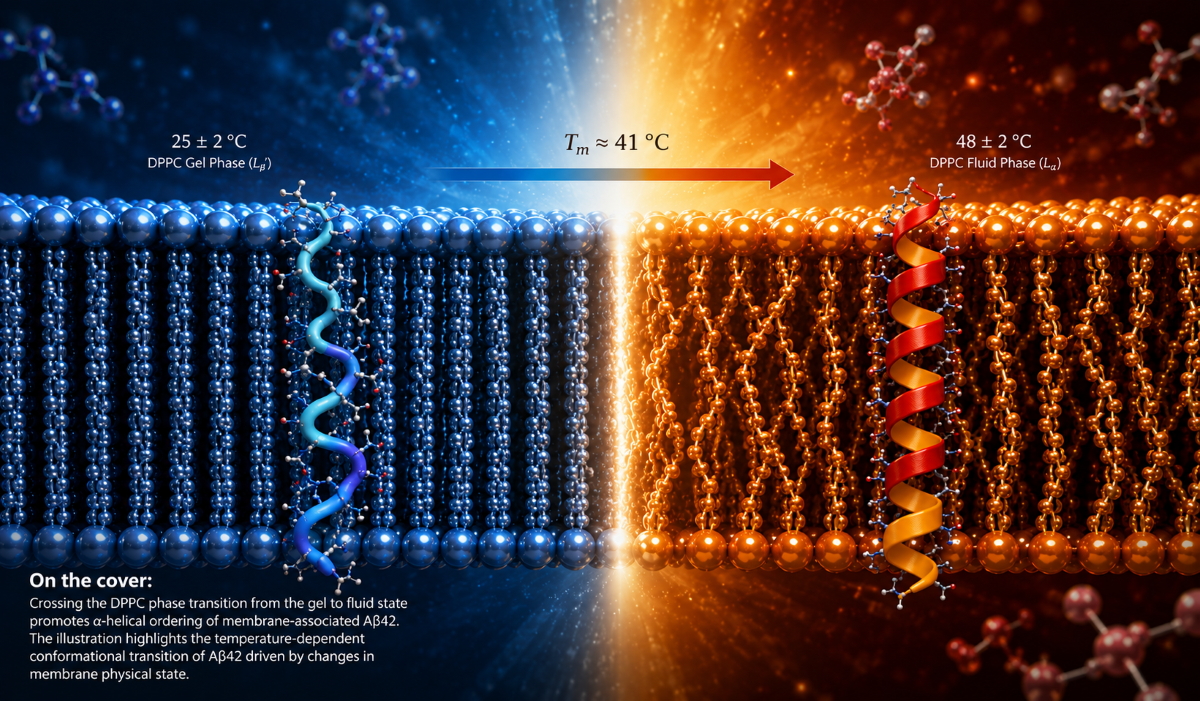
The conformational behavior of the amyloid- β 42 (A β 42) peptide is strongly influenced by the physical state of its surrounding lipid environment. The effect of temperature on the A β 42 structure within dipalmitoylphosphatidylcholine (DPPC) bilayers was investigated using circular dichroism (CD), Raman spectroscopy, and molecular dynamics (MD) simulations. The study examined two thermal phases: room temperature (RT =∼ (25±2)◦C), corresponding to the gel phase of DPPC, and (48±2)◦C, representing the fluid phase above the lipid transition temperature . The CD spectroscopy measurements indicated a clear temperature-dependent structural transition of the peptide. At RT, A β 42 exhibited a conformation enriched in β structures, while at (48±2)◦C, the spectra revealed a notable increase in α -helical content, reflecting enhanced backbone organization under fluid-phase conditions. Raman spectral analysis supported this trend by demonstrating an increased contribution of α -helical components accompanied by a reduction in β -strand features upon heating. Minor variations in lipid vibrational markers further suggested greater acyl-chain flexibility and bilayer fluidity in the high-temperature state. Furthermore, MD simulations revealed enhanced α-helical content and deeper peptide insertion within the disordered bilayer compared with the ordered gel phase. The findings from experimental and computational investigations demonstrate that membrane fluidization above the DPPC phase transition favors α-helical stabilization of A β 42, emphasizing temperature as a key parameter governing peptide–lipid conformational equilibria. The results obtained provide a fundamental framework for understanding how thermal conditions modulate amyloid-membrane interactions, which is essential for elucidating the early molecular events associated with amyloid-related pathologies.
Khlood A. A. Abdeljawaad, Yersultan Arynbek , Kahramon Mamatkulov, Huy Le Duc, Grigory Arzumanyan
Natural Sci. Rev. 3 200708 (2026) DOI: 10.54546/NaturalSciRev.200708
cover
Physics 70th anniversary of JINR
DOI: 10.54546/NaturalSciRev.200708

Searching for Light Dark Matter and Dark Sectors with the NA64 experiment at the CERN SPS: et al.

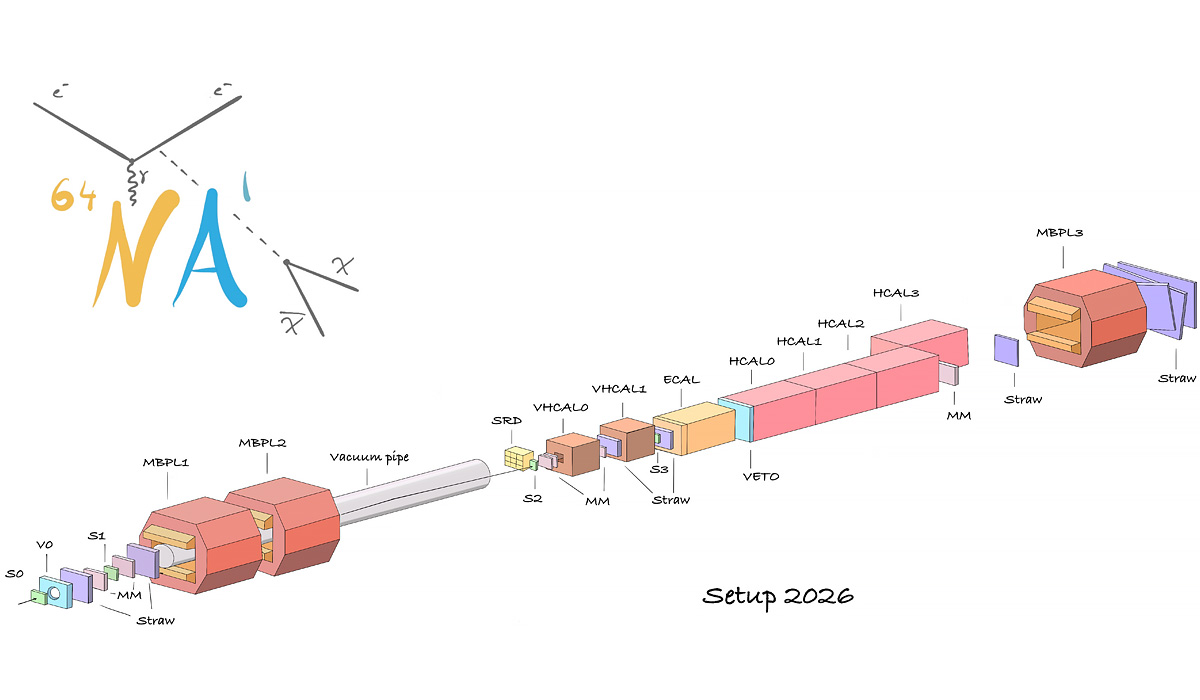
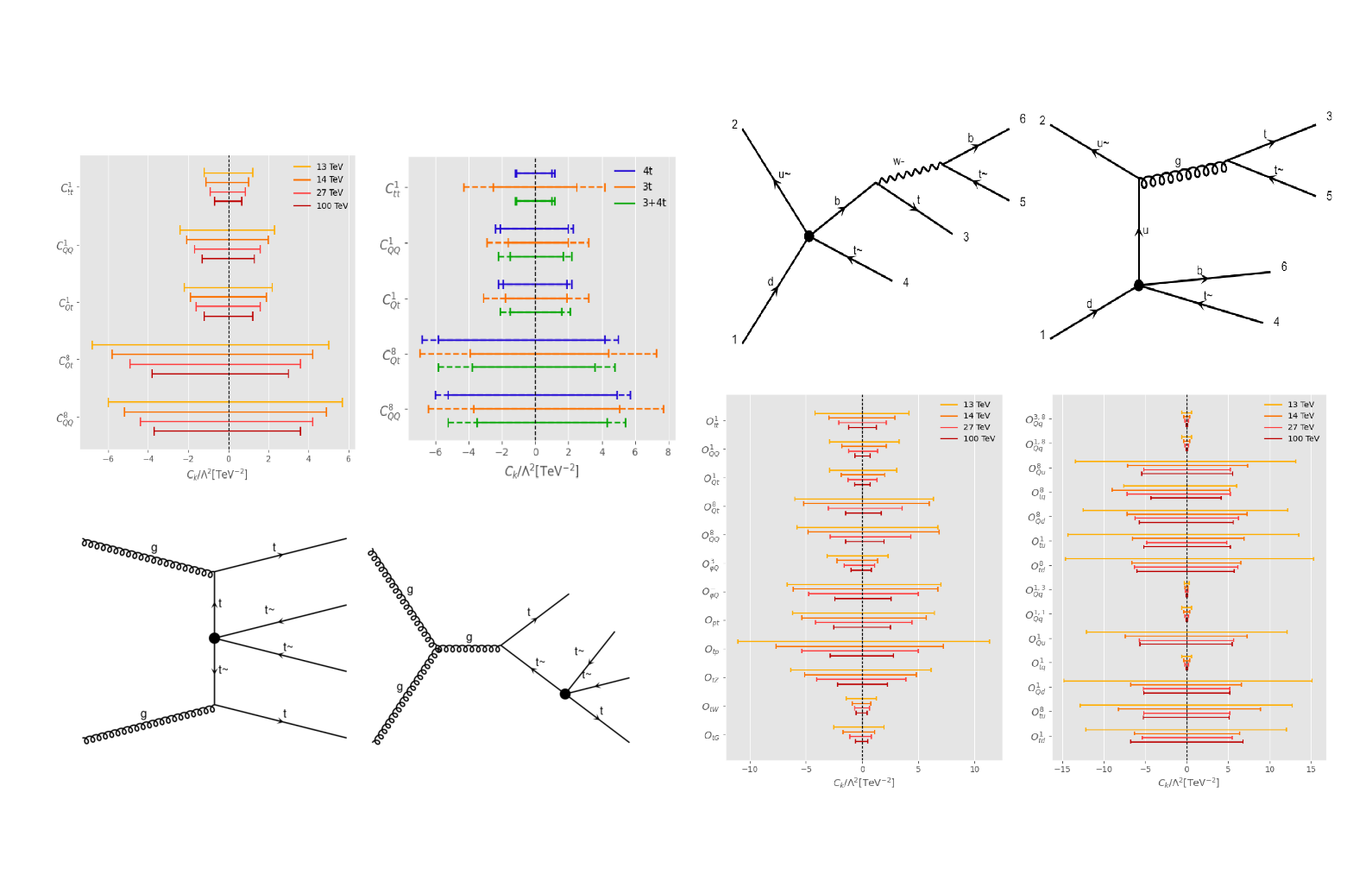
Since its approval in 2016, NA64 has pioneered Light Dark Matter (LDM) searches with electron [1], positron [2], muon [3], and hadron [4] beams. The experiment has successfully met its primary objectives, as outlined in the EPPS input (2018), and even exceed them producing results that demonstrate its ability to operate in a near background-free environment. The Physics Beyond Collider (PBC) initiative at CERN recognizes NA64’s contributions as complementary and worthy of continued exploration. Its key advantage over beam dump approaches is that the signal rate scales as (coupling) 2 rather than (coupling) 4 , reducing the required beam particles for the same sensitivity. To fully exploit the NA64 physics potential, an upgrade during LS3 will enable NA64 to run in background-free mode at higher SPS beam rates. Planned upgrades include (a) improved detector hermeticity with a new veto hadron calorimeter, (b) enhanced particle identification with a synchrotron radiation detector, and (c) increased beam rates via upgraded electronics. With the recently strengthened NA64 collaboration, stable operations and timely data analysis are planned for LHC Run 4. The expected ∼ 10 13 electrons, ∼ 10 11 positrons (40 and 60 GeV), and ∼ 2×10 13 muons on target will allow NA64 to explore new light dark matter regions, with the potential for discovery or conclusive exclusion of many well-motivated LDM models.
Yu. M. Andreev, A. Antonov, M. A. Ayala Torres, D. Banerjee, B. Banto Oberhauser, V. Bautin, J. Bernhard, P. Bisio, A. Celentano, N. Charitonidis, P. Crivelli, A. V. Dermenev, S. V. Donskov, R. R. Dusaev, V. N. Frolov, S. V. Gertsenberger, S. Girod, S. N. Gninenko, A. V. Ivanov, Y. Kambar, A. E. Karneyeu, G. Kekelidze, B. Ketzer, D. V. Kirpichnikov, M. M. Kirsanov, V. A. Kramarenko, N. V. Krasnikov, S. V. Kuleshov, V. E. Lyubovitskij, A. Marini, L. Marsicano, V. A. Matveev, R. Mena Fredes, R. Mena Yanssen, L. Molina Bueno, M. Mongillo, D. V. Peshekhonov, V. A. Polyakov, B. Radics, K. Salamatin, V. D. Samoylenko, H. Sieber, D. Shchukin, O. Soto, V. O. Tikhomirov, I. Tlisova, A. N. Toropin, M. Tuzi, P. V. Volkov, I. V. Voronchikhin, J. Zamora-Saá, A. S. Zhevlakov
Natural Sci. Rev. 3 200706 (2026) DOI: 10.54546/NaturalSciRev.200706
cover
Applied Research Chemistry 70th anniversary of JINR
DOI: 10.54546/NaturalSciRev.200706

Controlled immobilization of silver nanoparticles on track-etched membranes

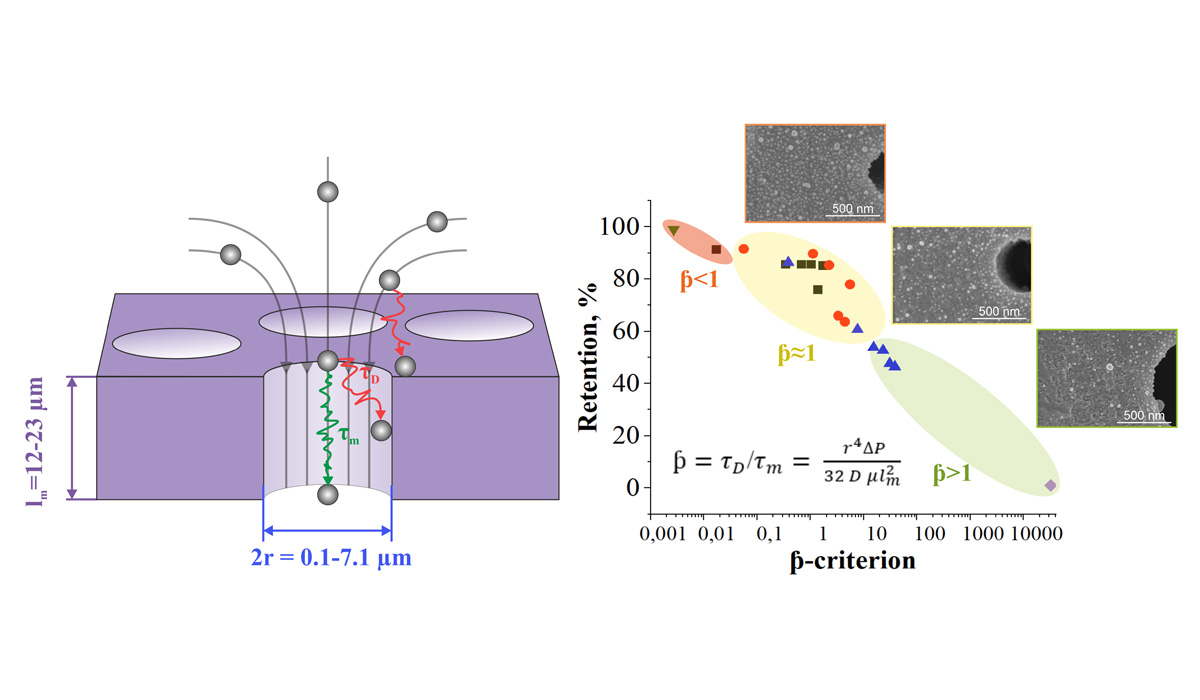
The study of the interaction of colloidal solution components with microfiltration membranes is of continuing interest, both in the development of composite porous materials and in the numerous applications of membranes for separating suspensions. This study investigates the transport of silver nanoparticles through track-etched membranes under conditions where the nanoparticles and the membrane surface possess opposite charges. The objective was to establish patterns of nanoparticle deposition based on the membranes structural parameters and the solution flow rate. A simple criterion was derived to determine nanoparticle retention efficiency by considering convection and diffusion within the pores. This criterion was tested through experiments using polyethylene terephthalate track-etched membranes with pore diameters ranging from 0.1 to 7.1 µm, while the average nanoparticle diameter was 24 nm. By varying the pressure drop, the flow rate of the colloidal solution through the membrane pores was varied. Nanoparticle retention efficiency was determined using optical spectroscopy and energy-dispersive X-ray analysis. The distribution of nanoparticles on the membrane surface was examined using scanning electron microscopy. It was found that the proposed criterion satisfactorily predicts the transition from nearly complete particle retention to complete transmission when key parameters — pore diameter, membrane thickness, and pressure drop — are varied. The obtained results provide insights into the controlled immobilization of nanoparticles on membrane surface, which is essential for creating functional nanocomposite devices, such as sensors.
I. N. Fadeikina, E. V. Andreev, O. V. Kristavchuk, O. L. Orelovich, P. Yu. Apel
Natural Sci. Rev. 3 100702 (2026) DOI: 10.54546/NaturalSciRev.100702
cover
Earth and Environmental Sciences
DOI: 10.54546/NaturalSciRev.100702

High Field Strength Elements distribution in river sediments of Nile (Egypt) and Zarafshon (Tajikistan) as investigated by Instrumental Neutron Activation Analysis

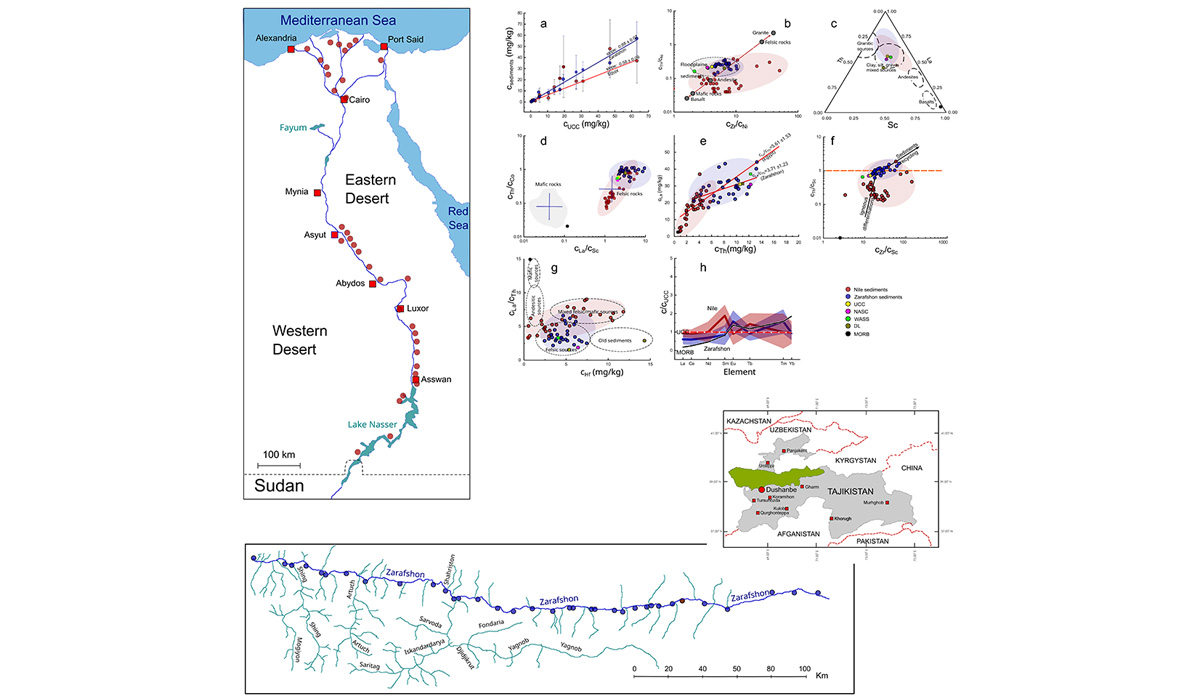
The High Field Strength Elements (HFSE), due to their relatively low mobility in the majority of sedimentary processes, are among the most suitable elements for provenance studies, as they permit collecting information on the parent material. Therefore, the distribution of the mass fractions of two incompatible elements (Co and Ni) and 13 HFSE (Sc, Zr, La, Ce, Nd, Sm, Eu, Tb, Tm, Yb, Hf, Th, and U) in unconsolidated sediments belonging to two different river systems, i.e., the Egyptian sector of the Nile River and the Tadjik sector of the Zarafshon River, evidences similarities and dissimilarities between the sedimentary materials and their correlation with the local geochemistry. The Instrumental Neutron Activation Analysis (INAA) in its Epithermal variant was used. In total, 38 and 29 samples of unconsolidated sediments were collected along the Nile and the Zarafshon rivers. In the great majority, the distribution functions of the mass fractions were not normal, as Shapiro–Wilk, Anderson–Darling, Lilliefors, and Jarque–Bera ANOVA tests proved. More discriminating bi-plots and ternary diagrams permitted a better comparison between the distribution functions of the considered elements. All of them showed, for both types of sedimentary material, a relative similarity with the less recycled felsic type of rocks. Despite this, a further detailed analysis revealed systematic differences between the two sediment categories, suggesting that the Nile sediments have been influenced by the mafic material transported from the basalt-rich plateaus of Ethiopia via the Blue Nile.
O. G. Duliu, W. M. Badawy, D. Abdusamadzoda, D. A. Abdushukurov, M. V. Frontasyeva, I. Zinicovscaia, P. S. Nekhoroshkov, H. El-Samman
Natural Sci. Rev. 3 200702 (2026) DOI: 10.54546/NaturalSciRev.200702
article_cover
Physics 70th anniversary of JINR
DOI: 10.54546/NaturalSciRev.200702

Structural, magnetic states and pressure-induced phenomena in complex nanosized magnetic oxides

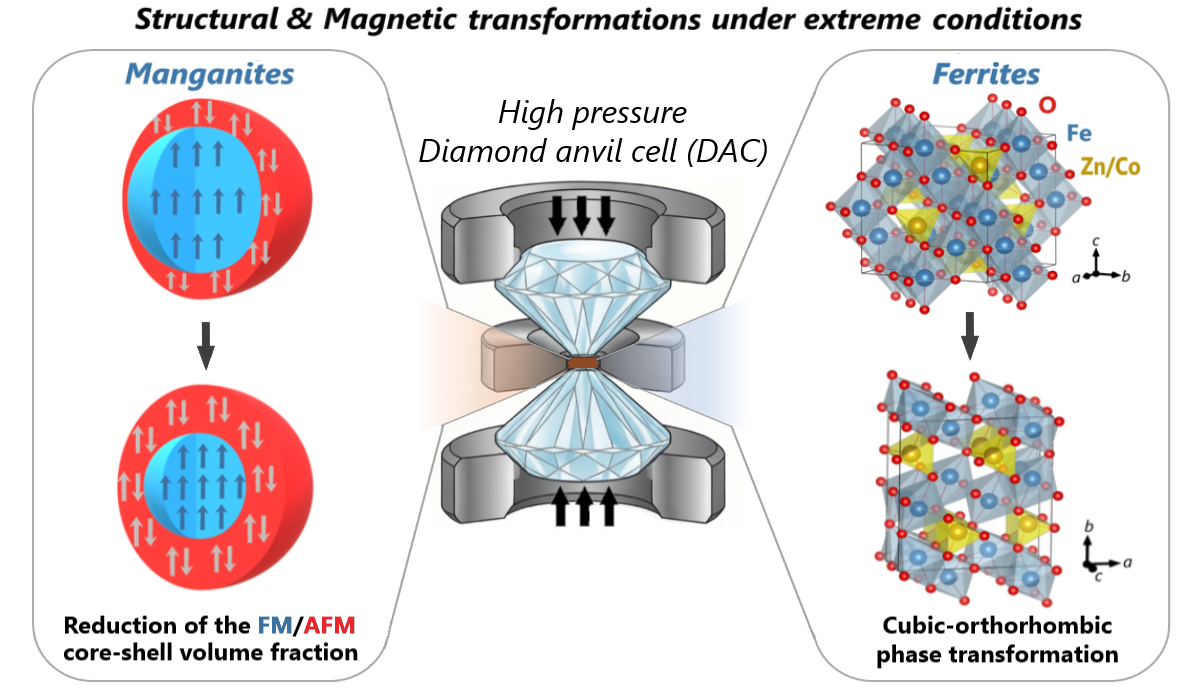
The results of the recent investigations of the crystal and magnetic structure of complex nanosized manganese and iron oxides using neutron diffraction, X-ray diffraction and other techniques over a wide range of thermodynamic parameters (temperature and pressure) are considered. In the nanostructured manganites La 1-x Sr x MnO 3 ( x = 0.28−0.47), the coexistence of the ferromagnetic (FM) and A-type antiferromagnetic (AFM) states has been evidenced, implying the production of core-shell nanoparticles with distinctive structural and magnetic properties of ordering of internal and external components. Application of high pressure significantly modifies the ratio of FM and AFM components. For the nanostructured Zn 0.34 Fe 2.53 O 4 ferrite, a distribution of Zn and Fe atoms in the crystal structure, as well as the parameters of crystal and magnetic structures, have been estimated. The oxygen vacancies were detected and their amount was estimated. The gradual transition of the structural phase from the initial cubic spinel phase to the orthorhombic post spinel phase was observed at high pressures in this material, relevant to CoFe 2 O 4 ferrite. In the latter case, the phase transition is also accompanied by suppression of the ordered magnetic moments. Surprisingly, in the most cases, the properties of structural and magnetic states of the studied nanosized manganites and ferrites are notably different from those for the relevant bulk forms of these materials. The microscopic mechanisms responsible for this distinction have been discussed in detail. Corrected: 24 April 2026 (the incorrect order of the authors and the affiliation of one of them were corrected)
D. P. Kozlenko, N. M. Belozerova, S. E. Kichanov, E. V. Lukin, O. N. Lis, A. V. Rutkauskas, B. N. Savenko, Z. Jirák, G. S. Rymski, A. L. Zhaludkevich, N. T. Dang
Natural Sci. Rev. 3 200701 (2026) DOI: 10.54546/NaturalSciRev.200701
cover
Physics Mathematical and Computer Sciences 70th anniversary of JINR
DOI: 10.54546/NaturalSciRev.200701

Multifunctional Information and Computing Complex of JINR

The Multifunctional Information and Computing Complex (MICC) of the JINR Meshcheryakov Laboratory of Information Technologies (MLIT) is a key element of the JINR network and information and computing infrastructures. The MICC is regarded as JINR’s unique basic facility and plays a decisive role in scientific research, which entails advanced computing power and storage systems. Its uniqueness is ensured by the consolidation of all state-of-the-art information technologies for data processing and storage, united by the network infrastructure with a bandwidth of up to 4 × 100 Gbps. It consists of distributed data processing and storage systems based on both grid and cloud technologies and the hyperconverged computing infrastructure with liquid cooling. Multifunctionality, high reliability, and availability in 24 × 7 × 365 mode, scalability and high performance, information security and an advanced software environment are the main requirements that the MICC meets. The reliability and availability are ensured by the enhanced high-speed telecommunication system and the modern local network infrastructure, as well as by the reliable engineering infrastructure that provides guaranteed power supply and cooling for server hardware. This infrastructure is a staple for computing the experiments at the NICA accelerator complex. The BM@N, MPD, and SPD experiments intensively use all computational components and storage systems. Being part of the Worldwide LHC Computing Grid, the MICC serves as the Tier1 grid site for the CMS experiment at the LHC and as the Tier2 grid site that provides support for the experiments at the LHC and other world’s large-scale experiments in high-energy physics. The integrated cloud environment of the JINR Member States focuses on supporting users and experiments in Russia, China, the USA, etc. (e.g., NICA, NOvA, BaikalGVD, JUNO). The HybriLIT platform comprising the Govorun supercomputer provides capabilities for elaborating mathematical models and algorithms and performing resource-intensive computations, including on graphics accelerators that enable the development of the ecosystem for machine and deep learning tasks, Big Data analysis, and quantum computing on simulators.
A. I. Balandin, N. A. Balashov, O. Yu. Derenovskaya, A. G. Dolbilov, A. P. Gavrish, A. O. Golunov, N. I. Gromova, A. V. Evlanov, I. A. Kashunin, V. V. Korenkov, N. A. Kutovskiy, V. V. Mitsyn, A. N. Moibenko, I. S. Pelevanyuk, D. V. Podgainy, O. I. Streltsova, S. V. Shmatov, T. A. Strizh, V. V. Trofimov, A. S. Vorontsov, N. N. Voytishin, M. I. Zuev


OTHER JOURNAL ISSUES