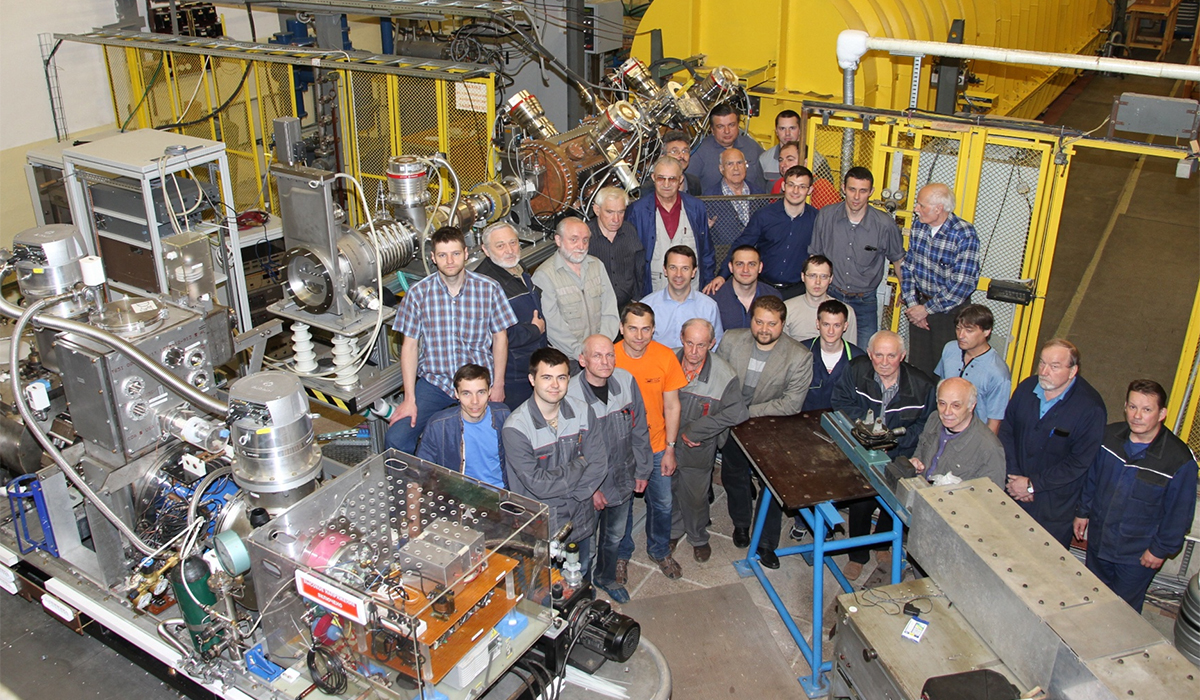
Natural Sci. Rev. 3 200608 (2026) DOI: 10.54546/NaturalSciRev.200608 Physics 70th anniversary of JINR DOI: 10.54546/NaturalSciRev.200608 Synchrophasotron and Nuclotron Equipment for Investigation of Polarization Phenomena The development of the unique cryogenic source of polarized deuterons, POLARIS, in the late 1970s was very fruitful and significantly enhanced JINR’s instrumental base for studies of nucleon-nucleon interactions as well as interactions of lightest nuclei with heavier nuclei. Experimental data on polarization-dependent effects, obtained at the Synchrophasotron and the Nuclotron, significantly influenced the worldwide understanding of strong interactions between hadrons as well as the structure of lightest nuclei (the deuteron, first of all) at short inter-nucleon distances. Experiments with polarized deuteron, proton and neutron beams at intermediate (several GeV) energies resulted in creation of wide collaborations between VBLHEP of JINR and other world centers (in the USSR and Russia, France, the USA, Germany, Japan, China). Many new and unexpected experimental results were obtained by those collaborations. In particular, many new unique results were obtained for the nucleon electromagnetic formfactors of nucleons, thanks to results of works within the ALPOM/ALPOM2 project. In addition, new ways became opened for experimental investigations with polarized 3 He beams. In this direction, new unique results were obtained. The necessary developments of the techniques for the spin program at the Nuclotron/NICA are discussed in the paper. V. Fimushkin, N. Piskunov, E. Strokovsky, V. Ladygin, Yu. Filatov, E. Syresin 20.03.2026
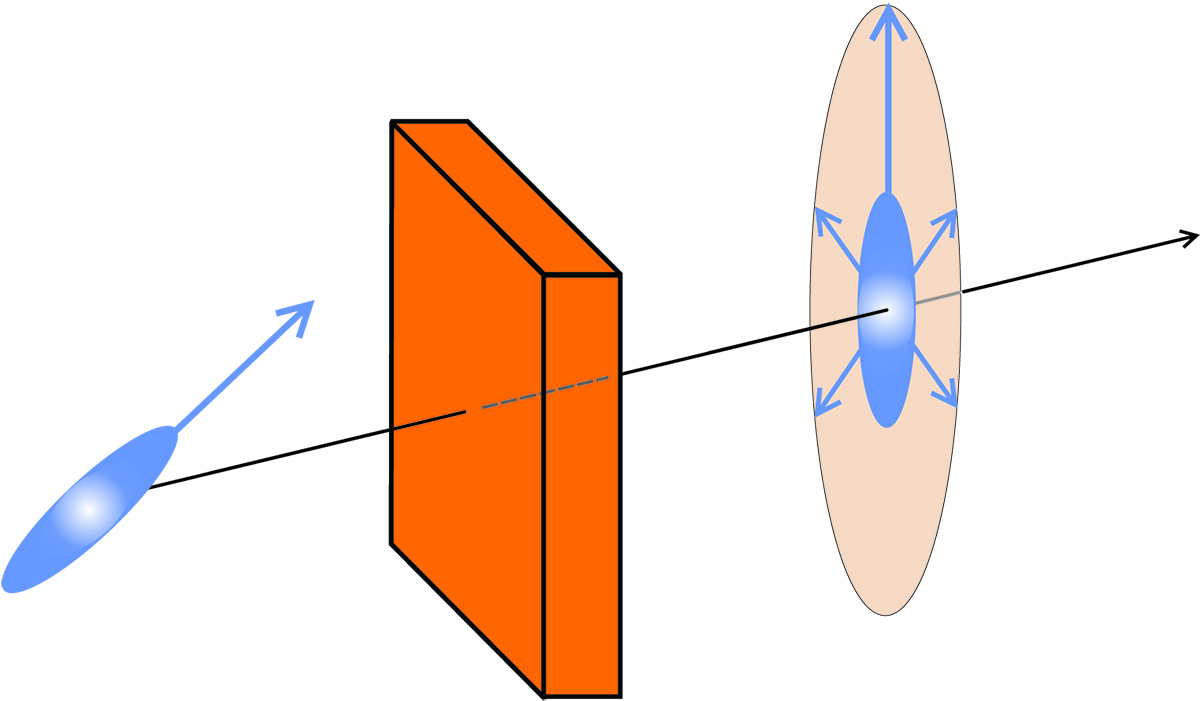
Natural Sci. Rev. 3 200607 (2026) DOI: 10.54546/NaturalSciRev.200607 Physics 70th anniversary of JINR DOI: 10.54546/NaturalSciRev.200607 High Energy Nuclear Optics of polarized nucleons and nuclei: research at the Nuclotron-M/NICA complex Refracton of particles (nucleons, nuclei, γ -quanta) in matter with polarized protons (nuclei) results in revealing coherent quasi-optical phenomenon of nuclear spin precession of particles (nuclei) in the pseudomagnetic field of matter with polarized spins and the phenomenon of birefringence of particles (nuclei) with spin S ⩾ 1. These phenomena can be observed and studied at the Nuclotron-M/NICA complex. The similar effects for γ -quanta could be observed at the LINAC accelerator.Quasi-optical coherent phenomena of spin rotation and dichroism are not caused by strong interactions only, the T-odd P-odd, T-odd P-even, and T-even P-odd interactions also contribute. Limits on the values of these contributions at the energies available at the Nuclotron-M/NICA complex can be obtained by investigating all these phenomena. When studying polarized particle collisions, it is necessary to consider possible influences of quasi-optical phenomena of spin rotation and spin dichroism caused by nuclear precession and birefringence. V. G. Baryshevsky 13.03.2026
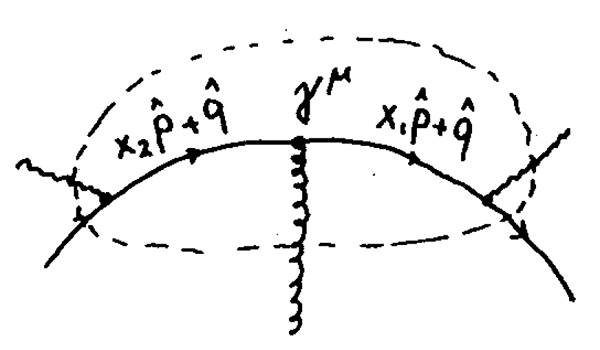
Natural Sci. Rev. 3 200606 (2026) DOI: 10.54546/NaturalSciRev.200606 70th anniversary of JINR DOI: 10.54546/NaturalSciRev.200606 Spin Phenomena in Quantum Chromodynamics The theory of spin effects (with the particular emphasis on T-odd ones) in QCD and its development in JINR is reviewed, including some personal recollections on the joint work with A.V. Efremov. The analysis of the sources of imaginary phases and respective cuts in hadronic kinematic variables leads to the effective character (non-universality) of T-odd distribution functions, contrary to universality of T-odd fragmentation functions. In particular, the model calculations of DIS with explicit T-violations can be used to predict the oscillations of T-odd polarizing fragmentation function. The comparison of polarization effects in hadronic and heavy-ion collisions is addressed. O. V. Teryaev 12.03.2026
Natural Sci. Rev. 3 200605 (2026) DOI: 10.54546/NaturalSciRev.200605 70th anniversary of JINR DOI: 10.54546/NaturalSciRev.200605 Computational schemes based on the continuous analogue of Newton’s method in the numerical study of complex physical systems at JINR The Continuous analogue of Newton's method (CANM), developed at JINR since the 1970s, is one of most important areas of research at Laboratory of Computing Techniques (LCTA) -- Meshcheryakov Laboratory of Information Technologies (MLIT). CANM and its generalization are powerful tools for the effective numerical solution of nonlinear problems within a wide range of complex physical systems studied at JINR. This review article provides a general framework for the CANM-based approach, the main stages in the development and applications of CANM for solving various types of nonlinear problems that have been on the agenda in different years. The results of the development and application of CANM-based iterative methods, obtained over the past 20 years, are presented in more detail. Corrected: 17 March 2026 (the revision date was initially misspelled ( 17 January 2026), the correct spelling is 17 February 2026; the acceptance date was initially misspelled ( 26 January 2026), the correct spelling is 26 February 2026). Elena V. Zemlyanaya, Ochbadrakh Chuluunbaatar 17.03.2026
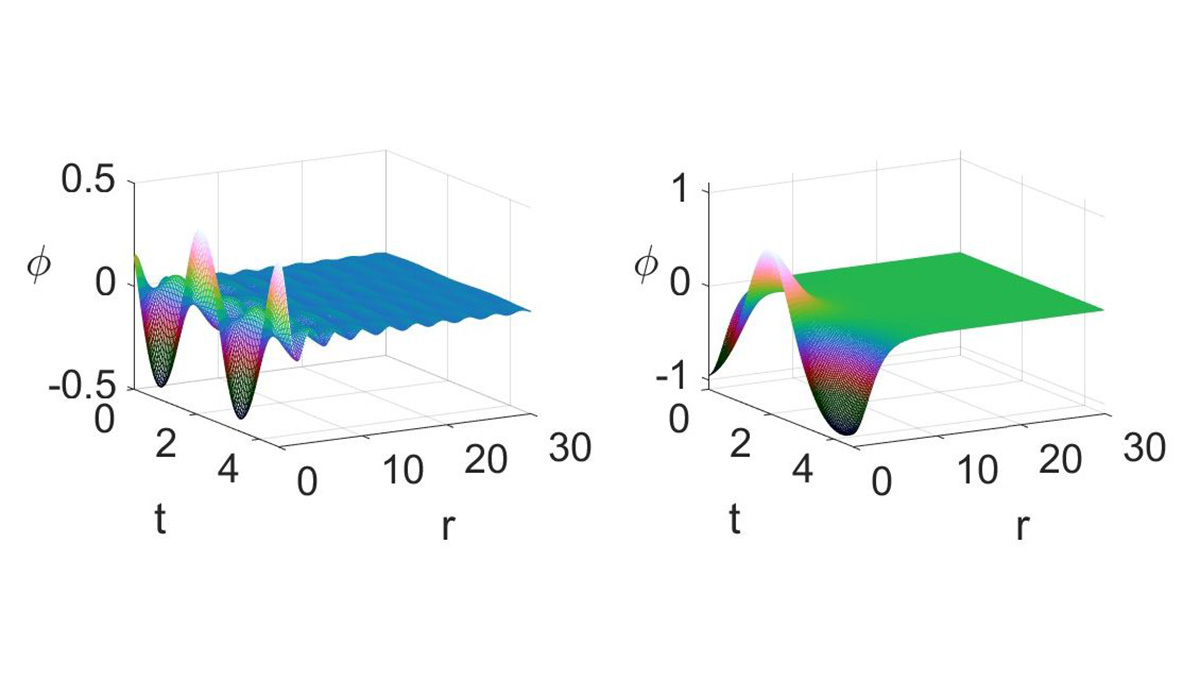
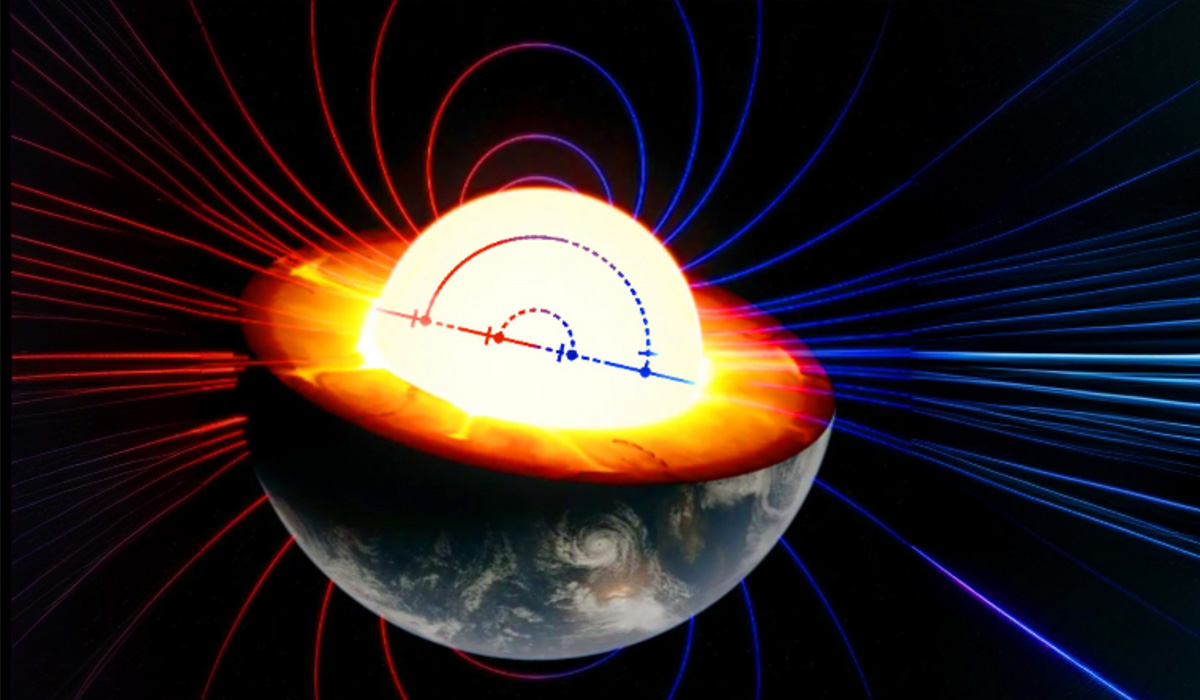
Natural Sci. Rev. 3 200604 (2026) DOI: 10.54546/NaturalSciRev.200604 Historical / Anniversary Reviews 70th anniversary of JINR DOI: 10.54546/NaturalSciRev.200604 Statistical field theory of forced magnetohydrodynamic turbulence We review the results of applying the statistical field-theoretic approach to the problem of fully developed turbulence in nonrelativistic three-dimensional magnetohydrodynamics (MHD), which have been obtained over the past forty years. The review covers both general aspects of the physics of MHD turbulence and the necessary mathematical machinery of statistical field theory, including elements of renormalization theory and the renormalization-group (RG) method. The approach is illustrated using a stochastic model of stationary, locally homogeneous, fully developed three-dimensional MHD turbulence in the general case of a medium with broken spatial parity (helical MHD). In this model, RG techniques make it possible to establish the existence of several infrared-stable scaling regimes and to calculate the critical dimensions of various composite operators, the infrared asymptotics of correlation functions, and the amplitude factors in scaling laws, as well as to incorporate the effects of compressibility, anisotropy, etc. For an important class of helical MHD systems, the field-theoretic approach provides an elegant formulation of the fundamental problem of large-scale turbulent dynamo action — namely, the generation of a large-scale magnetic field ⟨ b ⟩ = B (where b denotes magnetic fluctuations) at the expense of the energy of turbulent fluctuations — via the decay of the initial unstable vacuum state ⟨ b ⟩ = 0 as a result of dynamical spontaneous symmetry breaking in the spirit of the Coleman-Weinberg mechanism, followed by stabilization of the theory in the vicinity of the new ground state ⟨ b ⟩ = B (the dynamo regime). The field-theoretic formulation we developed, together with a generalization of the standard Feynman diagrammatic technique to the dynamo regime, not only makes it possible to treat within a unified framework the existing theoretical approaches to helical magnetohydrodynamics (kinematic MHD, large-scale dynamo theory), but also extends the RG formalism to the dynamo regime, which — unlike closure procedures still common in dynamo theory — is particularly well suited for studying statistically stationary turbulent states. The richness of MHD physics in the dynamo regime is illustrated both in the emergence of new effects (Goldstone-type corrections to Alfvén waves, anisotropic corrections associated with the transport of the large-scale field) and in the theoretically predicted strong dependence of the magnetic energy-spectrum slope on the degree of mirror-symmetry breaking. M. Hnatič, T. Lučivjanský, L. Mižišin, Yu. Molotkov, A. Ovsiannikov 11.03.2026
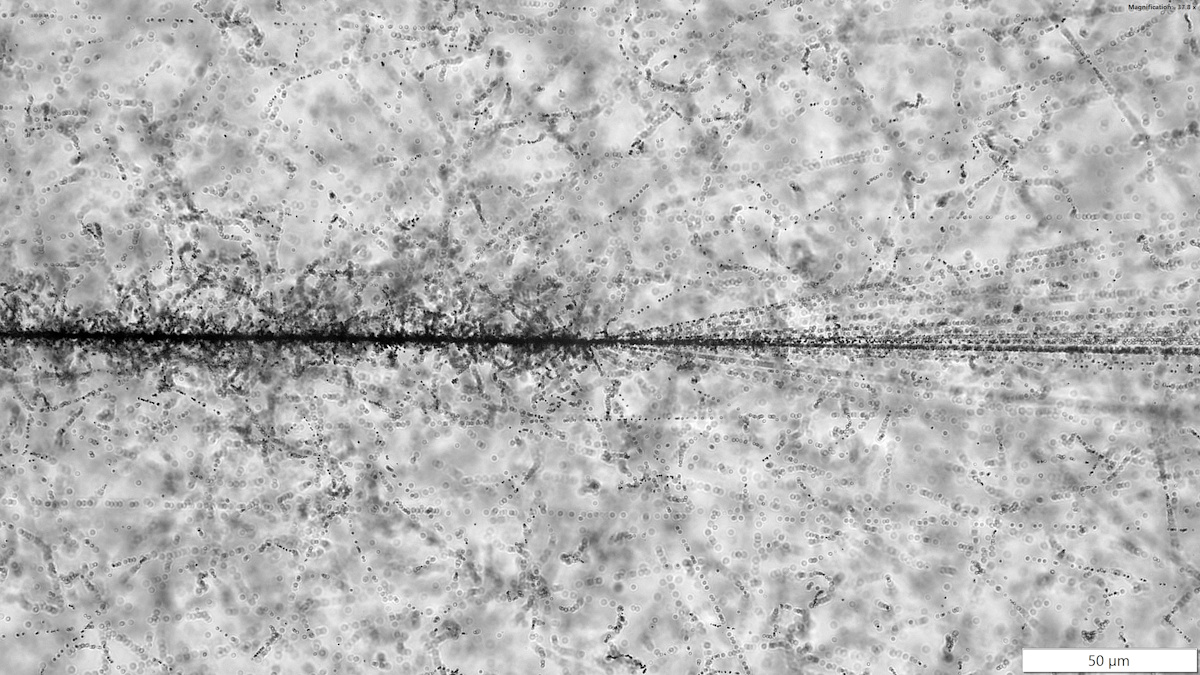
Natural Sci. Rev. 3 200603 (2026) DOI: 10.54546/NaturalSciRev.200603 Physics 70th anniversary of JINR DOI: 10.54546/NaturalSciRev.200603 The 8Be nucleus and the Hoyle state in dissociation of relativistic nuclei Having become observable since the pioneering era of cosmic ray physics fragmentation, the events of relativistic nuclei in nuclear emulsions highlight the potential of this method to study extremely cold ensembles of H and He nuclei, thereby advancing the physics of nuclear clustering and, potentially, expanding nuclear astrophysics. Following the presentation of the progress of this method and orientation to the current problems, this review presents the key results and generalizations of the BECQUEREL experiment at JINR, obtained in the study of unstable nuclear states in the relativistic dissociation of a wide variety of nuclei. The productivity of this method is ensured by record-breaking spatial resolution and full sensitivity to relativistic fragments. According to invariant masses based on the most accurate measurements of emission angles in the extremely narrow fragmentation cone, the contributions of the decays of 8 Be(0 + ), 8 Be(2 + ), 9 Be(1.7), 9 B, 6 Be, 12 С(0 + 2 ) or the Hoyle state and 12 C(3 – ) have been identified now. The increase in the contribution of 8 Be(0 + ) with the multiplicity of accompanying α-particles, followed by 9 B and 12 C(0 + 2 ), has been established. The structure of these states and the diversity of parent nuclei without the influence of the initial energy assume the coalescence of α-particles and nucleons which appear in dissociation. The initial density and duration of the secondary interaction of the latter may be sufficient up to the lowest-energy fusion reactions. Such a scenario requires low-energy physics concepts to interpret the relativistic fragmentation. The usage of automated microscopy for the analysis of irradiation beams from the JINR NICA accelerator complex becomes a modern basis to apply the nuclear emulsion method which has become fundamental in the physics of the micro-world. Denis Artemenkov, Andrei Zaitsev, Pavel Zarubin 11.03.2026
Natural Sci. Rev. 3 100602 (2026) DOI: 10.54546/NaturalSciRev.100602 Physics DOI: 10.54546/NaturalSciRev.100602 Optical transmittance of silica aerogel This paper presents the investigation of aerogel Cherenkov radiation detectors and the optical characterization of aerogel samples within the framework of the SPD experiment at the NICA accelerator complex, which is under construction at the Joint Institute for Nuclear Research (Dubna, Russia). The transmittance of aerogel samples was measured at the A. Alikhanyan National Science Laboratory (AANL) (Yerevan Physics Institute). Longitudinal transmittance measurements were performed for two distinct aerogel samples. Data analysis and visualization of results were carried out using the OriginPro 8.5 and ROOT software packages. The obtained results were compared with analogous studies performed at other research centers in order to evaluate the reliability, consistency and accuracy of the measurements. Argine Hakobyan, Arthur Mkrtchyan, Diana Khurshudyan 04.03.2026
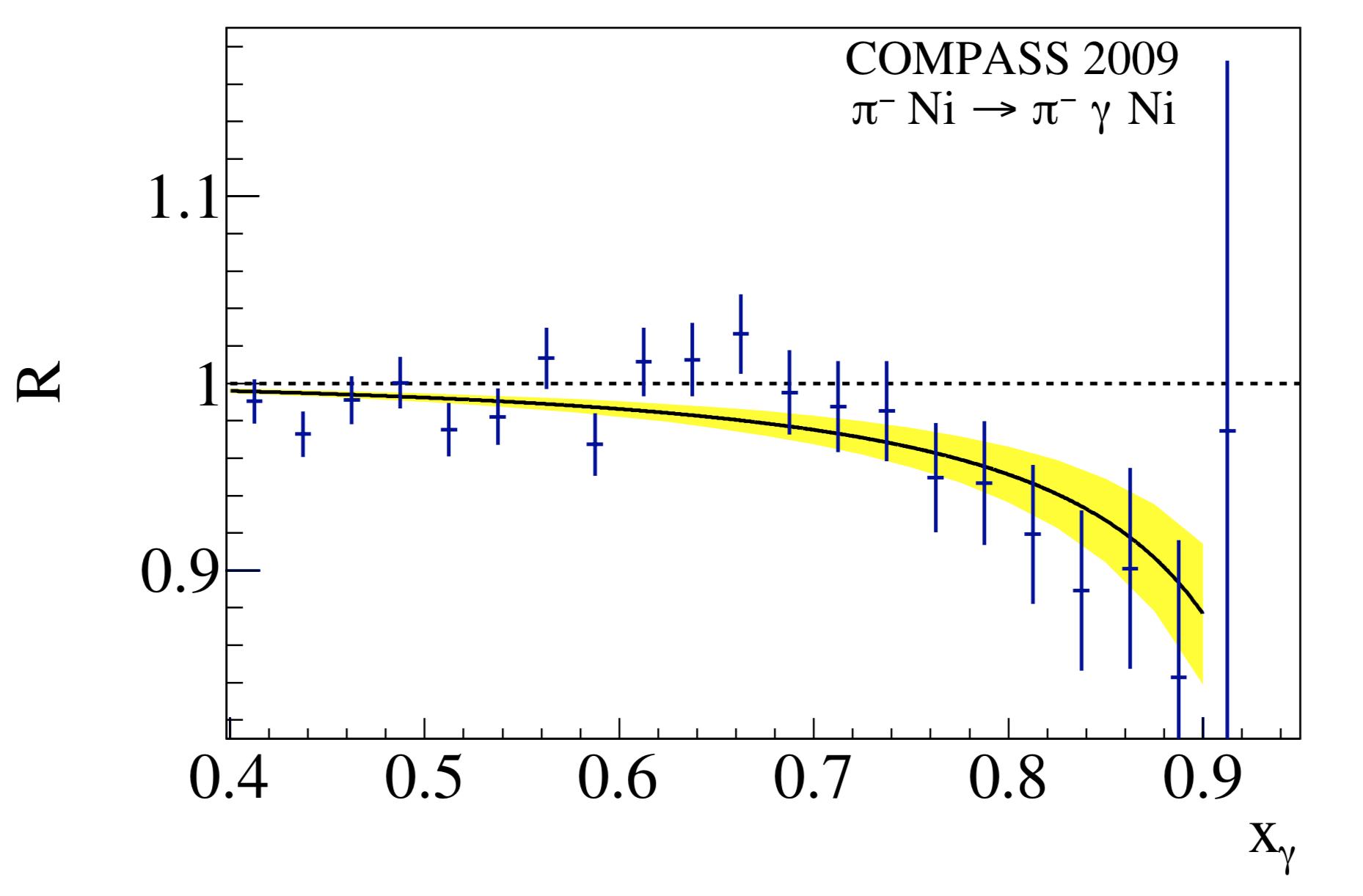
Natural Sci. Rev. 3 200602 (2026) DOI: 10.54546/NaturalSciRev.200602 Physics 70th anniversary of JINR DOI: 10.54546/NaturalSciRev.200602 Study of low-energy QCD in meson reactions with the Coulomb field of atomic nuclei This paper reviews the development of theoretical and experimental studies of low-energy QCD parameters starting from early investigations at the JINR Laboratory of Theoretical Physics and ending with modern measurements at CERN. We summarize the historical background and the pioneering theoretical approaches used at JINR to calculate meson parameters in various hadronic models which have laid the foundation for the experimental proposal to investigate the pion polarizability via radiative scattering off nuclei. The first observation of the Compton effect on the pion and the first measurements of the charged pion polarizability and the γ → 3 π constant performed with the U-70 accelerator are discussed as key milestones enabling quantitative studies of the meson structure and highlighting their impact on the low-energy QCD phenomenology. Continued advances in theoretical predictions have underscored the need for higher-precision experimental data and motivated new measurements carried out with pion beams in the COMPASS experiment at CERN. Finally, we outline the prospects for future studies within the AMBER experiment where kaon beams will enable a precision determination of kaon polarizabilities and related low-energy constants further advancing our understanding of dynamics of the strong interaction. A. Guskov, A. Maltsev, A. Olshevskiy 27.02.2026
Natural Sci. Rev. 3 200601 (2026) DOI: 10.54546/NaturalSciRev.200601 Physics Historical / Anniversary Reviews 70th anniversary of JINR DOI: 10.54546/NaturalSciRev.200601 ZFITTER: Theoretical calculations and precision tests of the Standard Model The development of the ZFITTER computer code is described in the context of high-precision tests of the Standard Model during the LEP era. The features of the code that allowed it to become a standard tool for the theoretical interpretation of electroweak observables are analyzed. Prospects for further development of ZFITTER and its contribution to research projects at future electron–positron colliders are discussed. Numerical illustrations are provided of the effects of parameter shifts and the addition of new results for higher-order radiative corrections. A. B. Arbuzov, Dr. L.V. Kalinovskaya, A. G. Olshevskiy, V. L. Yermolchyk 18.02.2026
Natural Sci. Rev. 3 100601 (2026) DOI: 10.54546/NaturalSciRev.100601 Earth and Environmental Sciences DOI: 10.54546/NaturalSciRev.100601 A research synthesis on heavy metals as emerging atmospheric pollutants: a systematic review and bibliometric analysis (1973-2024) Atmospheric heavy metals are persistent, bioaccumulative, and toxic pollutants capable of long-range transport, posing significant ecological and public health risks. This review synthesizes five decades of research (1973–2024) on emission sources, transport mechanisms, deposition pathways, and monitoring approaches, supported by a bibliometric analysis of 1642 Scopus-indexed articles. Anthropogenic activities, including industrial operations, mining and smelting, vehicular emissions, and agricultural inputs, remain dominant contributors, while volcanic eruptions, geothermal activity, sea-spray aerosols, and soil-dust resuspension constitute important natural sources. Once emitted, metals associate with particulate matter (e.g., PM 2.5 , PM 10 ), undergo atmospheric circulation, and are deposited through dry and wet processes, enabling transfer from urban centers to agricultural systems and remote environments. Urban areas exhibit the highest deposition loads, agricultural landscapes show substantial foliar uptake, and remote ecosystems display clear signatures of transboundary transport. Advances in analytical and biomonitoring techniques, including Atomic Absorption Spectroscopy, Inductively Coupled Plasma Mass Spectrometry, X-Ray Fluorescence, and moss-based bioindicators, have improved detection sensitivity. Mosses enhance sensitivity by acting as natural, long-term integrators of atmospheric deposition: their high surface-area-to-mass ratio, absence of cuticles and root systems, and direct uptake from precipitation and aerosols enable efficient accumulation of trace metals, revealing low-level and chronic deposition signals often missed by short-term instrumental air sampling. Bibliometric results reveal exponential growth in publications and strong collaboration networks centered in Asia, Europe, and North America, with underrepresentation in Africa, South America, and Central Asia. Key research gaps include limited long-term health assessments; insufficient real-time and low-cost monitoring technologies; low-resolution source apportionment; and minimal attention to emerging contaminants globally. W. Sawangproh, C. Phaenark, A. Bridhikitti 12.02.2026