

Аннотация
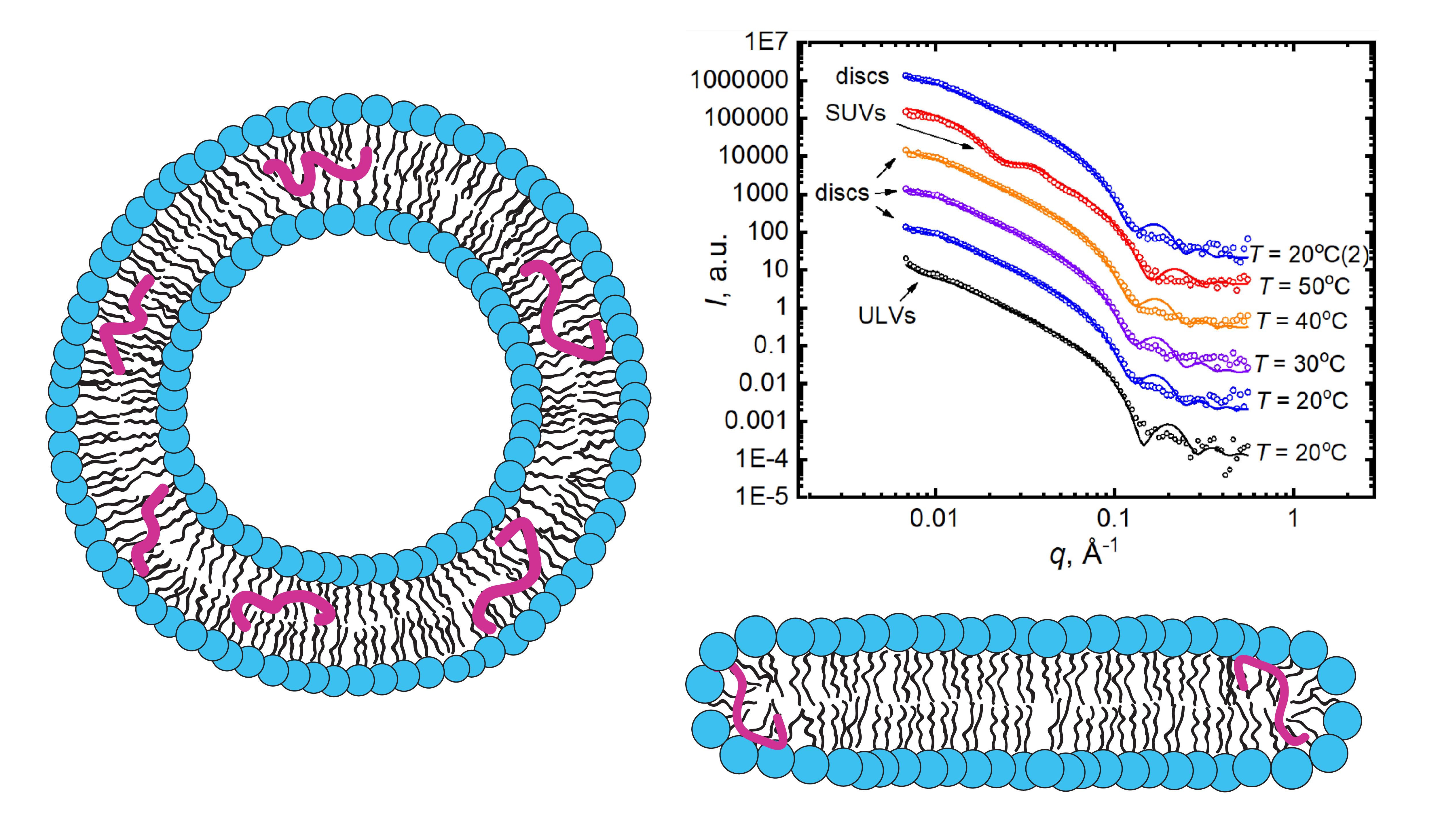
Предполагается, что бета-амилоидный пептид (Аβ-пептид) играет центральную роль в возникновении болезни Альцгеймера (БА). Эта патология связана с быстрым накоплением нейротоксичных амилоидных агрегатов в тканях мозга, хотя основы прогрессирования заболевания остаются неразрешенными. Отмечено, что доклиническая стадия БА может играть решающую роль в дальнейшем необратимом развитии болезни. В частности, взаимодействия между липидными мембранами и молекулами Аβ-пептида, встроенного в мембрану в относительно низких концентрациях, должны находиться под пристальным вниманием исследователей. В этом обзоре мы обсуждаем недавние работы, посвященные изучению липид-пептидных взаимодействий, с акцентом на вызванную пептидом Аβ(25-35) реорганизацию липидных мембран в условиях, имитирующих доклиническую стадию БА. Предполагается, что наблюдаемые взаимодействия важны для понимания механизмов деструктивного воздействия Аβ-пептида на липидные мембраны и последующего возникновения заболевания. Методы прикладной ядерной физики оказались чрезвычайно актуальными в таких исследованиях. Методы рассеяния предоставили инструментальную информацию на уровне надмолекулярных агрегатов, в то время как спектроскопия позволила получить информацию на молекулярном уровне. Наконец, компьютерное моделирование методом молекулярной динамики предоставило детали, недостижимые экспериментальными подходами, хотя в ключевой роли последних невозможно усомниться. Таким образом, последние достижения в исследованиях доказывают, что эти взаимодополняющие подходы являются наиболее подходящими для решения сложных проблем во взаимодействиях биомембран.
Поддерживающие организации
Библиографические ссылки
[1] M. A. DeTure, D. W. Dickson, The neuropathological diagnosis of Alzheimer’s disease, MolecularNeurodegeneration 14 (2019).https://doi.org/10.1186/s13024-019-0333-5.
[2] C. P. Ferri, M. Prince, C. Brayne, H. Brodaty, L. Fratiglioni, M. Ganguli, K. Hall, K. Hasegawa,H. Hendrie, Y. Huang, A. Jorm, C. Mathers, P. R. Menezes, E. Rimmer, M. Scazufca, Globalprevalence of dementia: A Delphi consensus study, The Lancet 366 (2005) 2112–2117.https://doi.org/10.1016/S0140-6736(05)67889-0.
[3] P. T. Francis, A. M. Palmer, M. Snape, G. K. Wilcock, The cholinergic hypothesis of Alzheimer’sdisease: A review of progress, Journal of Neurology, Neurosurgery & Psychiatry 66 (1999).https://doi.org/10.1136/jnnp.66.2.137.
[4] B. Frost, R. L. Jacks, M. I. Diamond, Propagation of tau misfolding from the outside to theinside of a cell, Journal of Biological Chemistry 284 (2009) 12845–12852.https://doi.org/10.1074/jbc.M808759200.
[5] J. A. Hardy, G. A. Higgins, Alzheimer’s disease: The amyloid cascade hypothesis, Science 256(1992) 184–185.https://doi.org/doi:10.1126/science.1566067.
[6] J. Hardy, D. Allsop, Amyloid deposition as the central event in the aetiology of Alzheimer’sdisease, Trends in Pharmacological Sciences 12 (1991) 383–388.https://doi.org/10.1016/0165-6147(91)90609-V.
[7] Y. Yang, D. Arseni, W. Zhang, M. Huang, S. L ̈ovestam, M. Schweighauser, A. Kotecha,A. G. Murzin, S. Y. Peak-Chew, J. Macdonald, I. Lavenir, H. J. Garringer, E. Gelpi, K. L. Newell,G. G. Kovacs, R. Vidal, B. Ghetti, B. Ryskeldi-Falcon, S. H. W. Scheres, M. Goedert, Cryo-EM structures of amyloid-β42 filaments from human brains, Science 375 (2022) 167–172.https://doi.org/10.1126/science.abm7285.
[8] Y. Yang, A. G. Murzin, S. Peak-Chew, C. Franco, H. J. Garringer, K. L. Newell, B. Ghetti,M. Goedert, S. H. W. Scheres, Cryo-EM structures of Aβ40 filaments from the leptomeningesof individuals with Alzheimer’s disease and cerebral amyloid angiopathy, Acta NeuropathologicaCommunications 11 (2023) 191.https://doi.org/10.1186/s40478-023-01694-8
[9] M. Kollmer, W. Close, L. Funk, J. Rasmussen, A. Bsoul, A. Schierhorn, M. Schmidt, C. J. Sigurd-son, M. Jucker, M. F ̈andrich, Cryo-EM structure and polymorphism of Aβamyloid fibrils purifiedfrom Alzheimer’s brain tissue, Nature Communications 10 (2019) 4760.https://doi.org/10.1038/s41467-019-12683-8.
[10] P. B. Pfeiffer, M. Ugrina, N. Schwierz, C. J. Sigurdson, M. Schmidt, M. F ̈andrich, Cryo-EManalysis of the effect of seeding with brain-derived Aβamyloid fibrils, Journal of MolecularBiology 436 (2024) 168422.https://doi.org/10.1016/j.jmb.2023.168422.
[11] B. Frieg, M. Han, K. Giller, C. Dienemann, D. Riedel, S. Becker, L. B. Andreas, C. Griesinger,G. F. Schr ̈oder, Cryo-EM structures of lipidic fibrils of amyloid-β(1–40), Nature Communications15 (2024) 1297.https://doi.org/10.1038/s41467-023-43822-x.
[12] L. Gremer, D. Sch ̈olzel, C. Schenk, E. Reinartz, J. Labahn, R. B. G. Ravelli, M. Tusche, C. Lopez-Iglesias, W. Hoyer, H. Heise, D. Willbold, G. F. Schr ̈oder, Fibril structure of amyloid-β(1–42)by cryo-electron microscopy, Science 358 (2017) 116–119.https://doi.org/10.1126/science.aao2825.
[13] M. P. Lambert, A. K. Barlow, B. A. Chromy, C. Edwards, R. Freed, M. Liosatos, T. E. Mor-gan, I. Rozovsky, B. Trommer, K. L. Viola, P. Wals, C. Zhang, C. E. Finch, G. A. Krafft,W. L. Klein, Diffusible, nonfibrillar ligands derived from Aβ1−42are potent central nervoussystem neurotoxins, Proceedings of the National Academy of Sciences 95 (1998) 6448–6453.https://doi.org/10.1073/pnas.95.11.6448.
[14] U. Sengupta, A. N. Nilson, R. Kayed, The role of amyloid-βoligomers in toxicity, propagation,and immunotherapy, eBioMedicine 6 (2016) 42–49.https://doi.org/10.1016/j.ebiom.2016.03.035.
[15] E. Y. Hayden, D. B. Teplow, Amyloidβ-protein oligomers and Alzheimer’s disease, Alzheimer’sResearch & Therapy 5 (2013) 60.https://doi.org/10.1186/alzrt226.
[16] S. Ghosh, R. Ali, S. Verma, Aβ-oligomers: A potential therapeutic target for Alzheimer’s disease,International Journal of Biological Macromolecules 239 (2023) 124231.https://doi.org/10.1016/j.ijbiomac.2023.124231.
[17] U. C. M ̈uller, T. Deller, M. Korte, Not just amyloid: Physiological functions of the amyloidprecursor protein family, Nature Reviews Neuroscience 18 (2017) 281–298.https://doi.org/10.1038/nrn.2017.29.
[18] G. Thinakaran, E. H. Koo, Amyloid precursor protein trafficking, processing, and function,Journal of Biological Chemistry 283 (2008) 29615–29619.https://doi.org/10.1074/jbc.R800019200.
[19] A. Martel, L. Antony, Y. Gerelli, L. Porcar, A. Fluitt, K. Hoffmann, I. Kiesel, M. Vivaudou,G. Fragneto, J. J. de Pablo, Membrane permeation versus amyloidogenicity: A multitechniquestudy of islet amyloid polypeptide interaction with model membranes, Journal of the AmericanChemical Society 139 (2017) 137–148.https://doi.org/10.1021/jacs.6b06985.
[20] T. Kubo, S. Nishimura, Y. Kumagae, I. Kaneko, In vivo conversion of racemizedβ-amyloid([D-Ser 26]Aβ1–40) to truncated and toxic fragments ([D-Ser 26]Aβ25–35/40) and fragmentpresence in the brains of Alzheimer’s patients, Journal of Neuroscience Research 70 (2002) 474–483.https://doi.org/10.1002/jnr.10391.
[21] G.-f. Chen, T.-H. Xu, Y. Yan, Y.-R. Zhou, Y. Jiang, K. Melcher, H. E. Xu, Amyloid beta:Structure, biology and structure-based therapeutic development, Acta Pharmacologica Sinica 38(2017) 1205–1235.https://doi.org/10.1038/aps.2017.28.
[22] L. Millucci, R. Raggiaschi, D. Franceschini, G. Terstappen, A. Santucci, Rapid aggregation andassembly in aqueous solution of Aβ(25–35) peptide, Journal of Biosciences 34 (2009) 293–303.https://doi.org/10.1007/s12038-009-0033-3.
[23] A. Cardinale, M. Racaniello, S. Saladini, G. De Chiara, C. Mollinari, M. C. de Stefano,M. Pocchiari, E. Garaci, D. Merlo, Sublethal doses ofβ-amyloid peptide abrogate DNA-dependent protein kinase activity, Journal of Biological Chemistry 287 (2012) 2618–2631.https://doi.org/10.1074/jbc.M111.276550.
[24] R. L. Frozza, A. P. Horn, J. B. Hoppe, F. Sim ̃ao, D. Gerhardt, R. A. Comiran, C. G. Sal-bego, A comparative study ofβ-amyloid peptides Aβ1–42 and Aβ25–35 toxicity in organotypichippocampal slice cultures, Neurochemical Research 34 (2009) 295–303.https://doi.org/10.1007/s11064-008-9776-8.
[25] R. Ren, Y. Zhang, B. Li, Y. Wu, B. Li, Effect ofβ-amyloid (25–35) on mitochondrial function andexpression of mitochondrial permeability transition pore proteins in rat hippocampal neurons,Journal of Cellular Biochemistry 112 (2011) 1450–1457.https://doi.org/10.1002/jcb.23062.
[26] J. Kang, H.-G. Lemaire, A. Unterbeck, J. M. Salbaum, C. L. Masters, K.-H. Grzeschik,G. Multhaup, K. Beyreuther, B. M ̈uller-Hill, The precursor of Alzheimer’s disease amyloid A4protein resembles a cell-surface receptor, Nature 325 (1987) 733–736.https://doi.org/10.1038/325733a0.
[27] L. Millucci, L. Ghezzi, G. Bernardini, A. Santucci, Conformations and biological activities ofamyloid beta peptide 25–35, Current Protein & Peptide Science 11 (2010) 54–67.http://dx.doi.org/10.2174/138920310790274626.
[28] C. J. Pike, D. Burdick, A. J. Walencewicz, C. G. Glabe, C. W. Cotman, Neurodegenerationinduced by beta-amyloid peptides in vitro: The role of peptide assembly state, The Journal ofNeuroscience 13 (1993) 1676.https://doi.org/10.1523/JNEUROSCI.13-04-01676.1993.
[29] M. Naldi, J. Fiori, M. Pistolozzi, A. F. Drake, C. Bertucci, R. Wu, K. Mlynarczyk, S. Filipek,A. De Simone, V. Andrisano, Amyloidβ-peptide 25–35 self-assembly and its inhibition: A modelundecapeptide system to gain atomistic and secondary structure details of the Alzheimer’s diseaseprocess and treatment, ACS Chemical Neuroscience 3 (2012) 952–962.https://doi.org/10.1021/cn3000982.
[30] J. Liu, J. Yang, Mitochondria-associated membranes: A hub for neurodegenerative diseases,Biomedicine & Pharmacotherapy 149 (2022) 112890.https://doi.org/10.1016/j.biopha.2022.112890.
[31] M. F. M. Sciacca, C. La Rosa, D. Milardi, Amyloid-mediated mechanisms of membrane disrup-tion, Biophysica 1 (2021) 137–156.https://doi.org/10.3390/biophysica1020011.
[32] J. M. Sanderson, The association of lipids with amyloid fibrils, Journal of Biological Chemistry298 (2022).https://doi.org/10.1016/j.jbc.2022.102108.
[33] T. Heimburg, Mechanical aspects of membrane thermodynamics. Estimation of the mechanicalproperties of lipid membranes close to the chain melting transition from calorimetry, Biochimicaet Biophysica Acta (BBA) — Biomembranes 1415 (1998) 147–162.https://doi.org/10.1016/S0005-2736(98)00189-8.
[34] M. R. Krause, S. L. Regen, The structural role of cholesterol in cell membranes: From condensedbilayers to lipid rafts, Accounts of Chemical Research 47 (2014) 3512–3521.https://doi.org/10.1021/ar500260t.
[35] E. Drolle, N. Kuˇcerka, M. I. Hoopes, Y. Choi, J. Katsaras, M. Karttunen, Z. Leonenko, Effectof melatonin and cholesterol on the structure of DOPC and DPPC membranes, Biochimica etBiophysica Acta (BBA) — Biomembranes 1828 (2013) 2247–2254.https://doi.org/10.1016/j.bbamem.2013.05.015.
[36] T. Kondela, E. Dushanov, M. Vorobyeva, K. Mamatkulov, E. Drolle, D. Soloviov, P. Hrubovˇc ́ak,K. Kholmurodov, G. Arzumanyan, Z. Leonenko, N. Kuˇcerka, Investigating the competitive effectsof cholesterol and melatonin in model lipid membranes, Biochimica et Biophysica Acta (BBA) —Biomembranes 1863 (2021) 183651.https://doi.org/10.1016/j.bbamem.2021.183651.
[37] D. Uhr ́ıkov ́a, N. Kuˇcerka, J. Teixeira, V. Gordeliy, P. Balgavy, Structural changes in dipalmi-toylphosphatidylcholine bilayer promoted by Ca2+ions: A small-angle neutron scattering study,Chemistry and Physics of Lipids 155 (2008) 80–89.https://doi.org/10.1016/j.chemphyslip.2008.07.010.
[38] N. Kuˇcerka, E. Ermakova, E. Dushanov, K. T. Kholmurodov, S. Kurakin, K.ˇZelinsk ́a,D. Uhr ́ıkov ́a, Cation–zwitterionic lipid interactions are affected by the lateral area per lipid,Langmuir 37 (2021) 278–288.https://doi.org/10.1021/acs.langmuir.0c02876.
[39] H. Binder, O. Zschornig, The effect of metal cations on the phase behavior and hydrationcharacteristics of phospholipid membranes, Chemistry and Physics of Lipids 115 (2002) 39–61.https://doi.org/10.1016/s0009-3084(02)00005-1
[40] H.-T. Cheng, Megha, E. London, Preparation and properties of asymmetric vesicles that mimiccell membranes, Journal of Biological Chemistry 284 (2009) 6079–6092.https://doi.org/10.1074/jbc.M806077200.
[41] T. Hornemann, Mini review: Lipids in peripheral nerve disorders, Neuroscience Letters 740(2021) 135455.https://doi.org/10.1016/j.neulet.2020.135455.
[42] P. R. Cullis, M. J. Hope, Chapter 1: Physical properties and functional roles of lipids in mem-branes, in: D. E. Vance, J. E. Vance (Eds.), New Comprehensive Biochemistry, Elsevier, 1991,pp. 1–41.https://doi.org/10.1016/S0167-7306(08)60329-4.
[43] M. S ̈oderberg, C. Edlund, K. Kristensson, G. Dallner, Fatty acid composition of brain phos-pholipids in aging and in Alzheimer’s disease, Lipids 26 (1991) 421–425.https://doi.org/10.1007/bf02536067.
[44] M. Mart ́ınez, I. Mougan, Fatty acid composition of human brain phospholipids during normaldevelopment, Journal of Neurochemistry 71 (1998) 2528–2533.https://doi.org/10.1046/j.1471-4159.1998.71062528.x.
[45] M. Neuringer, G. J. Anderson, W. E. Connor, The essentiality of N-3 fatty acids for the de-velopment and function of the retina and brain, Annual Review of Nutrition 8 (1988) 517–541.https://doi.org/10.1146/annurev.nu.08.070188.002505.
[46] Z. Z. Guan, M. S ̈oderberg, P. Sindelar, C. Edlund, Content and fatty acid composition of cardi-olipin in the brain of patients with Alzheimer’s disease, Neurochemistry International 25 (1994)295–300.https://doi.org/10.1016/0197-0186(94)90073-6.
[47] Y.-C. Kao, P.-C. Ho, Y.-K. Tu, I.-M. Jou, K.-J. Tsai, Lipids and Alzheimer’s disease, Interna-tional Journal of Molecular Sciences 21 (2020) 1505.https://doi.org/10.3390/ijms21041505.
[48] K. Simons, D. Toomre, Lipid rafts and signal transduction, Nature Reviews Molecular CellBiology 1 (2000) 31–39.https://doi.org/10.1038/35036052.
[49] C. Fabiani, S. S. Antollini, Alzheimer’s disease as a membrane disorder: Spatial cross-talk amongbeta-amyloid peptides, nicotinic acetylcholine receptors and lipid rafts, Frontiers in CellularNeuroscience 13 (2019) 13:309.https://doi.org/10.3389/fncel.2019.00309.
[50] S. Grassi, P. Giussani, L. Mauri, S. Prioni, S. Sonnino, A. Prinetti, Lipid rafts and neurode-generation: Structural and functional roles in physiologic aging and neurodegenerative diseases,Journal of Lipid Research 61 (2020) 636–654.https://doi.org/10.1194/jlr.TR119000427.
[51] V. Rudajev, J. Novotny, Cholesterol as a key player in amyloidβ-mediated toxicity in Alzheimer’sdisease, Frontiers in Molecular Neuroscience 15 (2022) 15:937056.https://doi.org/10.3389/fnmol.2022.937056.
[52] M. D ́ıaz, N. Fabelo, I. Ferrer, R. Mar ́ın, “Lipid raft aging” in the human frontal cortex during non-pathological aging: Gender influences and potential implications in Alzheimer’s disease, Neurobi-ology of Aging 67 (2018) 42–52.https://doi.org/10.1016/j.neurobiolaging.2018.02.022.
[53] M. D ́ıaz, N. Fabelo, V. Mart ́ın, I. Ferrer, T. G ́omez, R. Mar ́ın, Biophysical alterations in lipidrafts from human cerebral cortex associate with increased BACE1/AβPP interaction in earlystages of Alzheimer’s disease, Journal of Alzheimer’s Disease 43 (2015) 1185–1198.https://doi.org/10.3233/jad-141146.
[54] M. Cerasuolo, I. Di Meo, M. C. Auriemma, G. Paolisso, M. Papa, M. R. Rizzo, Exploring thedynamic changes of brain lipids, lipid rafts, and lipid droplets in aging and Alzheimer’s disease,Biomolecules 14 (2024) 1362.https://doi.org/10.3390/biom14111362.
[55] A. E. Abdallah, Review on anti-Alzheimer drug development: Approaches, challenges and per-spectives, RSC Advances 14 (2024) 11057–11088.https://doi.org/10.1039/D3RA08333K.
[56] M. Jung, S. Lee, S. Park, J. Hong, C. Kim, I. Cho, H. S. Sohn, K. Kim, I. W. Park, S. Yoon,S. Kwon, J. Shin, D. Lee, M. Kang, S. Go, S. Moon, Y. Chung, Y. Kim, B.-S. Kim, A therapeuticnanovaccine that generates anti-amyloid antibodies and amyloid-specific regulatory T cells forAlzheimer’s disease, Advanced Materials 35 (2023) 2207719.https://doi.org/10.1002/adma.202207719.
[57] C. H. van Dyck, Anti-amyloid-βmonoclonal antibodies for Alzheimer’s disease: Pitfalls andpromise, Biological Psychiatry 83 (2018) 311–319.https://doi.org/10.1016/j.biopsych.2017.08.010.
[58] H. Yang, S.-Y. Park, H. Baek, C. Lee, G. Chung, X. Liu, J. H. Lee, B. Kim, M. Kwon, H. Choi,H. J. Kim, J. Y. Kim, Y. Kim, Y.-S. Lee, G. Lee, S. K. Kim, J. S. Kim, Y.-T. Chang, W. S. Jung,K. H. Kim, H. Bae, Adoptive therapy with amyloid-βspecific regulatory T cells alleviatesAlzheimer’s disease, Theranostics 12 (2022) 7668–7680.https://doi.org/10.7150/thno.75965.
[59] F. Mantile, A. Prisco, Vaccination againstβ-amyloid as a strategy for the prevention ofAlzheimer’s disease, Biology 9 (2020) 425.https://doi.org/10.3390/biology9120425.
[60] D. Lee, G. Lee, D. S. Yoon, Anti-Aβdrug candidates in clinical trials and plasmonic nanoparticle-based drug-screen for Alzheimer’s disease, Analyst 143 (2018) 2204–2212.https://doi.org/10.1039/C7AN02013A.
[61] K. Hou, J. Zhao, H. Wang, B. Li, K. Li, X. Shi, K. Wan, J. Ai, J. Lv, D. Wang, Q. Huang,H. Wang, Q. Cao, S. Liu, Z. Tang, Chiral gold nanoparticles enantioselectively rescue memorydeficits in a mouse model of Alzheimer’s disease, Nature Communications 11 (2020) 4790.https://doi.org/10.1038/s41467-020-18525-2.
[62] K. Z. Mamatkulov, H. A. Esawii, G. M. Arzumanyan, Photon and neutron-based techniquesfor studying membrane dynamics and protein aggregation in lipid–protein interactions, NaturalScience Review 1 (2024).https://nsr-jinr.ru/index.php/nsr/article/view/20.
[63] A. Buchsteiner, T. Hauβ, S. Dante, N. A. Dencher, Alzheimer’s disease amyloid-βpeptideanalogue alters the ps-dynamics of phospholipid membranes, Biochimica et Biophysica Acta(BBA) — Biomembranes 1798 (2010) 1969–1976.https://doi.org/10.1016/j.bbamem.2010.06.024.
[64] A. Buchsteiner, T. Hauß, N. A. Dencher, Influence of amyloid-βpeptides with different lengthsand amino acid sequences on the lateral diffusion of lipids in model membranes, Soft Matter 8(2012) 424–429.https://doi.org/10.1039/C1SM06823G.
[65] S. Dante, T. Hauß, A. Brandt, N. A. Dencher, Membrane fusogenic activity of the Alzheimer’speptide Aβ(1–42) demonstrated by small-angle neutron scattering, Journal of Molecular Biology376 (2008) 393–404.https://doi.org/10.1016/j.jmb.2007.11.076.
[66] T. Kohno, K. Kobayashi, T. Maeda, K. Sato, A. Takashima, Three-dimensional structures ofthe amyloidβpeptide (25–35) in membrane-mimicking environment, Biochemistry 35 (1996)16094–16104.https://doi.org/10.1021/bi961598j.
[67] R. P. Mason, J. D. Estermyer, J. F. Kelly, P. E. Mason, Alzheimer’s disease amyloidβpeptide25–35 is localized in the membrane hydrocarbon core: X-ray diffraction analysis, Biochemicaland Biophysical Research Communications 222 (1996) 78–82.https://doi.org/10.1006/bbrc.1996.0699.
[68] S. Dante, T. Hauss, N.A. Dencher, Insertion of externally administered amyloidβpeptide 25–35and perturbation of lipid bilayers, Biochemistry 42 (2003) 13667–13672.https://doi.org/10.1021/bi035056v.
[69] A. K. Smith, D. K. Klimov, Binding of cytotoxic Aβ25–35 peptide to the dimyristoylphos-phatidylcholine lipid bilayer, Journal of Chemical Information and Modeling 58 (2018) 1053–1065.https://doi.org/10.1021/acs.jcim.8b00045.
[70] E. Terzi, G. Hoelzemann, J. Seelig, Alzheimerβ-amyloid peptide 25–35: Electrostatic interactionswith phospholipid membranes, Biochemistry 33 (1994) 7434–7441.https://doi.org/10.1021/bi00189a051.
[71] H. Dies, L. Toppozini, M. C. Rheinst ̈adter, The interaction between amyloid-βpeptides andanionic lipid membranes containing cholesterol and melatonin, PLOS ONE 9 (2014) e99124.https://doi.org/10.1371/journal.pone.0099124.
[72] I. Ermilova, A. P. Lyubartsev, Modelling of interactions between Aβ(25–35) peptide and phos-pholipid bilayers: Effects of cholesterol and lipid saturation, RSC Advances 10 (2020) 3902–3915.https://doi.org/10.1039/C9RA06424A.
[73] T.-L. Lau, J. D. Gehman, J. D. Wade, K. Perez, C. L. Masters, K. J. Barnham, F. Separovic,Membrane interactions and the effect of metal ions of the amyloidogenic fragment Aβ(25–35) incomparison to Aβ(1–42), Biochimica et Biophysica Acta (BBA) — Biomembranes 1768 (2007)2400–2408.https://doi.org/10.1016/j.bbamem.2007.05.004.
[74] H.-H. G. Tsai, J.-B. Lee, Y.-C. Shih, L. Wan, F.-K. Shieh, C.-Y. Chen, Location and conformationof amyloidβ(25–35) peptide and its sequence-shuffled peptides within membranes: Implicationsfor aggregation and toxicity in PC12 cells, ChemMedChem 9 (2014) 1002–1011.https://doi.org/10.1002/cmdc.201400062.
[75] A. Cuco, A. P. Serro, J. P. Farinha, B. Saramago, A. G. da Silva, Interaction of the AlzheimerAβ(25–35) peptide segment with model membranes, Colloids and Surfaces B: Biointerfaces 141(2016) 10–18.https://doi.org/10.1016/j.colsurfb.2016.01.015.
[76] M. S. Saponetti, M. Grimaldi, M. Scrima, C. Albonetti, S. L. Nori, A. Cucolo, F. Bobba,A. M. D’Ursi, Aggregation of Aβ(25–35) on DOPC and DOPC/DHA bilayers: An atomic forcemicroscopy study, PLOS ONE 9 (2015) e115780.https://doi.org/10.1371/journal.pone.0115780.
[79] C. Peters, D. Bascu ̃n ́an, C. Opazo, L. G. Aguayo, Differential membrane toxicity of amyloid-βfragments by pore forming mechanisms, Journal of Alzheimer’s Disease 51 (2016) 689–699.https://doi.org/10.3233/jad-150896.
[80] M.-c. A. Lin, B. L. Kagan, Electrophysiologic properties of channels induced by Aβ25−35in pla-nar lipid bilayers, Peptides 23 (2002) 1215–1228.https://doi.org/10.1016/S0196-9781(02)00057-8.
[81] C. Di Scala, H. Chahinian, N. Yahi, N. Garmy, J. Fantini, Interaction of Alzheimer’sβ-amyloidpeptides with cholesterol: Mechanistic insights into amyloid pore formation, Biochemistry 53(2014) 4489–4502.https://doi.org/10.1021/bi500373k.
[82] N. Kandel, J. O. Matos, S. A. Tatulian, Structure of amyloidβ25−35in lipid environment andcholesterol-dependent membrane pore formation, Scientific Reports 9 (2019) 2689.https://doi.org/10.1038/s41598-019-38749-7.
[83] J. F. Nagle, S. Tristram-Nagle, Structure of lipid bilayers, Biochimica et Biophysica Acta 1469(2000) 159–195.https://doi.org/10.1016/s0304-4157(00)00016-2.
[84] O. Ivankov, T. N. Murugova, E. V. Ermakova, T. Kondela, D. R. Badreeva, P. Hrubovˇc ́ak,D. Soloviov, A. Tsarenko, A. Rogachev, A. I. Kuklin, N. Kuˇcerka, Amyloid-beta peptide (25–35)triggers a reorganization of lipid membranes driven by temperature changes, Scientific Reports11 (2021) 21990.https://doi.org/10.1038/s41598-021-01347-7.
[85] N. Kuˇcerka, J. Pencer, J. N. Sachs, J. F. Nagle, J. Katsaras, Curvature effect on the structure ofphospholipid bilayers, Langmuir 23 (2007) 1292–1299.https://doi.org/10.1021/la062455t.
[86] H. Schmiedel, L. Alm ́asy, G. Klose, Multilamellarity, structure and hydration of extruded POPCvesicles by SANS, European Biophysics Journal 35 (2006) 181–189.https://doi.org/10.1007/s00249-005-0015-9.
[87] S. Kurakin, O. Ivankov, E. Dushanov, T. Murugova, E. Ermakova, S. Efimov, T. Mukhamet-zyanov, S. Smerdova, V. Klochkov, A. Kuklin, N. Kuˇcerka, Calcium ions do not influencethe Aβ(25–35) triggered morphological changes of lipid membranes, Biophysical Chemistry 313(2024) 107292.https://doi.org/10.1016/j.bpc.2024.107292.
[88] M. N. Triba, D. E. Warschawski, P. F. Devaux, Reinvestigation by phosphorus NMR of lipiddistribution in bicelles, Biophysical Journal 88 (2005) 1887–1901.https://doi.org/10.1529/biophysj.104.055061.
[89] S. Mahabir, D. Small, M. Li, W. Wan, N. Kuˇcerka, K. Littrell, J. Katsaras, M.-P. Nieh, Growthkinetics of lipid-based nanodiscs to unilamellar vesicles — A time-resolved small angle neutronscattering (SANS) study, Biochimica et Biophysica Acta (BBA) — Biomembranes 1828 (2013)1025–1035.https://doi.org/10.1016/j.bbamem.2012.11.002.
[90] D. Otten, L. L ̈obbecke, K. Beyer, Stages of the bilayer-micelle transition in the systemphosphatidylcholine-C12E8 as studied by deuterium- and phosphorous-NMR, light scatter-ing, and calorimetry, Biophysical Journal 68 (1995) 584–597.https://doi.org/10.1016/S0006-3495(95)80220-1.
[91] S. S. Funari, B. Nuscher, G. Rapp, K. Beyer, Detergent-phospholipid mixed micelles with acrystalline phospholipid core, Proceedings of the National Academy of Sciences 98 (2001) 8938–8943.https://doi.org/10.1073/pnas.161160998.
[92] C. Dargel, Y. Hannappel, T. Hellweg, Heating-induced DMPC/glycyrrhizin bicelle-to-vesicletransition: A X-ray contrast variation study, Biophysical Journal 118 (2020) 2411–2425.https://doi.org/10.1016/j.bpj.2020.03.022.
[93] C. Dargel, L. H. Moleiro, A. Radulescu, T. J. Stank, T. Hellweg, Decomposition of mixed DMPC-aescin vesicles to bicelles is linked to the lipid’s main phase transition: A direct evidence by usingchain-deuterated lipid, Journal of Colloid and Interface Science 679 (2025) 209–220.https://doi.org/10.1016/j.jcis.2024.10.074.
[77] J. Tang, R. J. Alsop, M. Backholm, H. Dies, A.-C. Shi, M. C. Rheinst ̈adter, Amyloid-β25−35peptides aggregate into cross-βsheets in unsaturated anionic lipid membranes at high peptideconcentrations, Soft Matter 12 (2016) 3165–3176.https://doi.org/10.1039/C5SM02619A.
[78] A. Khondker, R. J. Alsop, S. Himbert, J. Tang, A.-C. Shi, A. P. Hitchcock, M. C. Rheinst ̈adter,Membrane-modulating drugs can affect the size of amyloid-β25−35aggregates in anionic mem-branes, Scientific Reports 8 (2018) 12367.https://doi.org/10.1038/s41598-018-30431-8.
[94] E. J. Dufourc, J.-F. Faucon, G. Fourche, J. Dufourcq, T. Gulik-Krzywicki, M. le Maire, Re-versible disc-to-vesicle transition of melittin-DPPC complexes triggered by the phospholipid acylchain melting, FEBS Letters 201 (1986) 205–209.https://doi.org/10.1016/0014-5793(86)80609-3.
[95] J. Dufourcq, J.-F. Faucon, G. Fourche, J.-L. Dasseux, M. Le Maire, T. Gulik-Krzywicki, Mor-phological changes of phosphatidylcholine bilayers induced by melittin: Vesicularization, fusion,discoidal particles, Biochimica et Biophysica Acta (BBA) — Biomembranes 859 (1986) 33–48.https://doi.org/10.1016/0005-2736(86)90315-9.
[96] T. Pott, E. J. Dufourc, Action of melittin on the DPPC-cholesterol liquid-ordered phase: A solidstate2H- and31P-NMR study, Biophysical Journal 68 (1995) 965–977.https://doi.org/10.1016/S0006-3495(95)80272-9.
[97] T. Pott, M. Paternostre, E. J. Dufourc, A comparative study of the action of melittin on sphin-gomyelin and phosphatidylcholine bilayers, European Biophysics Journal 27 (1998) 237–245.https://doi.org/10.1007/s002490050130.
[98] T. Wang, M. Hong, Investigation of the curvature induction and membrane localization of theinfluenza virus M2 protein using static and off-magic-angle spinning solid-state nuclear magneticresonance of oriented bicelles, Biochemistry 54 (2015) 2214–2226.https://doi.org/10.1021/acs.biochem.5b00127.
[99] C. Anada, K. Ikeda, A. Egawa, T. Fujiwara, H. Nakao, M. Nakano, Temperature- andcomposition-dependent conformational transitions of amphipathic peptide–phospholipid nan-odiscs, Journal of Colloid and Interface Science 588 (2021) 522–530.https://doi.org/10.1016/j.jcis.2020.12.090.
[100] Y. Miyazaki, W. Shinoda, Cooperative antimicrobial action of melittin on lipid membranes:A coarse-grained molecular dynamics study, Biochimica et Biophysica Acta (BBA) — Biomem-branes 1864 (2022) 183955.https://doi.org/10.1016/j.bbamem.2022.183955.
[101] S. J. Soscia, J. E. Kirby, K. J. Washicosky, S. M. Tucker, M. Ingelsson, B. Hyman, M. A. Burton,L. E. Goldstein, S. Duong, R. E. Tanzi, R. D. Moir, The Alzheimer’s disease-associated amyloidβ-protein is an antimicrobial peptide, PLOS ONE 5 (2010) e9505.https://doi.org/10.1371/journal.pone.0009505.
[102] A. Surguchov,α-Synuclein and mechanisms of epigenetic regulation, Brain Sciences 13 (2023)150.https://doi.org/10.3390/brainsci13010150.
[103] J. F. Nagle, Theory of the main lipid bilayer phase transition, Annual Review of Physical Chem-istry 31 (1980) 157–196.https://doi.org/10.1146/annurev.pc.31.100180.001105.
[104] R. Koynova, M. Caffrey, Phases and phase transitions of the phosphatidylcholines, Biochimicaet Biophysica Acta 1376 (1998) 91–145.https://doi.org/10.1016/s0304-4157(98)00006-9.
[105] R. Koynova, B. Tenchov, Phase transitions and phase behavior of lipids, in: G. C. K. Roberts(Ed.), Encyclopedia of Biophysics, Springer, Berlin, Heidelberg, 2013, pp. 1841–1854.https://doi.org/10.1007/978-3-642-16712-6_542.
[106] W. J. Sun, S. Tristram-Nagle, R. M. Suter, J. F. Nagle, Structure of the ripple phase in lecithinbilayers, Proceedings of the National Academy of Sciences 93 (1996) 7008–7012.https://doi.org/10.1073/pnas.93.14.7008.
[107] T. Heimburg, A model for the lipid pretransition: Coupling of ripple formation with thechain-melting transition, Biophysical Journal 78 (2000) 1154–1165.https://doi.org/10.1016/S0006-3495(00)76673-2.[108] K. Akabori, J. F. Nagle, Structure of the DMPC lipid bilayer ripple phase, Soft Matter 11 (2015)918–926.https://doi.org/10.1039/C4SM02335H.
[109] M. Davies, A.D. Reyes-Figueroa, A. A. Gurtovenko, D. Frankel, M. Karttunen, Elucidating lipidconformations in the ripple phase: Machine learning reveals four lipid populations, BiophysicalJournal 122 (2023) 442–450.https://doi.org/10.1016/j.bpj.2022.11.024.
[110] M. Yoda, T. Miura, H. Takeuchi, Non-electrostatic binding and self-association of amyloidβ-peptide on the surface of tightly packed phosphatidylcholine membranes, Biochemical and Bio-physical Research Communications 376 (2008) 56–59.https://doi.org/10.1016/j.bbrc.2008.08.093.
[111] D. M. Walsh, D. M. Hartley, Y. Kusumoto, Y. Fezoui, M. M. Condron, A. Lomakin, G. B. Bene-dek, D. J. Selkoe, D. B. Teplow, Amyloid beta-protein fibrillogenesis: Structure and biologicalactivity of protofibrillar intermediates, Journal of Biological Chemistry 274 (1999) 25945–25952.https://doi.org/10.1074/jbc.274.36.25945.
[112] M. D. Kirkitadze, M. M. Condron, D. B. Teplow, Identification and characterization of key kineticintermediates in amyloidβ-protein fibrillogenesis, Edited by F. Cohen, Journal of MolecularBiology 312 (2001) 1103–1119.https://doi.org/10.1006/jmbi.2001.4970.
[113] E. Khayat, D. K. Klimov, A. K. Smith, Phosphorylation promotes Aβ25–35 peptide aggregationwithin the DMPC bilayer, ACS Chemical Neuroscience 11 (2020) 3430–3441.https://doi.org/10.1021/acschemneuro.0c00541.
[114] E. Khayat, C. Lockhart, B. M. Delfing, A. K. Smith, D. K. Klimov, Met35 oxidation hindersAβ25–35 peptide aggregation within the dimyristoylphosphatidylcholine bilayer, ACS ChemicalNeuroscience 12 (2021) 3225–3236.https://doi.org/10.1021/acschemneuro.1c00407.
[115] K. J. Korshavn, A. Bhunia, M. H. Lim, A. Ramamoorthy, Amyloid-βadopts a conserved, par-tially folded structure upon binding to zwitterionic lipid bilayers prior to amyloid formation,Chemical Communications 52 (2016) 882–885.https://doi.org/10.1039/C5CC08634E.
[116] H. Fatafta, B. Kav, B. F. Bundschuh, J. Loschwitz, B. Strodel, Disorder-to-order transition ofthe amyloid-βpeptide upon lipid binding, Biophysical Chemistry 280 (2022) 106700.https://doi.org/10.1016/j.bpc.2021.106700.
[117] P. T. Lansbury, Evolution of amyloid: What normal protein folding may tell us about fibril-logenesis and disease, Proceedings of the National Academy of Sciences 96 (1999) 3342–3344.https://doi.org/10.1073/pnas.96.7.3342.
[118] M.-A. Sani, F. Separovic, How membrane-active peptides get into lipid membranes, Accounts ofChemical Research 49 (2016) 1130–1138.https://doi.org/10.1021/acs.accounts.6b00074.
[119] H. M. Brothers, M. L. Gosztyla, S. R. Robinson, The physiological roles of amyloid-βpeptidehint at new ways to treat Alzheimer’s disease, Frontiers in Aging Neuroscience 10 (2018).https://doi.org/10.3389/fnagi.2018.00118.
[120] H. A. Pearson, C. Peers, Physiological roles for amyloidβpeptides, The Journal of Physiology575 (2006) 5–10.https://doi.org/10.1113/jphysiol.2006.111203.
[121] A. E. Roher, C. L. Esh, T. A. Kokjohn, E. M. Casta ̃no, G. D. Van Vickle, W. M. Kalback,R. L. Patton, D. C. Luehrs, I. D. Daugs, Y.-M. Kuo, M. R. Emmerling, H. Soares, J. F. Quinn,J. Kaye, D. J. Connor, N. B. Silverberg, C. H. Adler, J. D. Seward, T. G. Beach, M. N. Sabbagh,Amyloid beta peptides in human plasma and tissues and their significance for Alzheimer’s disease,Alzheimer’s & Dementia 5 (2009) 18–29.https://doi.org/10.1016/j.jalz.2008.10.004.
[122] V. Dubois, D. Serrano, S. Seeger, Amyloid-βpeptide–lipid bilayer interaction investigated bysupercritical angle fluorescence, ACS Chemical Neuroscience 10 (2019) 4776–4786.https://doi.org/10.1021/acschemneuro.9b00264.
[123] R. van Deventer, Y. L. Lyubchenko, Damage of the phospholipid bilayer by Aβ42 at physiolog-ically relevant peptide concentrations, ACS Chemical Neuroscience (2024).https://doi.org/10.1021/acschemneuro.4c00647.
[124] A. G. Lee, How lipids affect the activities of integral membrane proteins, Biochimica et BiophysicaActa (BBA) — Biomembranes 1666 (2004) 62–87.https://doi.org/10.1016/j.bbamem.2004.05.012.
[125] P. Xie, H. Zhang, Y. Qin, H. Xiong, C. Shi, Z. Zhou, Membrane proteins and membrane curva-ture: Mutual interactions and a perspective on disease treatments, Biomolecules 13 (2023) 1772.https://doi.org/10.3390/biom13121772.
[126] H. T. McMahon, J. L. Gallop, Membrane curvature and mechanisms of dynamic cell membraneremodelling, Nature 438 (2005) 590–596.https://doi.org/10.1038/nature04396.
[127] N. C. Kegulian, S. Sankhagowit, M. Apostolidou, S. A. Jayasinghe, N. Malmstadt, P. C. But-ler, R. Langen, Membrane curvature-sensing and curvature-inducing activity of islet amyloidpolypeptide and its implications for membrane disruption, Journal of Biological Chemistry 290(2015) 25782–25793.https://doi.org/10.1074/jbc.M115.659797.
[128] S. Kurakin, D. Badreeva, E. Dushanov, A. Shutikov, S. Efimov, A. Timerova, T. Mukhamet-zyanov, T. Murugova, O. Ivankov, K. Mamatkulov, G. Arzumanyan, V. Klochkov, N. Kuˇcerka,Arrangement of lipid vesicles and bicelle-like structures formed in the presence of Aβ(25–35) peptide, Biochimica et Biophysica Acta (BBA) — Biomembranes 1866 (2024) 184237.https://doi.org/10.1016/j.bbamem.2023.184237.
[129] J. Schiller, M. Muller, B. Fuchs, K. Arnold, D. Huster, 31P NMR spectroscopy of phospholipids:From micelles to membranes, Current Analytical Chemistry 3 (2007) 283–301.http://dx.doi.org/10.2174/157341107782109635.
[130] D. Huster, Solid-state NMR spectroscopy to study protein–lipid interactions, Biochimica et Bio-physica Acta (BBA) — Molecular and Cell Biology of Lipids 1841 (2014) 1146–1160.https://doi.org/10.1016/j.bbalip.2013.12.002.
[131] H. S. Cho, J. L. Dominick, M. M. Spence, Lipid domains in bicelles containing unsaturated lipidsand cholesterol, The Journal of Physical Chemistry B 114 (2010) 9238–9245.https://doi.org/10.1021/jp100276u.
[132] K. Yamamoto, P. Pearcy, A. Ramamoorthy, Bicelles exhibiting magnetic alignment for a broaderrange of temperatures: A solid-state NMR study, Langmuir 30 (2014) 1622–1629.https://doi.org/10.1021/la404331t.
[133] F. Hagn, M. Etzkorn, T. Raschle, G. Wagner, Optimized phospholipid bilayer nanodiscs facilitatehigh-resolution structure determination of membrane proteins, Journal of the American ChemicalSociety 135 (2013) 1919–1925.https://doi.org/10.1021/ja310901f.
[134] T. Ravula, J. Kim, D.-K. Lee, A. Ramamoorthy, Magnetic alignment of polymer nanodiscsprobed by solid-state NMR spectroscopy, Langmuir 36 (2020) 1258–1265.https://doi.org/10.1021/acs.langmuir.9b03538.
[135] T. Ravula, S. K. Ramadugu, G. Di Mauro, A. Ramamoorthy, Bioinspired, size-tunable self-assembly of polymer–lipid bilayer nanodiscs, Angewandte Chemie International Edition 56 (2017)11466–11470.https://doi.org/10.1002/anie.201705569.
[136] E. J. Dufourc, Bicelles and nanodiscs for biophysical chemistry, Biochimica et BiophysicaActa (BBA) — Biomembranes 1863 (2021) 183478.https://doi.org/10.1016/j.bbamem.2020.183478.
[137] I. G. Denisov, S. G. Sligar, Nanodiscs for the study of membrane proteins, Current Opinion inStructural Biology 87 (2024) 102844.https://doi.org/10.1016/j.sbi.2024.102844.
[138] A. Liwo, C. Czaplewski, A. K. Sieradzan, A. G. Lipska, S. A. Samsonov, R. K. Murarka,Theory and practice of coarse-grained molecular dynamics of biologically important systems,Biomolecules 11 (2021) 1347.https://doi.org/10.3390/biom11091347.
[139] S. J. Marrink, A. H. de Vries, A. E. Mark, Coarse grained model for semiquantitative lipidsimulations, The Journal of Physical Chemistry B 108 (2004) 750–760.https://doi.org/10.1021/jp036508g.
[140] N. Kuˇcerka, J. F. Nagle, S. E. Feller, P. Balgav ́y, Models to analyze small-angle neutron scatteringfrom unilamellar lipid vesicles, Physical Review E 69 (2004) 051903.https://doi.org/10.1103/PhysRevE.69.051903.
[141] J.-z. Wang, Z.-f. Wang, Role of melatonin in Alzheimer-like neurodegeneration, Acta Pharmaco-logica Sinica 27 (2006) 41–49.https://doi.org/10.1111/j.1745-7254.2006.00260.x.
[142] Y.-H. Wu, D. F. Swaab, The human pineal gland and melatonin in aging and Alzheimer’s disease,Journal of Pineal Research 38 (2005) 145–152.https://doi.org/10.1111/j.1600-079X.2004.00196.x.
[143] M. Karasek, Melatonin, human aging, and age-related diseases, Experimental Gerontology 39(2004) 1723–1729.https://doi.org/10.1016/j.exger.2004.04.012.
[144] J. M. Olcese, C. Cao, T. Mori, M. B. Mamcarz, A. Maxwell, M. J. Runfeldt, L. Wang, C. Zhang,X. Lin, G. Zhang, G. W. Arendash, Protection against cognitive deficits and markers of neu-rodegeneration by long-term oral administration of melatonin in a transgenic model of Alzheimerdisease, Journal of Pineal Research 47 (2009) 82–96.https://doi.org/10.1111/j.1600-079X.2009.00692.x.
[145] D. K. Lahiri, D. Chen, Y.-W. Ge, S. C. Bondy, E. H. Sharman, Dietary supplementation withmelatonin reduces levels of amyloid beta-peptides in the murine cerebral cortex, Journal of PinealResearch 36 (2004) 224–231.https://doi.org/10.1111/j.1600-079X.2004.00121.x.
[146] R. Chrast, G. Saher, K.-A. Nave, M. H. G. Verheijen, Lipid metabolism in myelinating glial cells:Lessons from human inherited disorders and mouse models, Journal of Lipid Research 52 (2011)419–434.https://doi.org/10.1194/jlr.R009761.
[147] A. Zampelas, E. Magriplis, New insights into cholesterol functions: A friend or an enemy?,Nutrients 11 (2019) 1645.https://doi.org/10.3390/nu11071645.
[148] J. Cipolla-Neto, F. G. Amaral, S. C. Afeche, D. X. Tan, R. J. Reiter, Melatonin, energymetabolism, and obesity: A review, Journal of Pineal Research 56 (2014) 371–381.https://doi.org/10.1111/jpi.12137.
[149] A. C. R. G. Fonseca, R. Resende, C. R. Oliveira, C. M. F. Pereira, Cholesterol and statins inAlzheimer’s disease: Current controversies, Experimental Neurology 223 (2010) 282–293.https://doi.org/10.1016/j.expneurol.2009.09.013.
[150] L. Puglielli, R. E. Tanzi, D. M. Kovacs, Alzheimer’s disease: The cholesterol connection, NatureNeuroscience 6 (2003) 345–351.https://doi.org/10.1038/nn0403-345.
[151] G. Di Paolo, T.-W. Kim, Linking lipids to Alzheimer’s disease: Cholesterol and beyond, NatureReviews Neuroscience 12 (2011) 284–296.https://doi.org/10.1038/nrn3012.[152] W. G. Wood, L. Li, W. E. M ̈uller, G. P. Eckert, Cholesterol as a causative factor in Alzheimer’sdisease: A debatable hypothesis, Journal of Neurochemistry 129 (2014) 559–572.https://doi.org/10.1111/jnc.12637.
[153] Y. Oku, K. Murakami, K. Irie, J. Hoseki, Y. Sakai, Synthesized Aβ42 caused intracellular oxida-tive damage, leading to cell death, via lysosome rupture, Cell Structure and Function 42 (2017)71–79.https://doi.org/10.1247/csf.17006.
[154] E. Evangelisti, M. Zampagni, R. Cascella, M. Becatti, C. Fiorillo, A. Caselli, S. Bagnoli,B. Nacmias, C. Cecchi, Plasma membrane injury depends on bilayer lipid composition inAlzheimer’s disease, Journal of Alzheimer’s Disease 41 (2014) 289–300.https://doi.org/10.3233/jad-131406.
[155] C. Di Scala, N. Yahi, C. Leli`evre, N. Garmy, H. Chahinian, J. Fantini, Biochemical identificationof a linear cholesterol-binding domain within Alzheimer’sβamyloid peptide, ACS ChemicalNeuroscience 4 (2013) 509–517.https://doi.org/10.1021/cn300203a.
[156] S. Devanathan, Z. Salamon, G. Lindblom, G. Gr ̈obner, G. Tollin, Effects of sphingomyelin,cholesterol and zinc ions on the binding, insertion and aggregation of the amyloid Aβ1–40 peptidein solid-supported lipid bilayers, The FEBS Journal 273 (2006) 1389–1402.https://doi.org/10.1111/j.1742-4658.2006.05162.x.
[157] G. D’Errico, G. Vitiello, O. Ortona, A. Tedeschi, A. Ramunno, A. M. D’Ursi, Interaction betweenAlzheimer’s Aβ(25–35) peptide and phospholipid bilayers: The role of cholesterol, Biochimica etBiophysica Acta (BBA) — Biomembranes 1778 (2008) 2710–2716.https://doi.org/10.1016/j.bbamem.2008.07.014.
[158] E. J. X. Costa, R. H. Lopes, M. T. Lamy-Freund, Permeability of pure lipid bilayers to melatonin,Journal of Pineal Research 19 (1995) 123–126.https://doi.org/10.1111/j.1600-079X.1995.tb00180.x.
[159] D. Bongiorno, L. Ceraulo, M. Ferrugia, F. Filizzola, A. Ruggirello, V. T. Liveri, Localizationand interactions of melatonin in dry cholesterol/lecithin mixed reversed micelles used as cellmembrane models, Journal of Pineal Research 38 (2005) 292–298.https://doi.org/10.1111/j.1600-079X.2005.00211.x.
[160] A. Filippov, G. Or ̈add, G. Lindblom, The effect of cholesterol on the lateral diffusion of phos-pholipids in oriented bilayers, Biophysical Journal 84 (2003) 3079–3086.https://doi.org/10.1016/S0006-3495(03)70033-2.
[161] A. Filippov, G. Or ̈add, G. Lindblom, Influence of cholesterol and water content on phospho-lipid lateral diffusion in bilayers, Langmuir 19 (2003) 6397–6400.https://doi.org/10.1021/la034222x.
[162] O. Ivankov, T. Kondela, E. B. Dushanov, E. V. Ermakova, T. N. Murugova, D. Soloviov,A. I. Kuklin, N. Kuˇcerka, Cholesterol and melatonin regulated membrane fluidity does not affectthe membrane breakage triggered by amyloid-beta peptide, Biophysical Chemistry 298 (2023)107023.https://doi.org/10.1016/j.bpc.2023.107023.
[163] N. Xu, M. Francis, D. L. Cioffi, T. Stevens, Studies on the resolution of subcellular freecalcium concentrations: A technological advance. Focus on “Detection of differentially regu-lated subsarcolemmal calcium signals activated by vasoactive agonists in rat pulmonary arterysmooth muscle cells”, American Journal of Physiology — Cell Physiology 306 (2014) C636–C638.https://doi.org/10.1152/ajpcell.00046.2014.
[164] J. A. Beto, The role of calcium in human aging, Clinical Nutrition Research 4 (2015) 1–8.https://doi.org/10.7762/cnr.2015.4.1.1.
[165] C. O. Brostrom, M. A. Brostrom, Calcium-dependent regulation of protein synthesis in intactmammalian cells, Annual Review of Physiology 52 (1990) 577–590.https://doi.org/10.1146/annurev.ph.52.030190.003045.
[166] N. Kuˇcerka, E. Dushanov, K. T. Kholmurodov, J. Katsaras, D. Uhr ́ıkov ́a, Calcium and zincdifferentially affect the structure of lipid membranes, Langmuir 33 (2017) 3134–3141.https://doi.org/10.1021/acs.langmuir.6b03228.
[167] S. Kurakin, O. Ivankov, V. Skoi, A. Kuklin, D. Uhr ́ıkov ́a, N. Kuˇcerka, Cations do not alterthe membrane structure of POPC — A lipid with an intermediate area, Frontiers in MolecularBiosciences 9 (2022) 926591.https://doi.org/10.3389/fmolb.2022.926591.
[168] S. A. Kurakin, E. V. Ermakova, A. I. Ivankov, S. G. Smerdova, N. Kuˇcerka, The effect ofdivalent ions on the structure of bilayers in the dimyristoylphosphatidylcholine vesicles, Journalof Surface Investigation: X-Ray, Synchrotron and Neutron Techniques 15 (2021) 211–220.https://doi.org/10.1134/S1027451021020075.
[169] A. Filippov, G. Or ̈add, G. Lindblom, Effect of NaCl and CaCl2on the lateral diffusion ofzwitterionic and anionic lipids in bilayers, Chemistry and Physics of Lipids 159 (2009) 81–87.https://doi.org/10.1016/j.chemphyslip.2009.03.007.
[170] A. Melcrov ́a, S. Pokorna, S. Pullanchery, M. Kohagen, P. Jurkiewicz, M. Hof, P. Jungwirth,P. S. Cremer, L. Cwiklik, The complex nature of calcium cation interactions with phospholipidbilayers, Scientific Reports 6 (2016) 38035.https://doi.org/10.1038/srep38035.
[171] M. Javanainen, W. Hua, O. Tichacek, P. Delcroix, L. Cwiklik, H. C. Allen, Structural effects ofcation binding to DPPC monolayers, Langmuir 36 (2020) 15258–15269.https://doi.org/10.1021/acs.langmuir.0c02555.
[172] I. Slutsky, S. Sadeghpour, B. Li, G. Liu, Enhancement of synaptic plasticity through chronicallyreduced Ca2+flux during uncorrelated activity, Neuron 44 (2004) 835–849.https://doi.org/10.1016/j.neuron.2004.11.013.
[173] E. Smorodina, B. Kav, H. Fatafta, B. Strodel, Effects of ion type and concentration on thestructure and aggregation of the amyloid peptide Aβ16−22, Proteins: Structure, Function, andBioinformatics (2023) 1–14.https://doi.org/10.1002/prot.26635.
[174] A. Itkin, V. Dupres, Y. F. Dufrˆene, B. Bechinger, J.-M. Ruysschaert, V. Raussens, Calciumions promote formation of amyloidβ-peptide (1–40) oligomers causally implicated in neuronaltoxicity of Alzheimer’s disease, PLOS ONE 6 (2011) e18250:18251–18210.https://doi.org/10.1371/journal.pone.0018250.
[175] K. N. Green, F. M. LaFerla, Linking calcium to Aβand Alzheimer’s disease, Neuron 59 (2008)190–194.https://doi.org/10.1016/j.neuron.2008.07.013.
[176] M. F. M. Sciacca, D. Milardi, G. M. L. Messina, G. Marletta, J. R. Brender, A. Ramamoorthy,C. La Rosa, Cations as switches of amyloid-mediated membrane disruption mechanisms: Calciumand IAPP, Biophysical Journal 104 (2013) 173–184.https://doi.org/10.1016/j.bpj.2012.11.3811.
[177] M. F. M. Sciacca, I. Monaco, C. La Rosa, D. Milardi, The active role of Ca2+ions in Aβ-mediated membrane damage, Chemical Communications 54 (2018) 3629–3631.https://doi.org/10.1039/C8CC01132J.
[178] C. Lockhart, D. K. Klimov, Calcium enhances binding of Aβmonomer to DMPC lipid bilayer,Biophysical Journal 108 (2015) 1807–1818.https://doi.org/10.1016/j.bpj.2015.03.001.
[179] S. Boopathi, R. Gardu ̃no-Ju ́arez, Calcium inhibits penetration of Alzheimer’s Aβ1–42 monomersinto the membrane, Proteins: Structure, Function, and Bioinformatics 90 (2022) 2124–2143.https://doi.org/10.1002/prot.26403.
[180] S. J. Martin, C. P. Reutelingsperger, A. J. McGahon, J. A. Rader, R. C. van Schie, D. M. LaFace,D. R. Green, Early redistribution of plasma membrane phosphatidylserine is a general featureof apoptosis regardless of the initiating stimulus: Inhibition by overexpression of Bcl-2 and Abl,Journal of Experimental Medicine 182 (1995) 1545–1556.https://doi.org/10.1084/jem.182.5.1545.
[181] V. A. Fadok, D. L. Bratton, S. C. Frasch, M. L. Warner, P. M. Henson, The role of phos-phatidylserine in recognition of apoptotic cells by phagocytes, Cell Death & Differentiation 5(1998) 551–562.https://doi.org/10.1038/sj.cdd.4400404.
[182] Y. Sugiura, K. Ikeda, M. Nakano, High membrane curvature enhances binding, conformationalchanges, and fibrillation of amyloid-βon lipid bilayer surfaces, Langmuir 31 (2015) 11549–11557.https://doi.org/10.1021/acs.langmuir.5b03332.
[183] M. Bokvist, F. Lindstr ̈om, A. Watts, G. Gr ̈obner, Two types of Alzheimer’sβ-amyloid (1–40) peptide membrane interactions: Aggregation preventing transmembrane anchoring versusaccelerated surface fibril formation, Journal of Molecular Biology 335 (2004) 1039–1049.https://doi.org/10.1016/j.jmb.2003.11.046.
[184] K. Matsuzaki, Physicochemical interactions of amyloidβ-peptide with lipid bilayers, Biochimicaet Biophysica Acta (BBA) — Biomembranes 1768 (2007) 1935–1942.https://doi.org/10.1016/j.bbamem.2007.02.009.
[185] J. Robinson, N. K. Sarangi, T. E. Keyes, Role of phosphatidylserine in amyloid-beta oligomer-ization at asymmetric phospholipid bilayers, Physical Chemistry Chemical Physics 25 (2023)7648–7661.https://doi.org/10.1039/D2CP03344E.
[186] O. Ivankov, D. R. Badreeva, E. V. Ermakova, T. Kondela, T. N. Murugova, N. Kuˇcerka, Anioniclipids modulate little the reorganization effect of amyloid-beta peptides on membranes, GeneralPhysiology and Biophysics 42 (2023) 59–66.https://doi.org/10.4149/gpb_2022052.