
Synchrophasotron and Nuclotron Equipment for Investigation of Polarization Phenomena
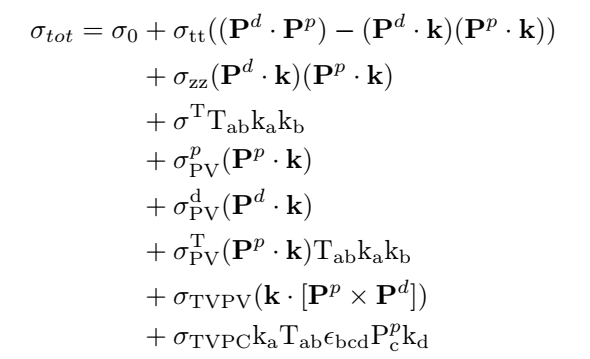
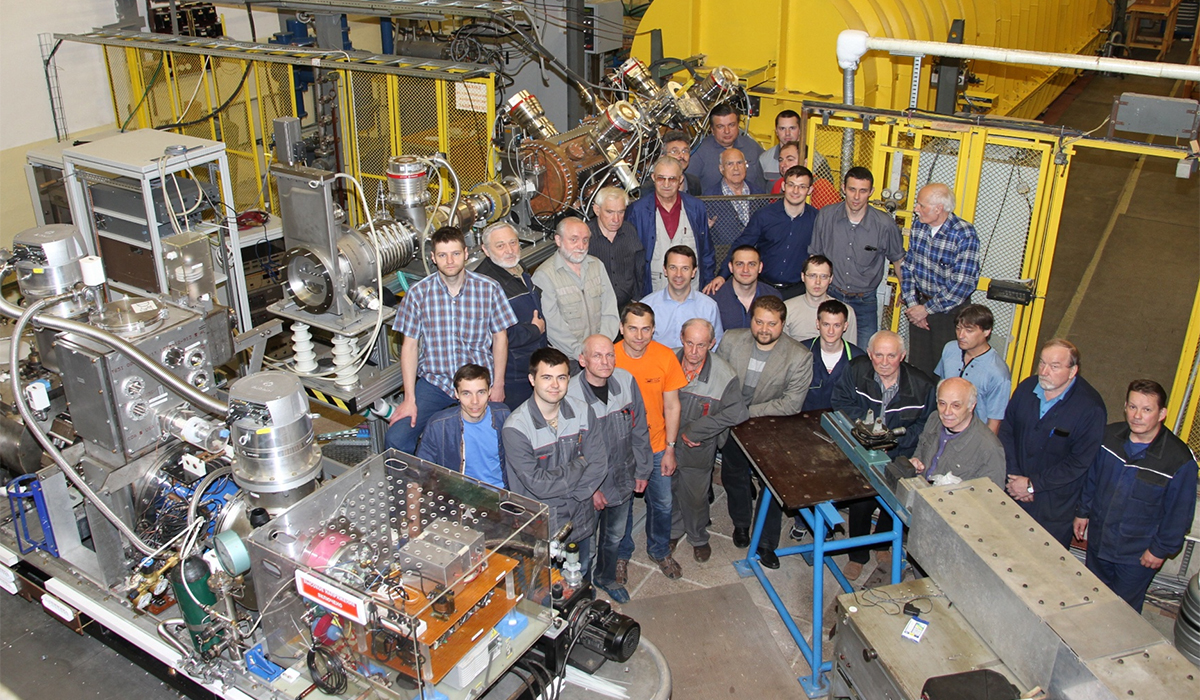
The development of the unique cryogenic source of polarized deuterons, POLARIS, in the late 1970s was very fruitful and significantly enhanced JINR’s instrumental base for studies of nucleon-nucleon interactions as well as interactions of lightest nuclei with heavier nuclei. Experimental data on polarization-dependent effects, obtained at the Synchrophasotron and the Nuclotron, significantly influenced the worldwide understanding of strong interactions between hadrons as well as the structure of lightest nuclei (the deuteron, first of all) at short inter-nucleon distances. Experiments with polarized deuteron, proton and neutron beams at intermediate (several GeV) energies resulted in creation of wide collaborations between VBLHEP of JINR and other world centers (in the USSR and Russia, France, the USA, Germany, Japan, China). Many new and unexpected experimental results were obtained by those collaborations. In particular, many new unique results were obtained for the nucleon electromagnetic formfactors of nucleons, thanks to results of works within the ALPOM/ALPOM2 project. In addition, new ways became opened for experimental investigations with polarized 3 He beams. In this direction, new unique results were obtained. The necessary developments of the techniques for the spin program at the Nuclotron/NICA are discussed in the paper.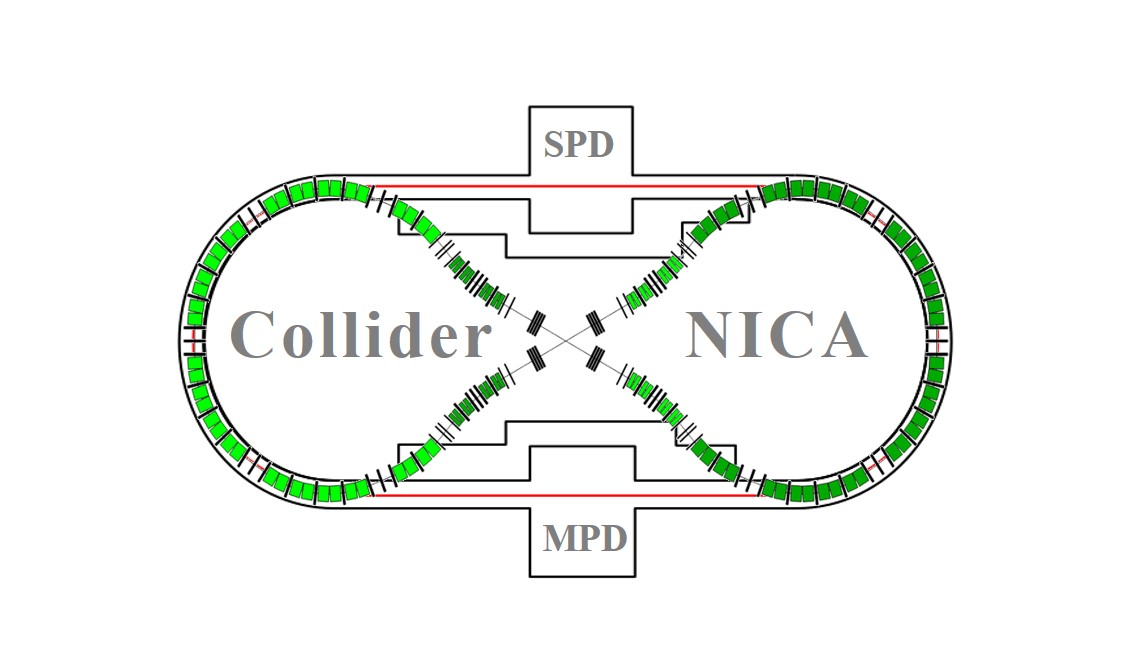
Figure-8 synchrotron for polarized protons and deuterons at the NICA accelerator complex
The paper considers a possibility to use the figure-8 synchrotron as a replacement of the Nuclotron for acceleration of polarized proton and deuteron beams at the NICA accelerator complex. The synchrotron arcs are placed inside the NICA collider tunnel. The presented design enables preservation of polarization for any ion species ( p , d , 3 He, etc.) in the entire energy range of the synchrotron. Because of its shape, the ring operates in the spin transparency mode. The direction of polarization is controlled by a spin navigator which uses weak solenoidal fields. The synchrotron can also be used as a storage ring for high precision experiments with polarized beams beyond its use as an injector to the collider. The results of numerical simulations of spin dynamics for acceleration of protons and deuterons are presented.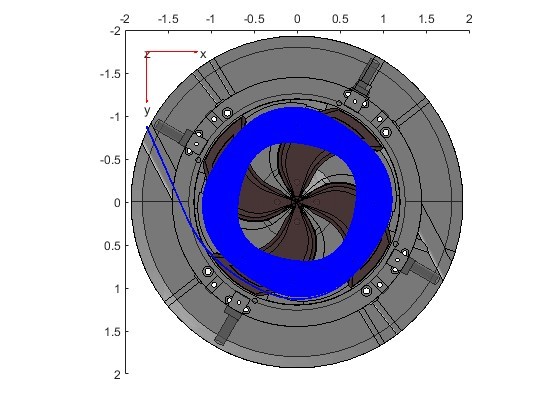
Progress in the design and modeling methods of the MSC230 superconducting cyclotron for proton therapy
With the emergence of the FLASH irradiation method in proton therapy, the need for high-current accelerators has grown significantly. Addressing this demand, the Joint Institute for Nuclear Research (JINR) has initiated the development of the MSC230, a compact isochronous cyclotron designed to produce high-intensity proton beams at 230 MeV for advanced biomedical research. Currently, the technical design of the cyclotron is in progress at D. V. Efremov Institute of Electrophysical Apparatus. Modifications during this phase often necessitate additional calculations, resulting in updates to the magnetic field configuration and beam dynamics. This article details the design methodologies and computational tools employed in the MSC230 project.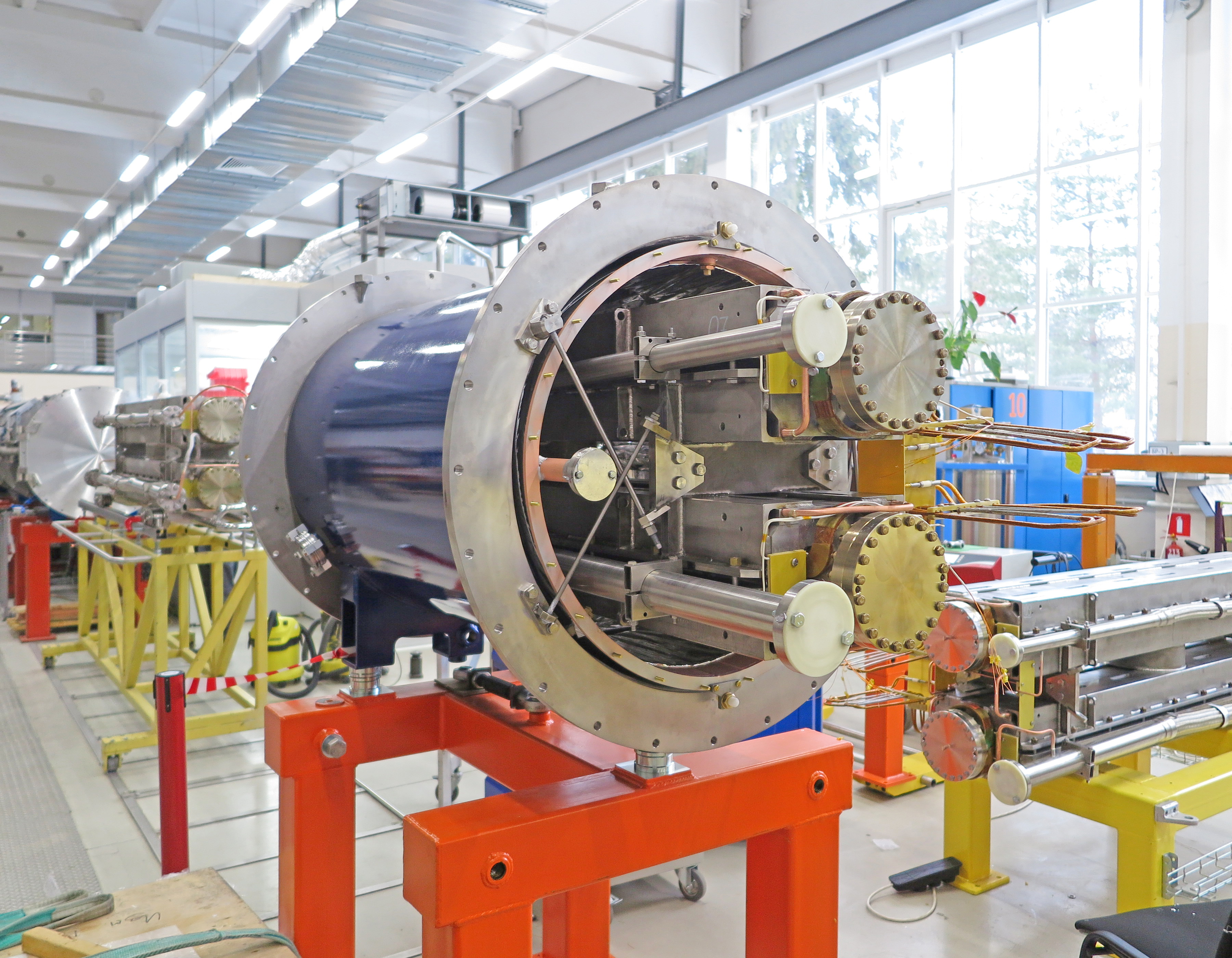
Development of Superconducting Accelerator Magnets at JINR
The article presents an overview of the work carried out at the Joint Institute for Nuclear Research in Dubna since the early 1970s aimed at creating superconducting (SC) magnets for charged particle accelerators. The specified studies made it possible to build the world’s first SC heavy-ion fast-cycling synchrotron — the Nuclotron; magnets for the SIS100 synchrotron of the FAIR project; magnetic systems of the SC Booster and collider of the NICA complex. It also resulted in a development of SC winding for magnet of the medical cyclotron for proton therapy MSC-230, a model magnet for the Chinese HIAF collider project with a record (up to 10 T/s) rate of magnetic field change, a 3-MJ energy storage device based on high-temperature superconductor (HTS), and a concept of magnets for the New Nuclotron made of HTS material for operation at a winding temperature of about 50 K.