
Mathematical Modelling
Computational schemes based on the continuous analogue of Newton’s method in the numerical study of complex physical systems at JINR
Elena Zemlyanaya , Ochbadrakh Chuluunbaatar
Natural Science Review 3 200605 (2026) Published 17.03.2026
DOI: 10.54546/NaturalSciRev.200605

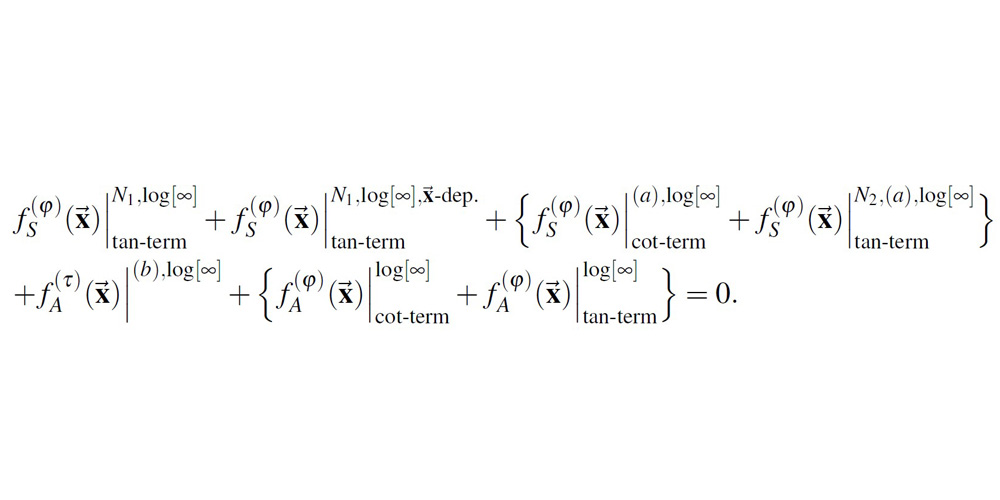
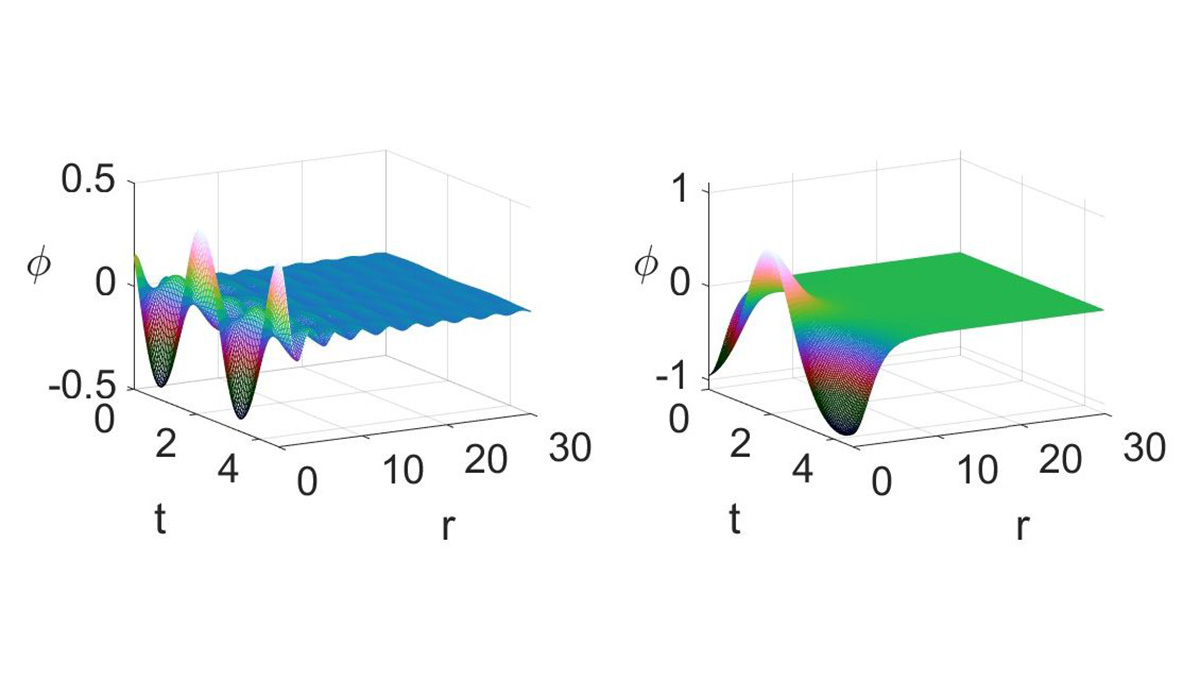
The Continuous analogue of Newton's method (CANM), developed at JINR since the 1970s, is one of most important areas of research at Laboratory of Computing Techniques (LCTA) -- Meshcheryakov Laboratory of Information Technologies (MLIT). CANM and its generalization are powerful tools for the effective numerical solution of nonlinear problems within a wide range of complex physical systems studied at JINR. This review article provides a general framework for the CANM-based approach, the main stages in the development and applications of CANM for solving various types of nonlinear problems that have been on the agenda in different years. The results of the development and application of CANM-based iterative methods, obtained over the past 20 years, are presented in more detail. 


Corrected:

17 March 2026 (the revision date was initially misspelled ( 17 January 2026), the correct spelling is 17 February 2026)

17 March 2026 (the acceptance date was initially misspelled ( 26 January 2026), the correct spelling is 26 February 2026)

Computational testing of independent component analysis for linear optics measurements at the NICA Booster
V. L. Smirnov
Natural Science Review 1 4 (2024) Published 20.12.2024
DOI: 10.54546/NaturalSciRev.100104

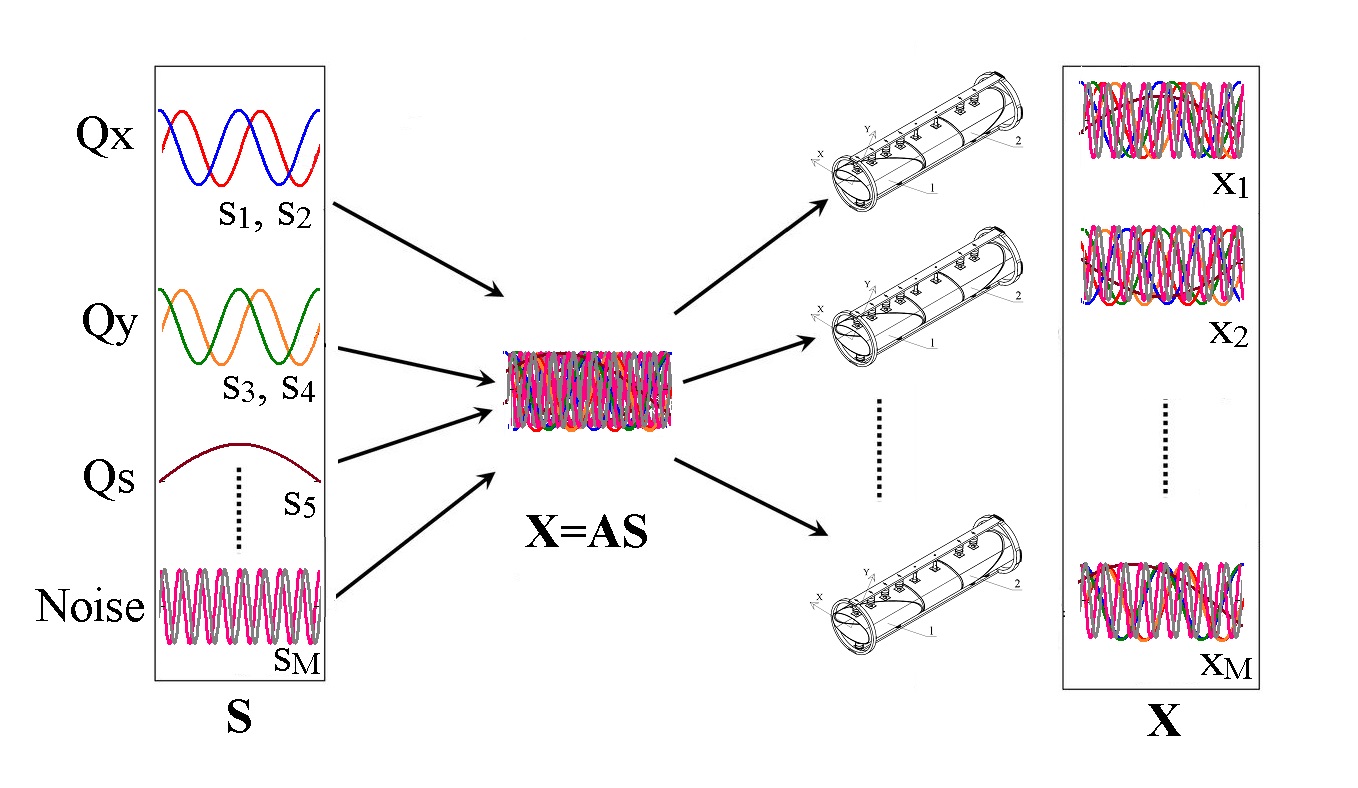
The accelerator complex NICA is at the stage of assembling and commissioning. A series of successful runs at the injection complex were carried out using various types of ions. It is planned to continue the linear optics measurements at booster synchrotron, for which several methods are considered. The first one is based on the analysis of turn-by-turn data of the beam orbit going from beam position monitors. The independent component analysis is used for the data processing and results to computation of betatron and synchrotron tunes, beta-functions, phase advances and dispersions. Other methods use orbit response matrix measured with alternate kicks by dipole correctors. Accuracy of optics restoration depends on the technical feasibility of betatron tunes and orbit measurements. Various methods should be firstly accommodated to the accelerator and tested using computational model in order to conclude their potentials and form requirements for future experiments with the beam. The paper describes implementation of independent component analysis to the computer model of the NICA Booster.