
Symmetries of massless QCD
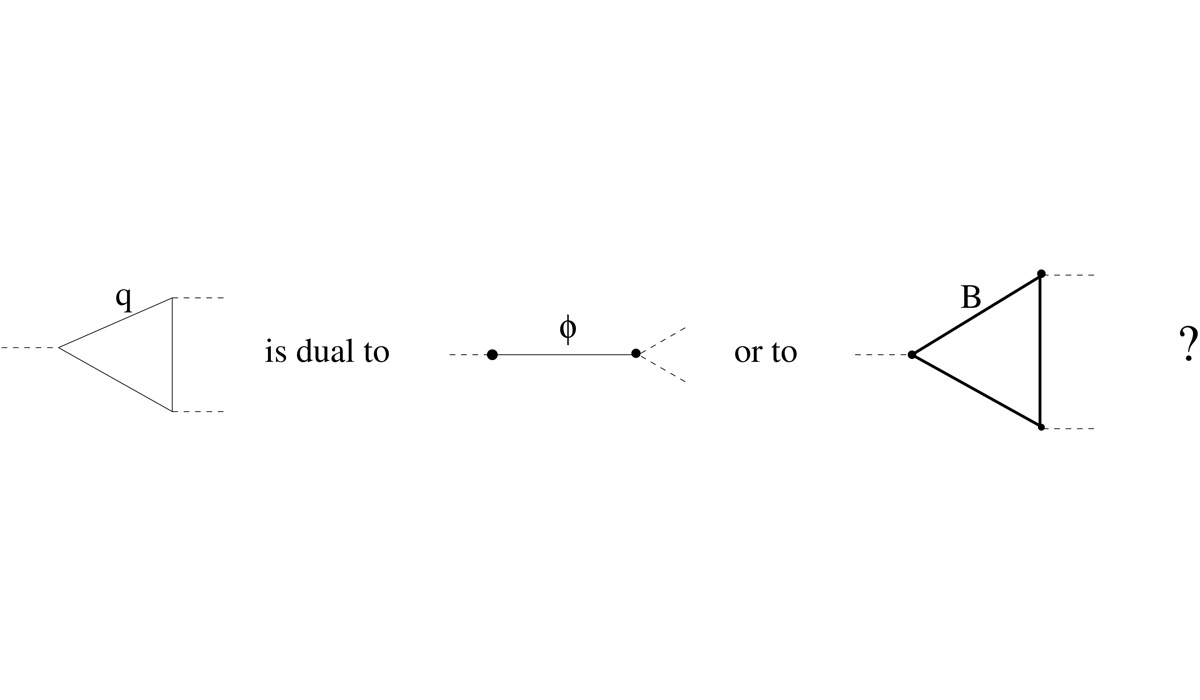
We present a pedagogical review of certain exact theoretical results concerning the physics of an imaginary world where one quark or more are deprived of their masses.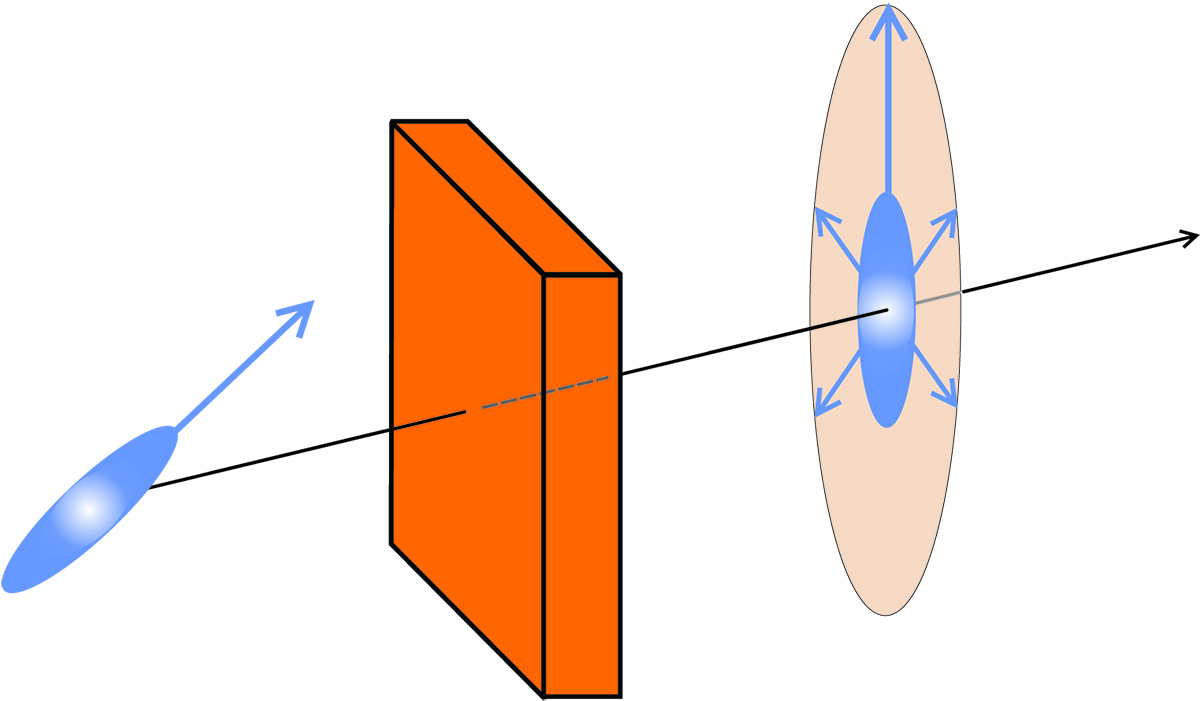
High Energy Nuclear Optics of polarized nucleons and nuclei: research at the Nuclotron-M/NICA complex
Refracton of particles (nucleons, nuclei, γ -quanta) in matter with polarized protons (nuclei) results in revealing coherent quasi-optical phenomenon of nuclear spin precession of particles (nuclei) in the pseudomagnetic field of matter with polarized spins and the phenomenon of birefringence of particles (nuclei) with spin S ⩾ 1. These phenomena can be observed and studied at the Nuclotron-M/NICA complex. The similar effects for γ -quanta could be observed at the LINAC accelerator.Quasi-optical coherent phenomena of spin rotation and dichroism are not caused by strong interactions only, the T-odd P-odd, T-odd P-even, and T-even P-odd interactions also contribute. Limits on the values of these contributions at the energies available at the Nuclotron-M/NICA complex can be obtained by investigating all these phenomena. When studying polarized particle collisions, it is necessary to consider possible influences of quasi-optical phenomena of spin rotation and spin dichroism caused by nuclear precession and birefringence.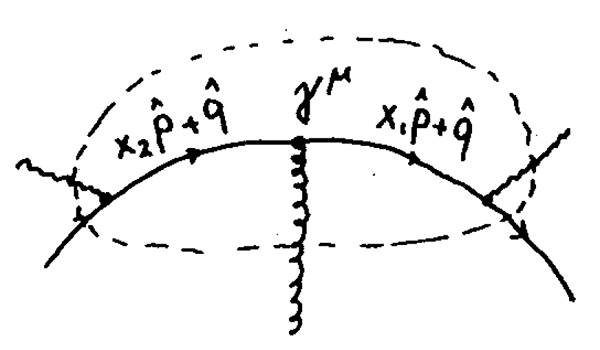
Spin Phenomena in Quantum Chromodynamics
The theory of spin effects (with the particular emphasis on T-odd ones) in QCD and its development in JINR is reviewed, including some personal recollections on the joint work with A.V. Efremov. The analysis of the sources of imaginary phases and respective cuts in hadronic kinematic variables leads to the effective character (non-universality) of T-odd distribution functions, contrary to universality of T-odd fragmentation functions. In particular, the model calculations of DIS with explicit T-violations can be used to predict the oscillations of T-odd polarizing fragmentation function. The comparison of polarization effects in hadronic and heavy-ion collisions is addressed.
ZFITTER: Theoretical calculations and precision tests of the Standard Model
The development of the ZFITTER computer code is described in the context of high-precision tests of the Standard Model during the LEP era. The features of the code that allowed it to become a standard tool for the theoretical interpretation of electroweak observables are analyzed. Prospects for further development of ZFITTER and its contribution to research projects at future electron–positron colliders are discussed. Numerical illustrations are provided of the effects of parameter shifts and the addition of new results for higher-order radiative corrections.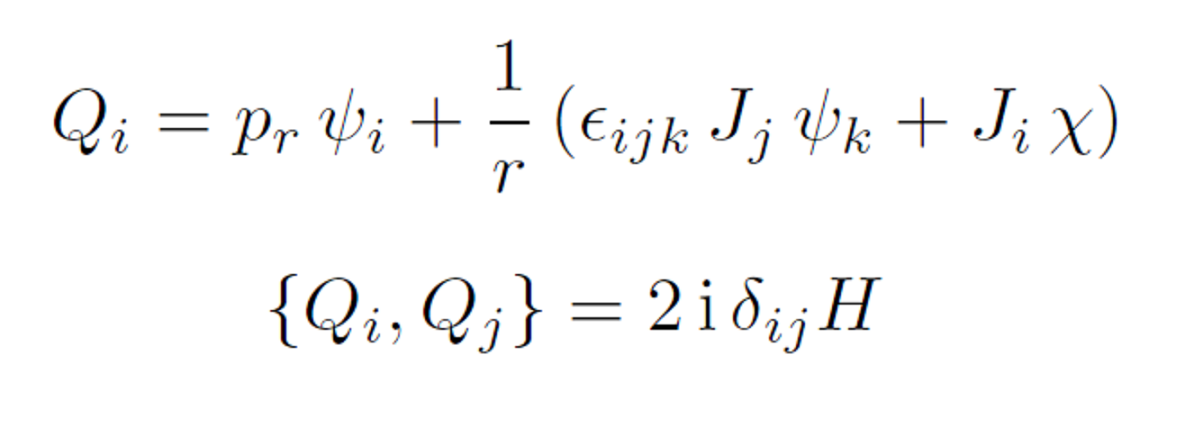
New variants of N = 3, 4 superconformal mechanics
We construct superconformal mechanics with N = 3 and N = 4 supersymmetries that were inspired by analogy with the supersymmetric Schwarzian mechanics. The Schwarzian, being another system with superconformal symmetry, provides insight into the field content of supersymmetric mechanics, most notably, on the number and properties of the fermionic fields involved. Adding more fermionic fields (four in the N = 3 case and eight in the N = 4 case) made it possible to construct systems possessing maximal superconformal symmetries in N = 3 and N = 4, namely osp (3|2) and D (1, 2; α ). In the case of N = 4 supersymmetry, we explicitly construct a new variant of N = 4 superconformal mechanics in which all bosonic subalgebras of the D (1, 2; α ) superalgebra have a bosonic realization. In addition, the constructed systems involve the so (3) currents whose parameterization is not fixed, which allows one to consider different underlying geometries.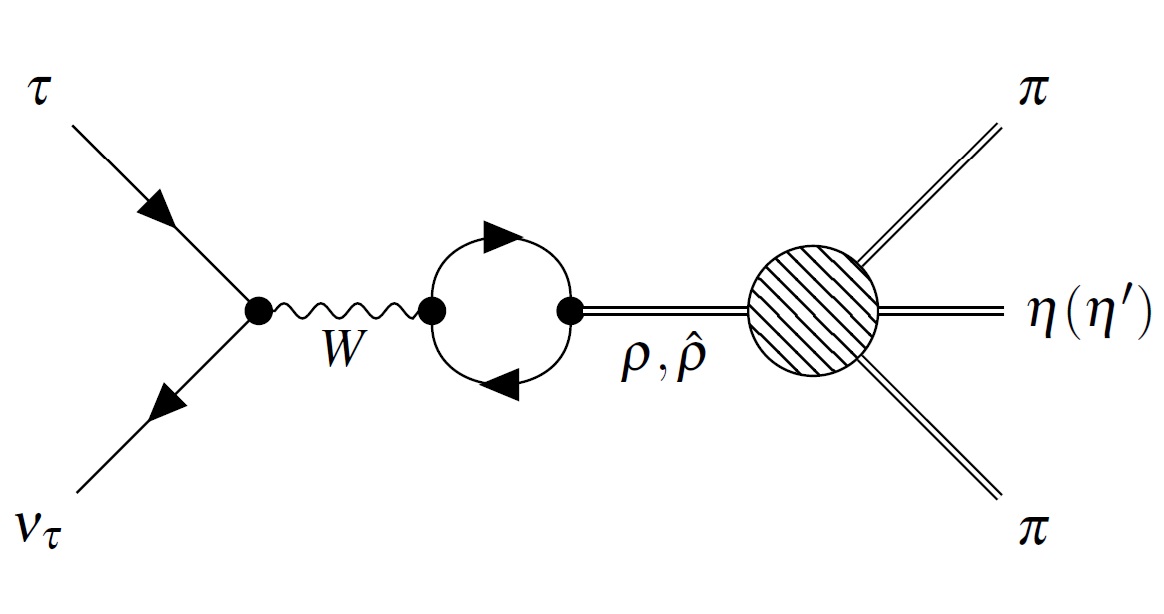
Decays τ → ππηντ and τ → πηηντ in the extended Nambu–Jona-Lasinio model
In the framework of the extended Nambu–Jona-Lasinio model, the processes τ → ππη ( η′ ) ν τ and τ → πηη ( η ′) ν τ are considered taking into account mesons in the ground and first radially excited intermediate states. It is shown that in the processes τ → ππη ( η′ ) ν τ the vector channel is dominant, and in the processes τ → πηη ( η′ ) ν τ the main contribution is given by the axial-vector channel. The scalar meson a 0 plays a dominant role in processes with two η mesons in the final state. The significance of the relative phase between the ground and first radially excited states for these processes is shown. The obtained results for the τ → ππην τ process are in satisfactory agreement with the recent experimental data from BaBar and CMD-3, which differ from the averaged values given in the PDG tables.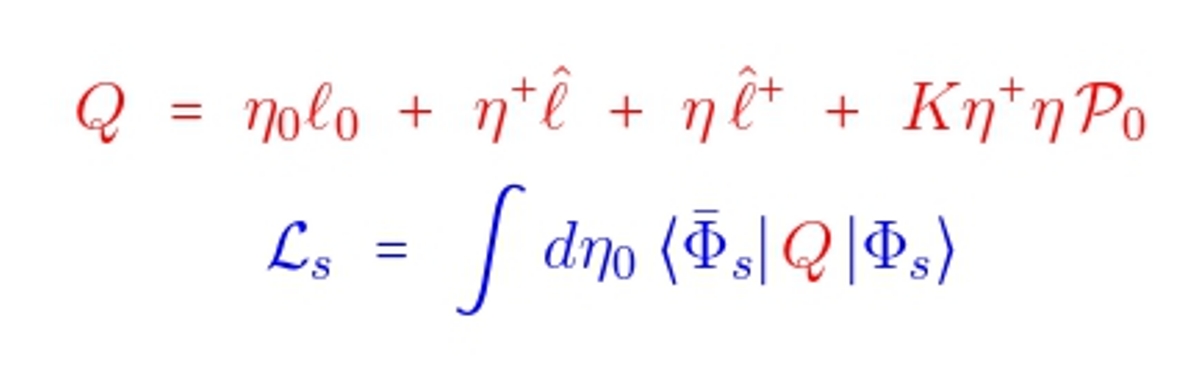
On BRST Lagrangian formulation for massive higher-spin fields in 4D Minkowski space
We give a brief overview of the BRST approach to the gauge-invariant Lagrangian formulation for free massive higher-spin bosonic fields, focusing on two specific aspects. First, the theory is considered in four-dimensional flat space in terms of spin-tensor fields with two-component undotted and dotted indices. This leads to a significant simplification of the whole approach in comparison with the one where the fields with vector indices were used, since now there is no need to introduce a constraint responsible for the traces of the fields into the BRST charge. Second, we develop an extremely simple and clear procedure to eliminate all the auxiliary fields and prove that the BRST equations of motion identically reproduce the basic conditions for irreducible representations of the Poincáre group with a given mass and spin. Similar to the massless theory, the final Lagrangian for massive higher-spin fields is formulated in triplet form. The BRST formulation leads to a system of fields that are clearly subdivided into the basic spin s field, Zinoviev-like auxiliary fields, Singh–Hagen-like auxiliary fields, and special BRST auxiliary fields. The auxiliary fields can be partially eliminated by gauge fixing and/or using the equations of motion. This allows one to obtain formally different (with different numbers of auxiliary fields) but equivalent Lagrangian formulations.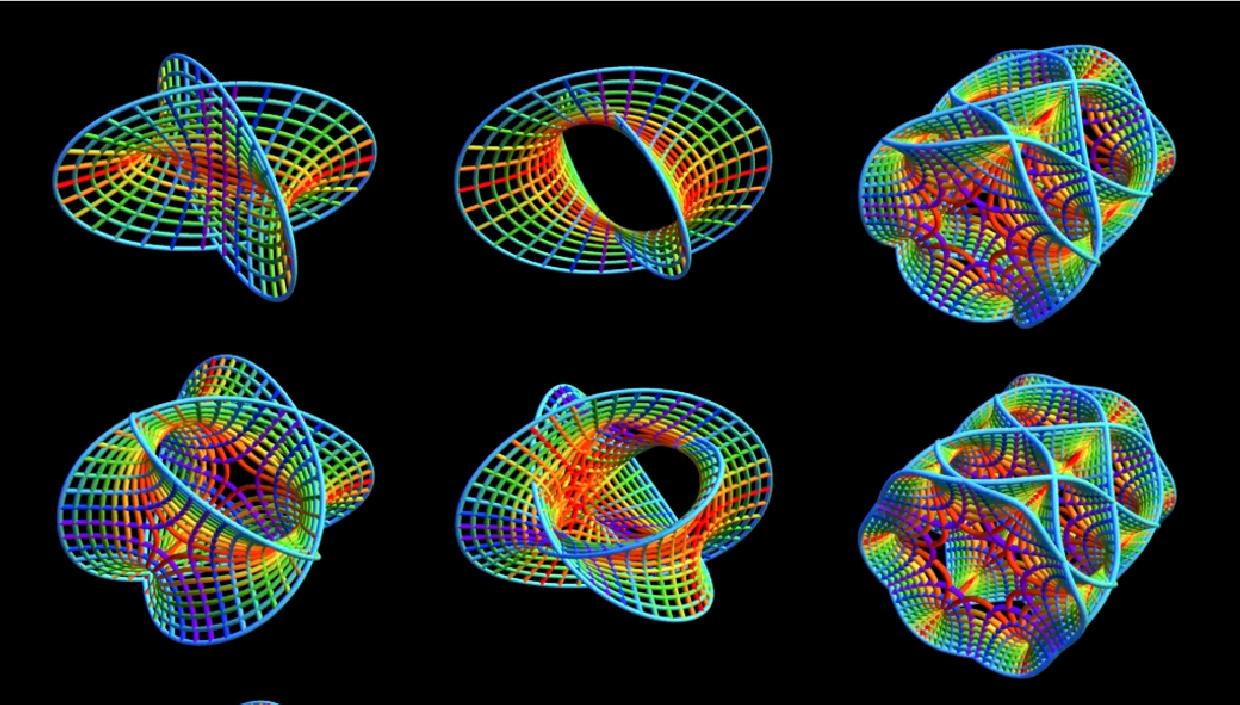
Quantum groups and Yang-Baxter equations
This introductory review is devoted to the newest section of the theory of symmetries -- the theory of quantum groups. The principles of the theory of quantum groups are reviewed from the point of view of the possibility of their use for deformations of symmetries in physics models. The R-matrix approach to the theory of quantum groups is discussed in detail and is taken as the basis of the quantization of classical Lie groups, as well as some Lie supergroups. We start by laying out the foundations of non-commutative and non-cocommutative Hopf algebras. Much attention has been paid to Hecke and Birman-Murakami-Wenzl (BMW) R-matrices and related quantum matrix algebras. Noncommutative differential geometry on quantum groups of special types is discussed. Trigonometric solutions of the Yang-Baxter equations associated with the quantum groups GL q (N), SO q (N), Sp q (2n) and supergroups GL q (N|M), Osp q (N|2m), as well as their rational (Yangian) limits, are presented. Rational R-matrices for exceptional Lie algebras and elliptic solutions of the Yang-Baxter equation are also considered. The basic concepts of the group algebra of the braid group and its finite dimensional quotients (such as Hecke and BMW algebras) are outlined. A sketch of the representation theories of the Hecke and BMW algebras is given, including methods for finding idempotents (quantum Young projectors) and their quantum dimensions. Applications of the theory of quantum groups and Yang-Baxter equations in various areas of theoretical physics are briefly discussed. This is a modified version of the review paper published in 2004 as a preprint of the Max-Planck-Institut für Mathematik in Bonn.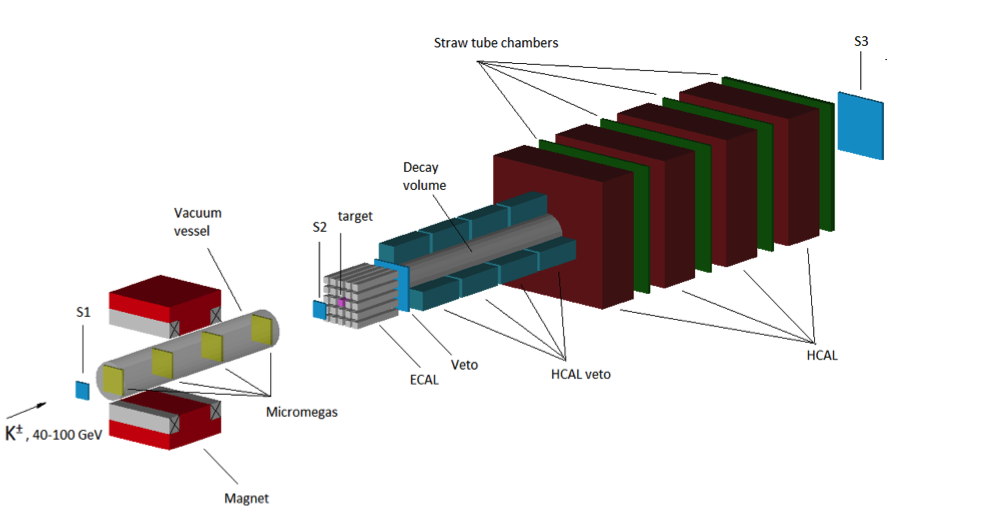
Search for KS,L oscillations and invisible decays into the dark sector at NA64
The decays K S,L → invisible have never been experimentally tested. In the Standard Model (SM), their branching ratios for the decay into two neutrinos are predicted to be extremely small, Br ( K S,L → νν̄ ) ≲ 10 −16 . We consider several natural extensions of the SM, such as two-Higgs-doublet (2HDM), 2HDM and light scalar, and dark mirror sector models, that allow one to enhance the Br ( K S,L → invisible ) up to a measurable level. We briefly discuss the possible search for K S,L → invisible decays and K S,L oscillations into the dark sector at the NA64 experiment at CERN with the sensitivity to Br ( K S,L → invisible ) ≲ 10 −7 −10 −5 .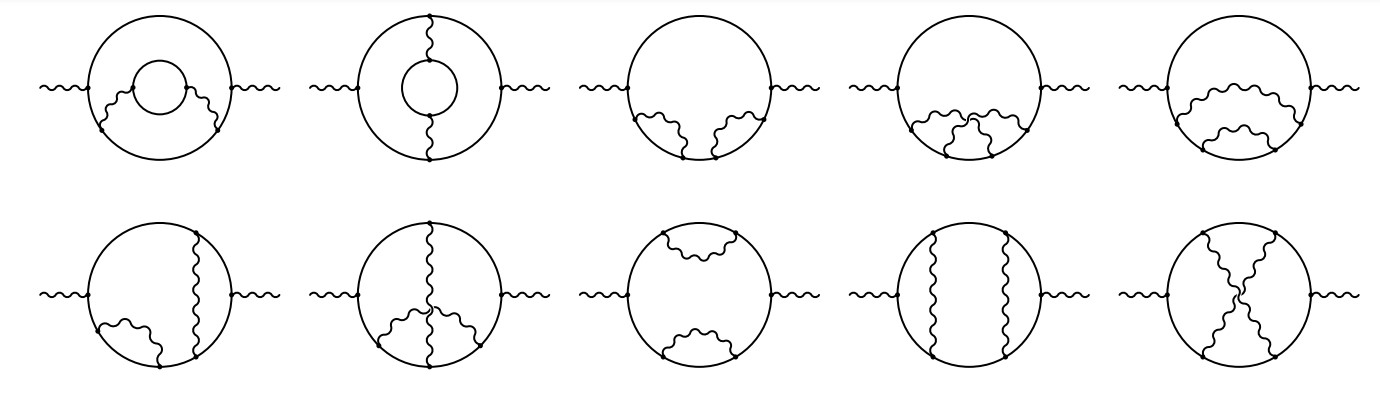
Three-loop moments and spectral density of photonpolarization function in QED
We calculate three-loop photon spectral density in QED with N different species of electrons. The obtained results were expressed in terms of iterated integrals, which can be either reduced to Goncharov’s polylogarithms or written in terms of one-fold integrals of harmonic polylogarithms and complete elliptic integrals. In addition, we provide threshold and high-energy asymptotics of the calculated spectral density. It is shown that the use of the obtained spectral density correctly reproduces separately calculated moments of corresponding photon polarization operator.