

Nuclear Physics (Theory)
Giant dipole resonance and related spin-dependent excitations
E. B. Balbutsev , I. V. Molodtsova
Natural Science Review 3 100703 (2026) Published 15.05.2026
DOI: 10.54546/NaturalSciRev.100703

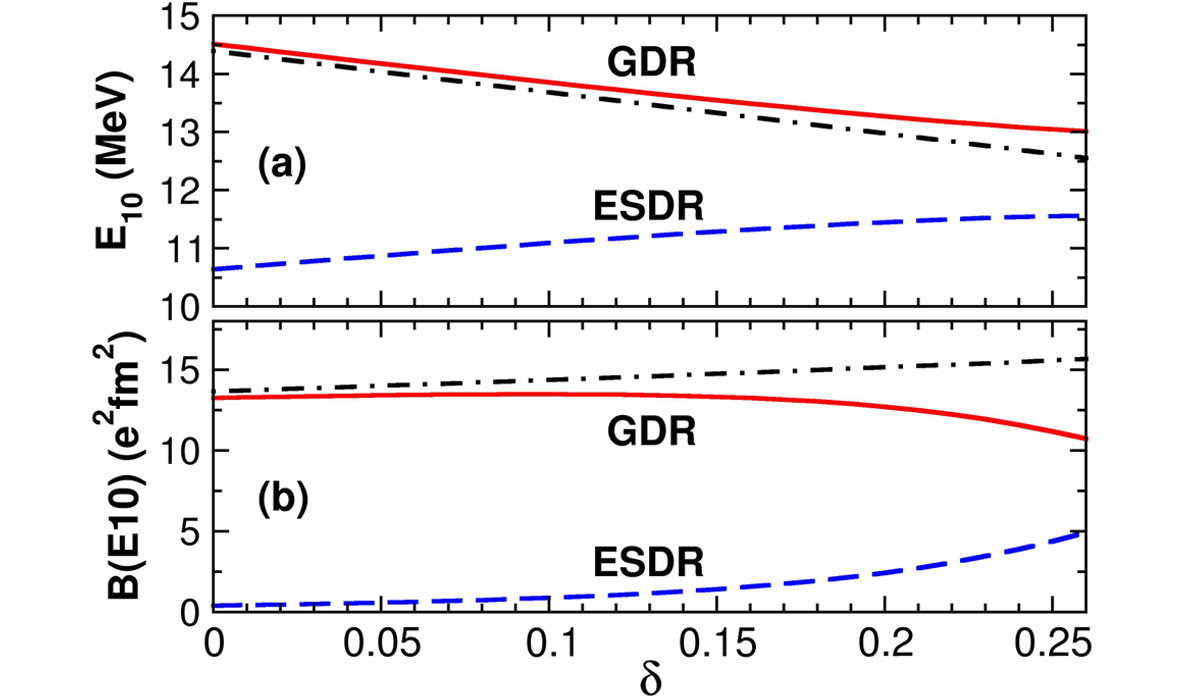
The time-dependent Hartree–Fock equation is solved by the Wigner function moments method taking into account spin degrees of freedom. Energies and reduced transition probabilities of Kπ = 0, 1 and 2excitations are calculated taking 164Dy as an example. The spin degrees of freedom give rise to the electric spin dipole resonance. Its properties and interplay with the giant dipole resonance are investigated. The deformation-induced splitting of the spin M2 resonance is discussed. The results of calculations are compared with the experimental data and other theoretical studies.

Nucleus scattering on 12C and 27Al targets in the complete Glauber theory
Yu. M. Shabelski , A. G. Shuvaev
Natural Science Review 3 100701 (2026) Published 22.04.2026
DOI: 10.54546/NaturalSciRev.100701

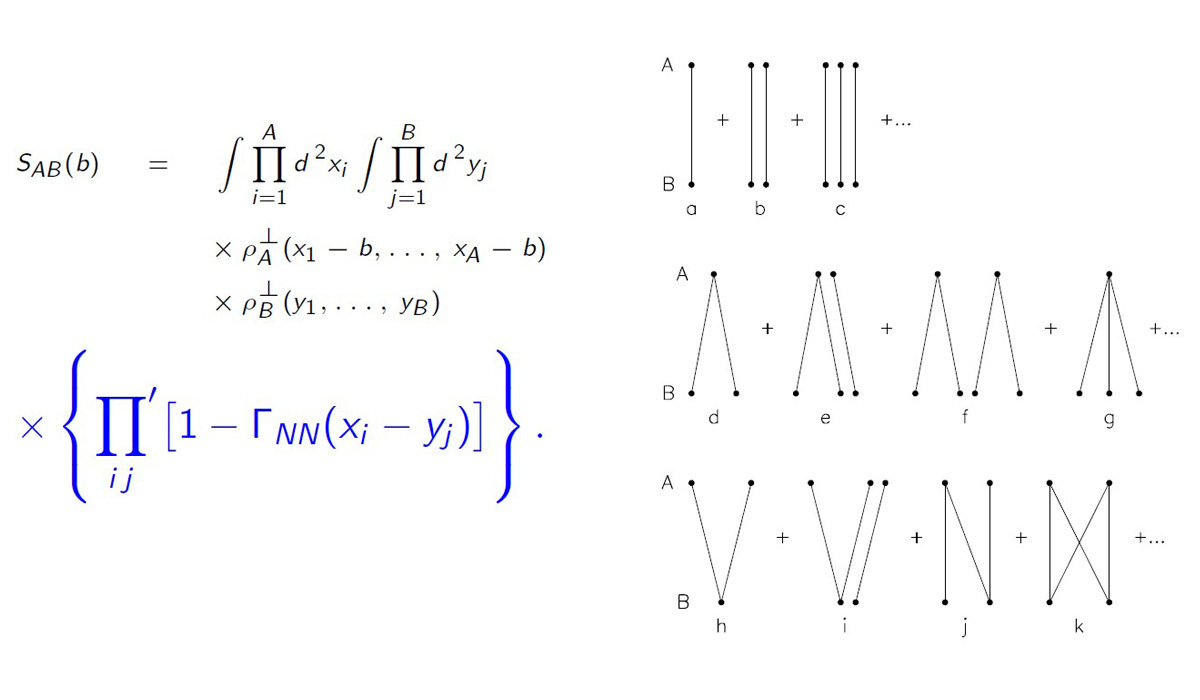
The straightforward calculations of the nucleus–nucleus scattering cross sections are carried out in Glauber approach using the generating function method. It allows for the resummation of all orders of Glauber theory. The results are obtained for a number of light nuclei isotopes scattering on 12C and 27Al targets. Their radii, extracted by comparing the calculated cross sections with the experimental ones, are presented.
Bogoliubov method in description of nuclear rotation
R. V. Jolos , E. A. Kolganova
Natural Science Review 2 100302 (2025) Published 09.06.2025
DOI: 10.54546/NaturalSciRev.100302

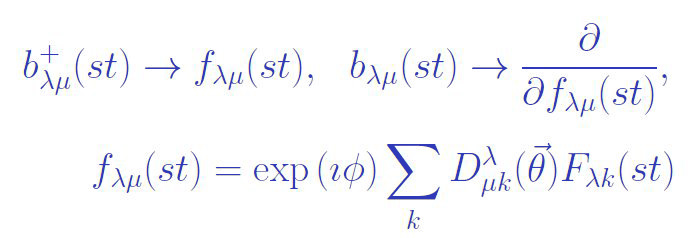
The problem of identifying and extracting the dynamic variables associated with symmetry transformations from the full set of dynamic variables is considered. It is demonstrated that employing a boson representation of bifermion operators enables the problem to be solved using the canonical transformation of dynamic variables proposed by N. N. Bogoliubov. The results obtained justify the application of the cranking model for the description of the rotational excitations of nuclei.

New classical Hall-type effect in the absence of magnetic field
E. Kh. Alpomishev , G. G. Adamian , N. V. Antonenko
Natural Science Review 2 100203 (2025) Published 27.03.2025
DOI: 10.54546/NaturalSciRev.100203

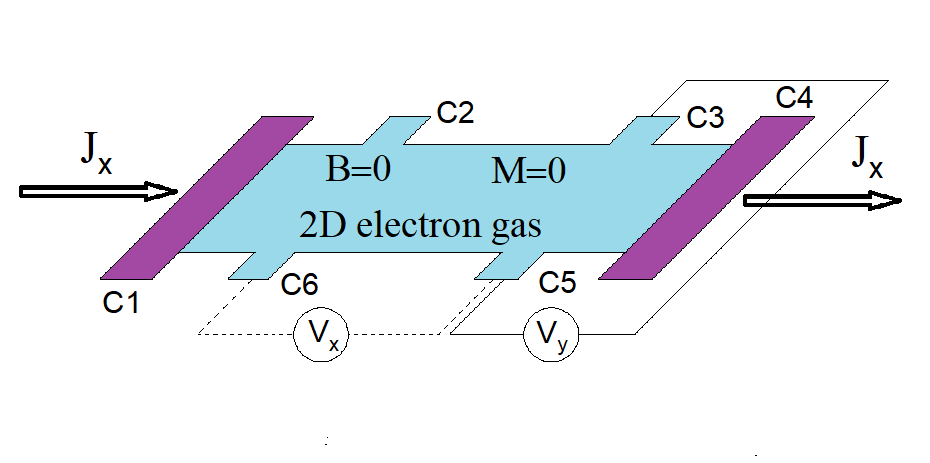
The non-Markovian two-dimensional dynamics of charge carriers in a dissipative non-magnetic medium is studied. The possibility of observing a new classical Hall-type effect in the absence of a magnetic field is predicted.