Vol. 3 No. 7 (2026): Natural Sci. Rev.
Giant dipole resonance and related spin-dependent excitations
E. B. Balbutsev , I. V. Molodtsova
Natural Sci. Rev. 3 100703 (2026) Published 15.05.2026
DOI: 10.54546/NaturalSciRev.100703
PDF

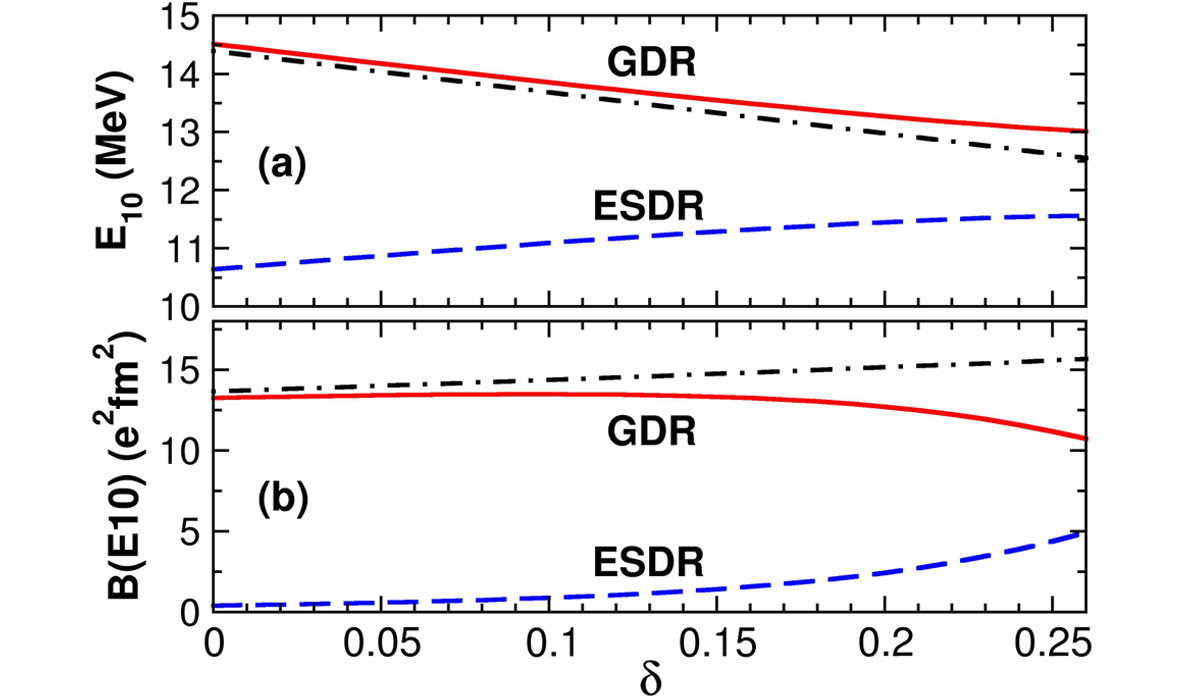
The time-dependent Hartree–Fock equation is solved by the Wigner function moments method taking into account spin degrees of freedom. Energies and reduced transition probabilities of Kπ = 0, 1 and 2excitations are calculated taking 164Dy as an example. The spin degrees of freedom give rise to the electric spin dipole resonance. Its properties and interplay with the giant dipole resonance are investigated. The deformation-induced splitting of the spin M2 resonance is discussed. The results of calculations are compared with the experimental data and other theoretical studies.

Keywords: collective motion, giant dipole resonance, spin dipole resonances
Topics: Physics , Nuclear Physics (Theory)
Interactions of exotic neutralino dark matter with nucleons in U (1) extensions of the MSSM originating from E6 GUTs
M. G. Belyakova , R. B. Nevzorov
Natural Sci. Rev. 3 200704 (2026) Published 14.05.2026
DOI: 10.54546/NaturalSciRev.200704
PDF

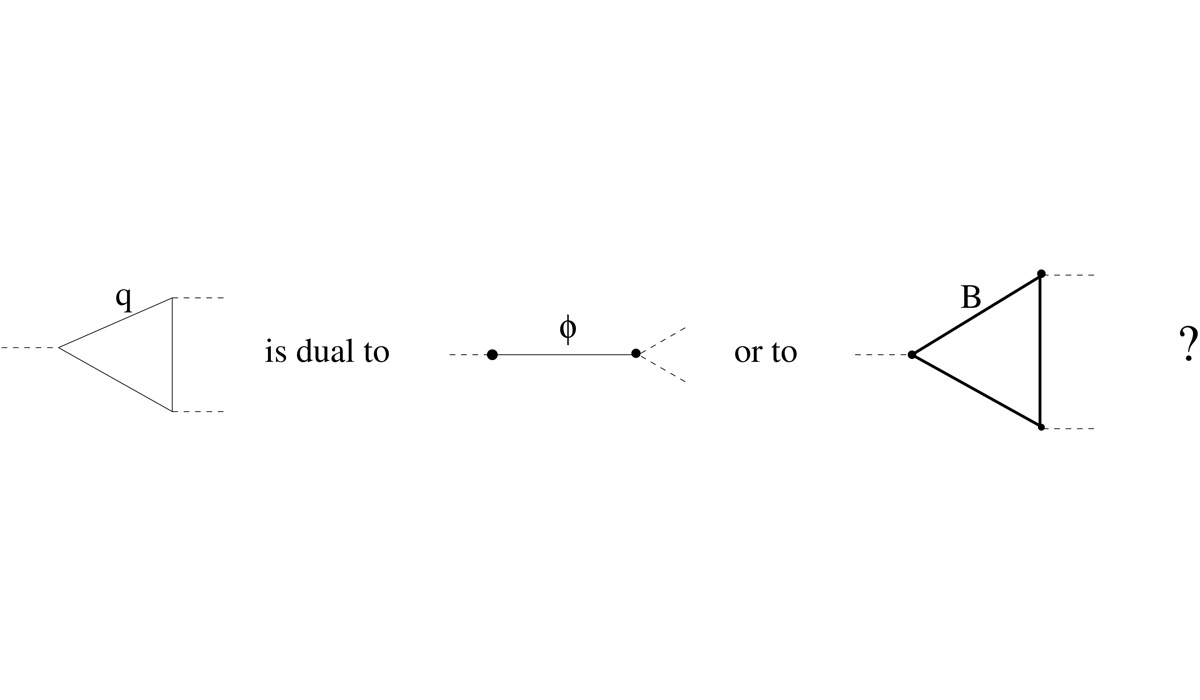
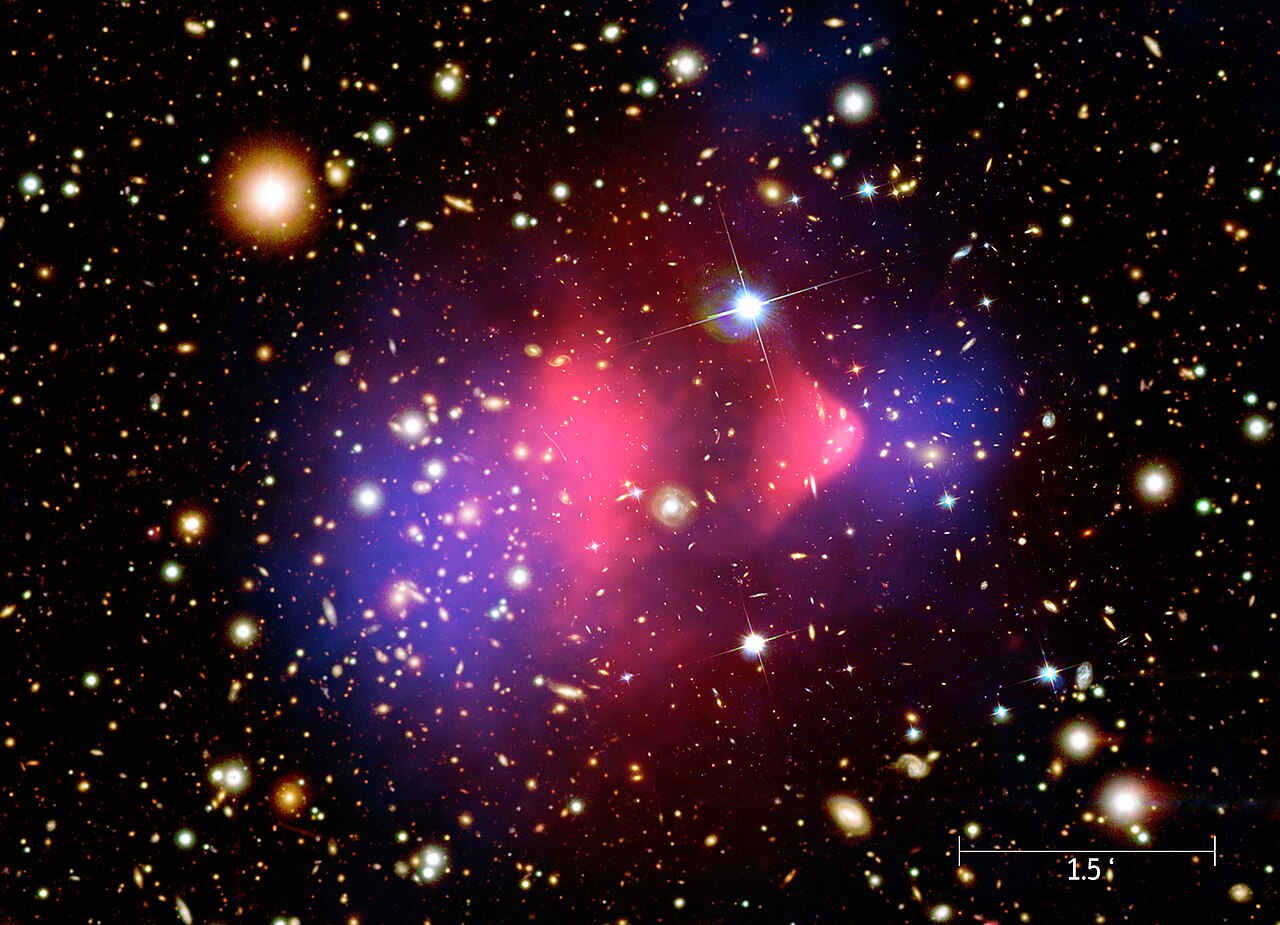
To ensure anomaly cancellation, the E6 inspired U(1) extensions of the Minimal Supersymmetric (SUSY) Standard Model (MSSM) involve extra exotic matter. The lightest exotic neutralino in these models can be stable contributing to the cold dark matter density. We consider the interactions of such neutralino with nucleons within a specific extension of the MSSM with an additional U(1)N gauge symmetry (SE6SSM). The constraints on the couplings of this state, which are set by the present experimental bounds caused by the direct detection experiments, are examined. The obtained results can be generalised to other E6 inspired SUSY models with extra U(1) gauge symmetry.

Keywords: unified field theories and models, models beyond the Standard Model, supersymmetry, cold dark matter
Topics: Physics , High Energy (Phenomenology) , 70th anniversary of JINR
SMEFT operators in rare multi-top processes
A. Aleshko , E. Boos , V. Bunichev , L. Dudko
Natural Sci. Rev. 3 200703 (2026) Published 06.05.2026
DOI: 10.54546/NaturalSciRev.200703
PDF

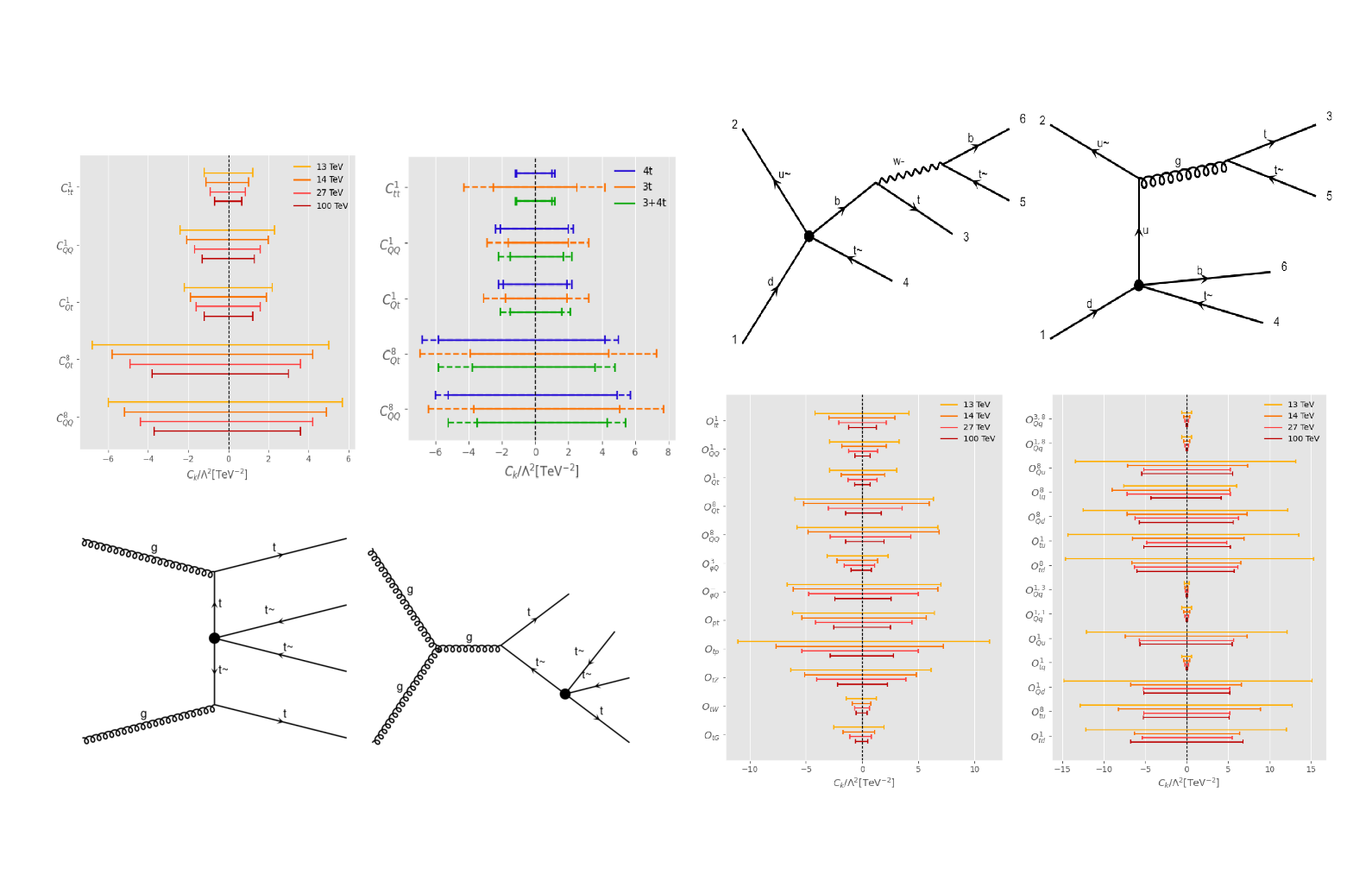
Nowadays, the Standard Model Effective Field Theory (SMEFT) provides a standard framework to parameterize potential deviations from the Standard Model and to combine information from multiple processes in global analyses. This review summarizes dedicated studies that constrain dimension-six Wilson coefficients using three top-quark and four top-quark production processes. We highlight the complementarity of these channels, as well as summarize the main problems and prospects in the area. A concise introduction to the SMEFT formalism and a discussion of the problem of potential perturbative unitarity violation are also provided.

Keywords: SMEFT, BSM, top-quark
Topics: Physics , High Energy (Phenomenology) , 70th anniversary of JINR
High Field Strength Elements distribution in river sediments of Nile (Egypt) and Zarafshon (Tajikistan) as investigated by Instrumental Neutron Activation Analysis
O. G. Duliu , W. M. Badawy , D. Abdusamadzoda , D. A. Abdushukurov , M. V. Frontasyeva , I. Zinicovscaia , P. S. Nekhoroshkov , H. El-Samman
Natural Sci. Rev. 3 100702 (2026) Published 27.04.2026
DOI: 10.54546/NaturalSciRev.100702
PDF

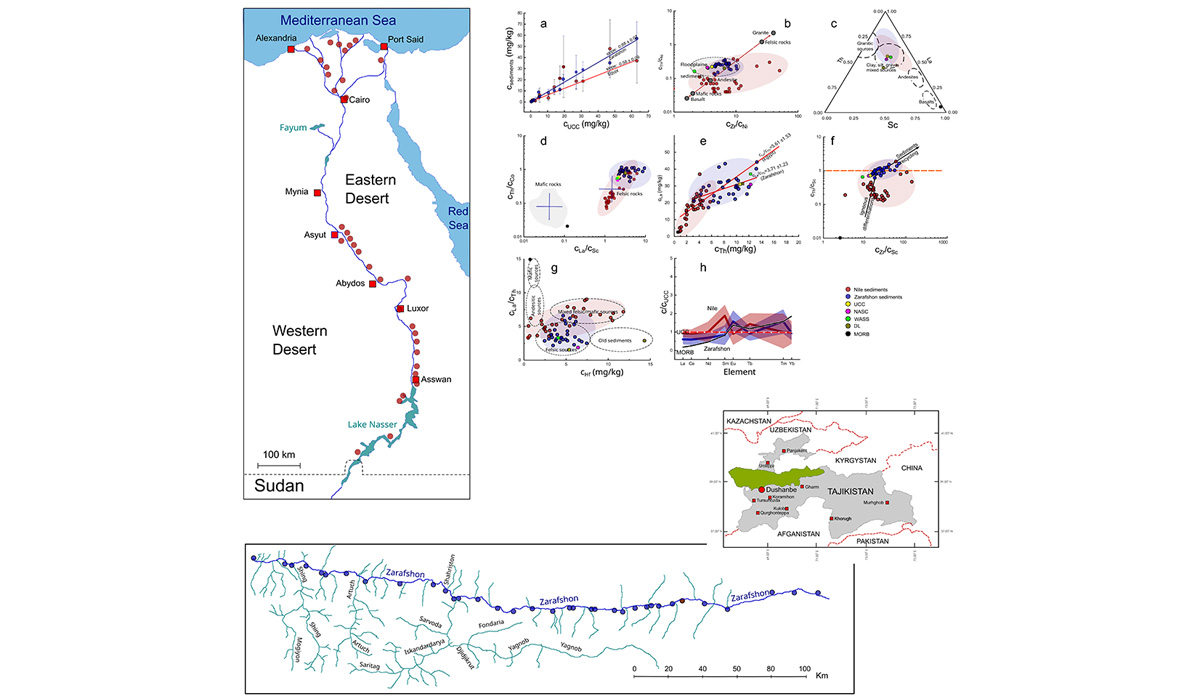
The High Field Strength Elements (HFSE), due to their relatively low mobility in the majority of sedimentary processes, are among the most suitable elements for provenance studies, as they permit collecting information on the parent material. Therefore, the distribution of the mass fractions of two incompatible elements (Co and Ni) and 13 HFSE (Sc, Zr, La, Ce, Nd, Sm, Eu, Tb, Tm, Yb, Hf, Th, and U) in unconsolidated sediments belonging to two different river systems, i.e., the Egyptian sector of the Nile River and the Tadjik sector of the Zarafshon River, evidences similarities and dissimilarities between the sedimentary materials and their correlation with the local geochemistry. The Instrumental Neutron Activation Analysis (INAA) in its Epithermal variant was used. In total, 38 and 29 samples of unconsolidated sediments were collected along the Nile and the Zarafshon rivers. In the great majority, the distribution functions of the mass fractions were not normal, as Shapiro–Wilk, Anderson–Darling, Lilliefors, and Jarque–Bera ANOVA tests proved. More discriminating bi-plots and ternary diagrams permitted a better comparison between the distribution functions of the considered elements. All of them showed, for both types of sedimentary material, a relative similarity with the less recycled felsic type of rocks. Despite this, a further detailed analysis revealed systematic differences between the two sediment categories, suggesting that the Nile sediments have been influenced by the mafic material transported from the basalt-rich plateaus of Ethiopia via the Blue Nile.

Keywords: High Field Strength Elements, river sediments, Nile, Egypt, Zarafshon, Tajikistan, Instrumental Neutron Activation Analysis, statistical data analysis
Topics: Earth and Environmental Sciences
Structural, magnetic states and pressure-induced phenomena in complex nanosized magnetic oxides
D. P. Kozlenko , N. M. Belozerova , S. E. Kichanov , E. V. Lukin , O. N. Lis , A. V. Rutkauskas , B. N. Savenko , Z. Jirák , G. S. Rymski , A. L. Zhaludkevich , N. T. Dang
Natural Sci. Rev. 3 200702 (2026) Published 23.04.2026
DOI: 10.54546/NaturalSciRev.200702
PDF

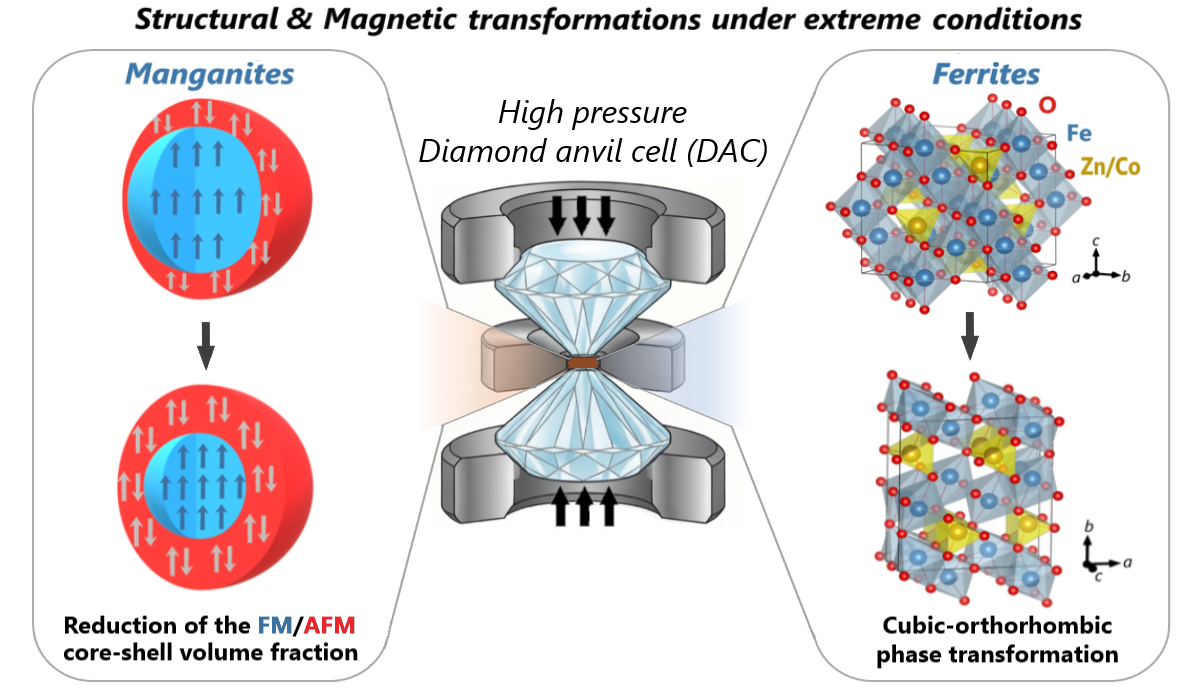
The results of the recent investigations of the crystal and magnetic structure of complex nanosized manganese and iron oxides using neutron diffraction, X-ray diffraction and other techniques over a wide range of thermodynamic parameters (temperature and pressure) are considered. In the nanostructured manganites La1-xSrxMnO3 (x = 0.28−0.47), the coexistence of the ferromagnetic (FM) and A-type antiferromagnetic (AFM) states has been evidenced, implying the production of core-shell nanoparticles with distinctive structural and magnetic properties of ordering of internal and external components. Application of high pressure significantly modifies the ratio of FM and AFM components. For the nanostructured Zn0.34Fe2.53O4 ferrite, a distribution of Zn and Fe atoms in the crystal structure, as well as the parameters of crystal and magnetic structures, have been estimated. The oxygen vacancies were detected and their amount was estimated. The gradual transition of the structural phase from the initial cubic spinel phase to the orthorhombic post spinel phase was observed at high pressures in this material, relevant to CoFe2O4 ferrite. In the latter case, the phase transition is also accompanied by suppression of the ordered magnetic moments. Surprisingly, in the most cases, the properties of structural and magnetic states of the studied nanosized manganites and ferrites are notably different from those for the relevant bulk forms of these materials. The microscopic mechanisms responsible for this distinction have been discussed in detail.

Corrected:

24 April 2026 (the incorrect order of the authors and the affiliation of one of them were corrected)

Keywords: high pressure, neutron diffraction, manganites, ferrites, magnetic structure
Topics: Physics , Condensed Matter Physics (Experiment) , 70th anniversary of JINR
Nucleus scattering on 12C and 27Al targets in the complete Glauber theory
Yu. M. Shabelski , A. G. Shuvaev
Natural Sci. Rev. 3 100701 (2026) Published 22.04.2026
DOI: 10.54546/NaturalSciRev.100701
PDF

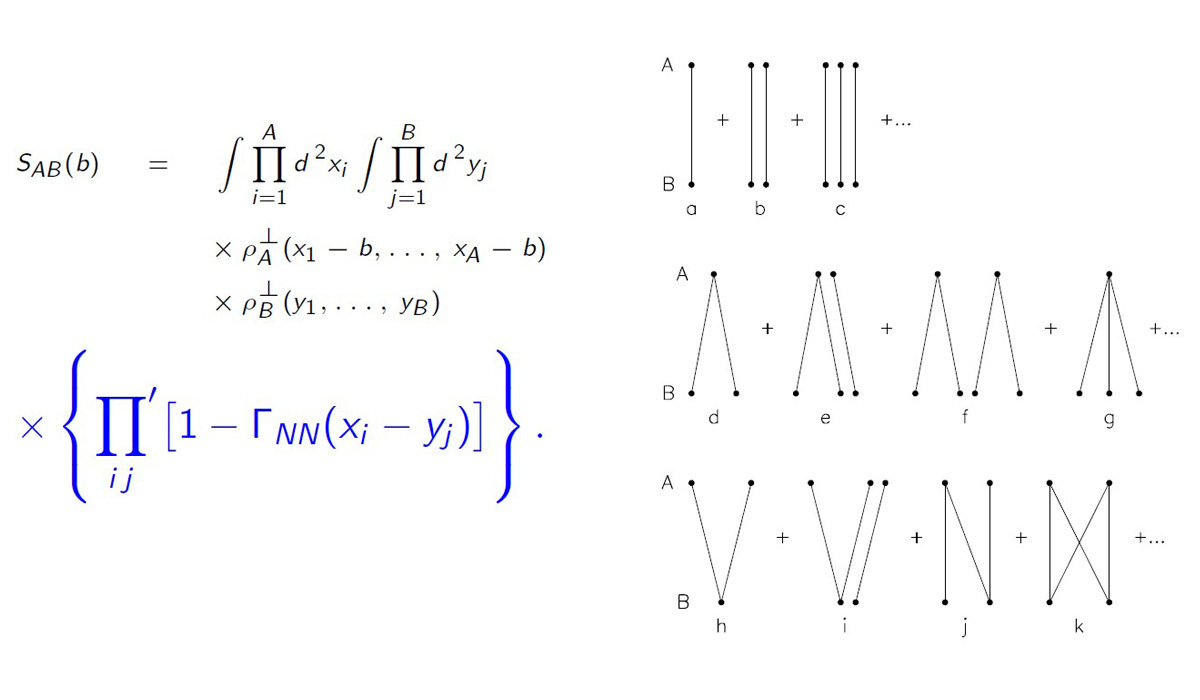
The straightforward calculations of the nucleus–nucleus scattering cross sections are carried out in Glauber approach using the generating function method. It allows for the resummation of all orders of Glauber theory. The results are obtained for a number of light nuclei isotopes scattering on 12C and 27Al targets. Their radii, extracted by comparing the calculated cross sections with the experimental ones, are presented.

Keywords: Glauber theory, reaction cross section, interaction cross section, halo nuclei
Topics: Physics , High Energy (Phenomenology) , Nuclear Physics (Theory)
Multifunctional Information and Computing Complex of JINR
A. I. Balandin , N. A. Balashov , O. Yu. Derenovskaya , A. G. Dolbilov , A. P. Gavrish , A. O. Golunov , N. I. Gromova , A. V. Evlanov , I. A. Kashunin , V. V. Korenkov , N. A. Kutovskiy , V. V. Mitsyn , A. N. Moibenko , I. S. Pelevanyuk , D. V. Podgainy , O. I. Streltsova , S. V. Shmatov , T. A. Strizh , V. V. Trofimov , A. S. Vorontsov , N. N. Voytishin , M. I. Zuev
Natural Sci. Rev. 3 200701 (2026) Published 15.04.2026
DOI: 10.54546/NaturalSciRev.200701
PDF

The Multifunctional Information and Computing Complex (MICC) of the JINR Meshcheryakov Laboratory of Information Technologies (MLIT) is a key element of the JINR network and information and computing infrastructures. The MICC is regarded as JINR’s unique basic facility and plays a decisive role in scientific research, which entails advanced computing power and storage systems. Its uniqueness is ensured by the consolidation of all state-of-the-art information technologies for data processing and storage, united by the network infrastructure with a bandwidth of up to 4 × 100 Gbps. It consists of distributed data processing and storage systems based on both grid and cloud technologies and the hyperconverged computing infrastructure with liquid cooling. Multifunctionality, high reliability, and availability in 24 × 7 × 365 mode, scalability and high performance, information security and an advanced software environment are the main requirements that the MICC meets. The reliability and availability are ensured by the enhanced high-speed telecommunication system and the modern local network infrastructure, as well as by the reliable engineering infrastructure that provides guaranteed power supply and cooling for server hardware. This infrastructure is a staple for computing the experiments at the NICA accelerator complex. The BM@N, MPD, and SPD experiments intensively use all computational components and storage systems. Being part of the Worldwide LHC Computing Grid, the MICC serves as the Tier1 grid site for the CMS experiment at the LHC and as the Tier2 grid site that provides support for the experiments at the LHC and other world’s large-scale experiments in high-energy physics. The integrated cloud environment of the JINR Member States focuses on supporting users and experiments in Russia, China, the USA, etc. (e.g., NICA, NOvA, BaikalGVD, JUNO). The HybriLIT platform comprising the Govorun supercomputer provides capabilities for elaborating mathematical models and algorithms and performing resource-intensive computations, including on graphics accelerators that enable the development of the ecosystem for machine and deep learning tasks, Big Data analysis, and quantum computing on simulators.

Keywords: grid technologies, cloud technologies, Govorun supercomputer, distributed data storage, LHC, NICA, Baikal-GVD
Topics: Physics , High Energy Physics (Experiment) , Mathematical and Computer Sciences , Information Technology , 70th anniversary of JINR