

The Natural Science Review electronic journal has been published since 2024 according to the decision of the session of the Committee of Plenipotentiaries of the Governments of the JINR Member States dated 24.03.2024. The international intergovernmental organization Joint Institute for Nuclear Research is the journal’s founder and publisher.
Open issue October — December 2025
All Issue Articles
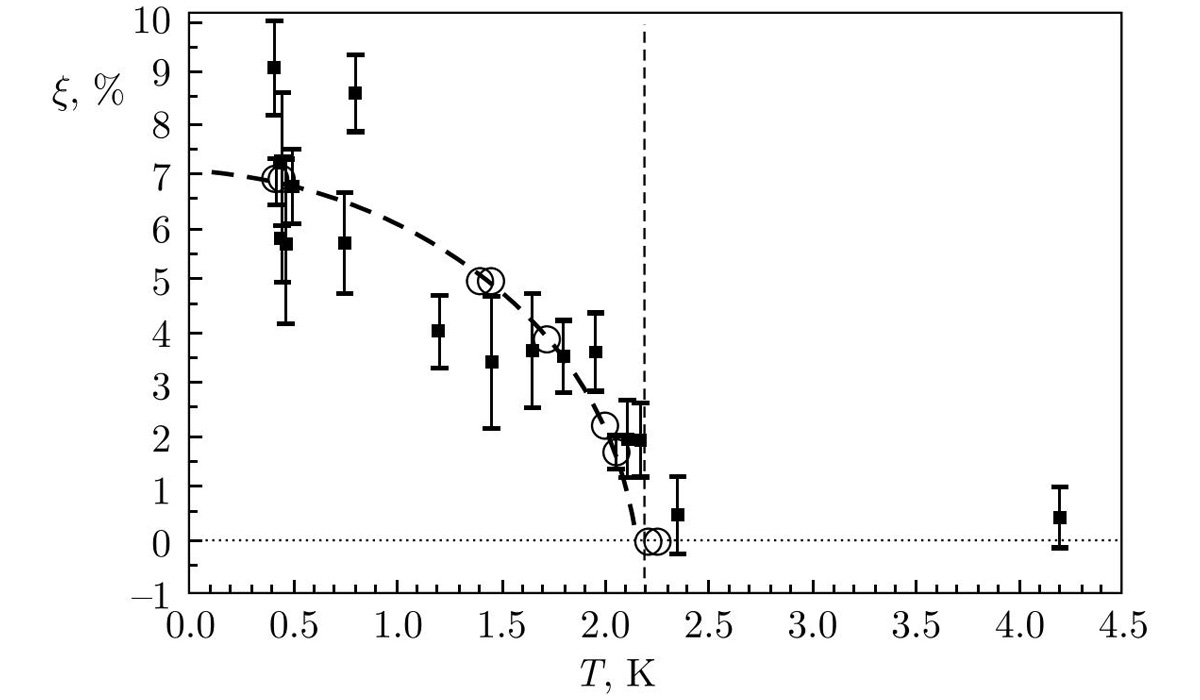
A century of the Bose–Einstein condensation concept and half a century of the JINR experiments for observation of condensate in superfluid 4He (He II)
This short review is devoted to the celebration of two major events in quantum physics. The first one is the birth of the concept of Bose–Einstein condensation (1925) and the second is the experimental proof that it does exist and appears in liquid 4He simultaneously with superfluidity below the λ-point (1975).
Both of these events are tightly related to the Bogoliubov theory of superfluidity (1947). The existence of condensate in the system of interacting bosons is the key ansatz of this theory. Therefore, the experiments started at JINR-Dubna in 1975 confirmed this prediction of the Bogoliubov theory that superfluidity of liquid 4He (He II) should emerge at the same time as the Bose–Einstein condensation.
Corrected:
13 November 2025 (the captions to Figures 1 and 2 were changed)
26 November 2025 (changes were made in formulas (53) and (55))
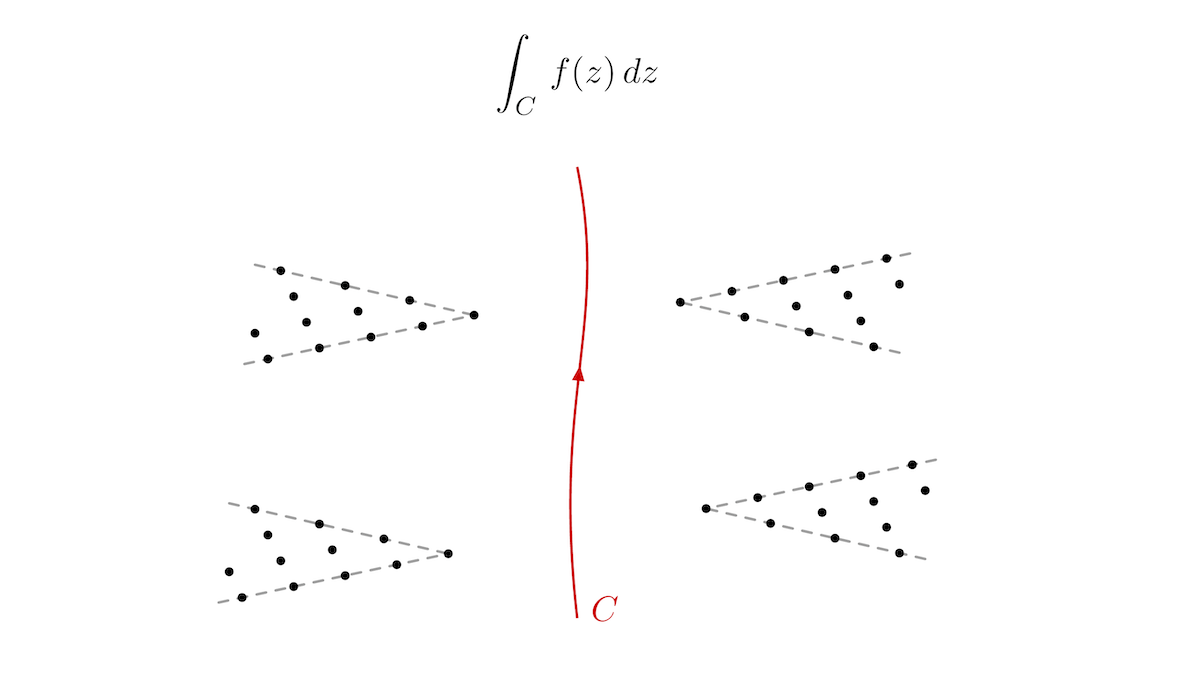
Complex rational Ruijsenaars model. The two-particle case
We consider a complex rational degeneration of the hyperbolic Ruijsenaars model emerging in the limit ω1 + ω2 → 0 (or b → i in 2d CFT) and investigate the two-particle case in detail. Corresponding wave functions are described by complex hypergeometric functions in the Mellin–Barnes representation. Their dual integral representation and reflection symmetry in the coupling constant are established. Besides, a complex limit of the hyperbolic Baxter Q-operators is considered. Another complex degeneration of the hyperbolic Ruijsenaars model is obtained by taking a special ω1 − ω2 → 0 (or b → 1) limit. Additionally, two new degenerations to the complex Calogero–Sutherland type models are described.
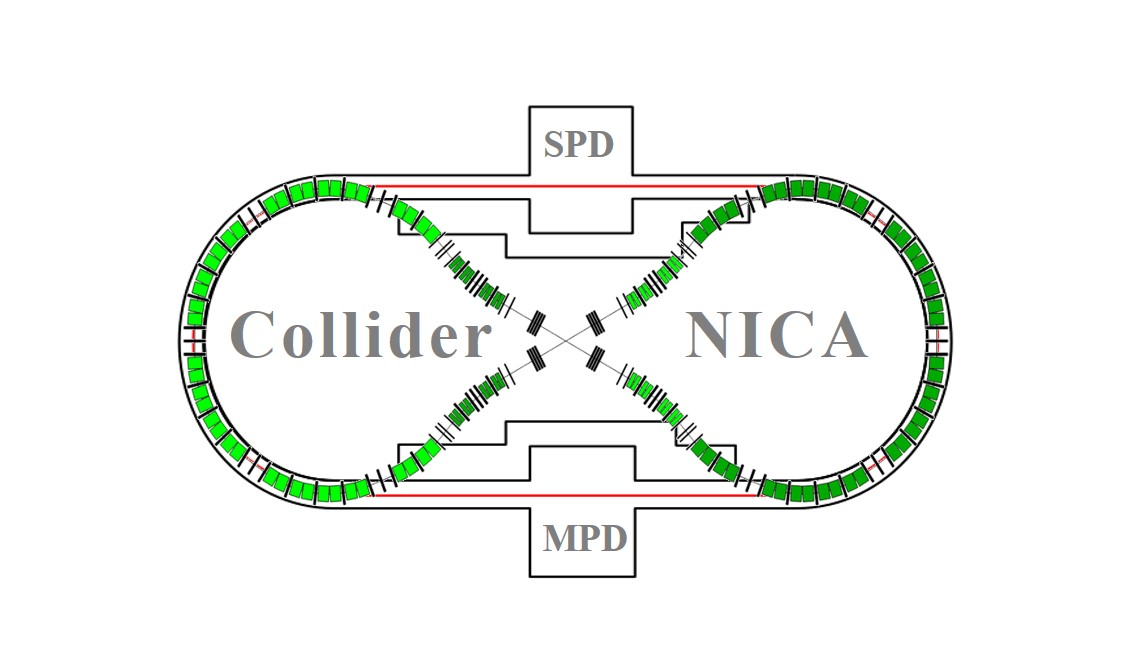
Figure-8 synchrotron for polarized protons and deuterons at the NICA accelerator complex
The paper considers a possibility to use the figure-8 synchrotron as a replacement of the Nuclotron for acceleration of polarized proton and deuteron beams at the NICA accelerator complex. The synchrotron arcs are placed inside the NICA collider tunnel. The presented design enables preservation of polarization for any ion species (p, d, 3He, etc.) in the entire energy range of the synchrotron. Because of its shape, the ring operates in the spin transparency mode. The direction of polarization is controlled by a spin navigator which uses weak solenoidal fields. The synchrotron can also be used as a storage ring for high precision experiments with polarized beams beyond its use as an injector to the collider. The results of numerical simulations of spin dynamics for acceleration of protons and deuterons are presented.
Issue 4 (Volume 2) 2025
All Issue Articles
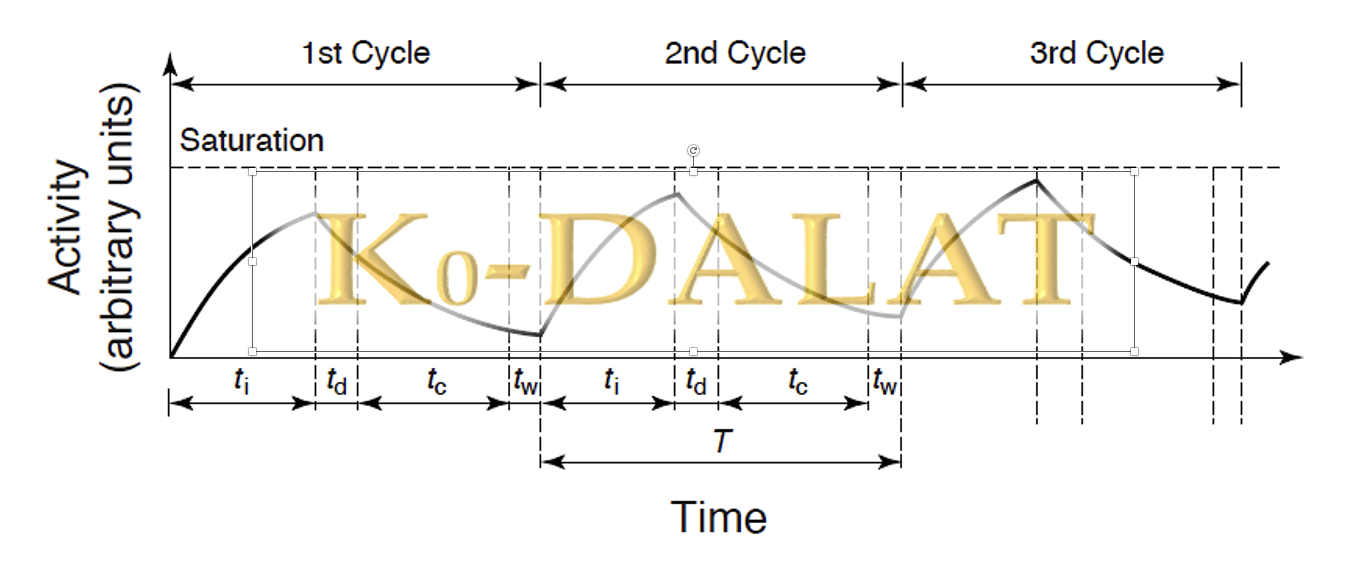
Development of the k0-standardized cyclic neutron activation analysis using short-lived radionuclides at the Dalat research reactor
An optimized k0-standardized neutron activation analysis method incorporating cyclic irradiations (k0-CNAA) for short-lived radionuclides (SLRNs) has been developed at the Dalat research reactor. This paper highlights precise reactor parameter characterization using a cyclic irradiation system, simple sample preparation, and advanced calibration of HPGe detector-based gamma-ray spectrometry for SLRNs’ rapid multielement determination. By targeting SLRNs such as 77mSe, 110Ag, 20F, 179mHf, 52V, and 46mSc, with half-lives from seconds to minutes, the method enables quantification of elements essential for biological and environmental research. The in-house developed “k0-Dalat” software, featuring high automation, supports complete analysis. Method accuracy was validated using certified reference materials (SMELS-I, NIST-SRM-1566b, NIST-SRM-2711a), achieving deviations under 8% from certified values. Detection limits ranged from 0.1 to 1.9 mg/kg for target elements in biological samples, confirming the method’s high sensitivity and suitability for similar matrices.
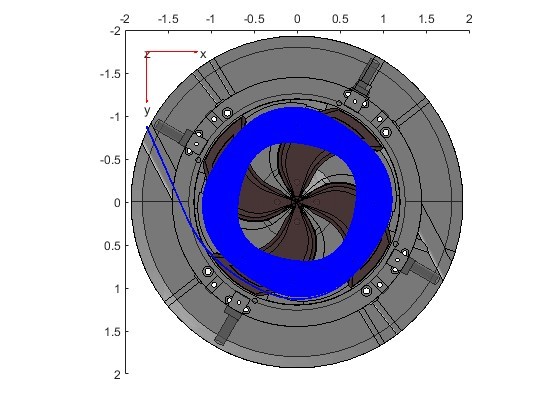
Progress in the design and modeling methods of the MSC230 superconducting cyclotron for proton therapy
With the emergence of the FLASH irradiation method in proton therapy, the need for high-current accelerators has grown significantly. Addressing this demand, the Joint Institute for Nuclear Research (JINR) has initiated the development of the MSC230, a compact isochronous cyclotron designed to produce high-intensity proton beams at 230 MeV for advanced biomedical research. Currently, the technical design of the cyclotron is in progress at D. V. Efremov Institute of Electrophysical Apparatus. Modifications during this phase often necessitate additional calculations, resulting in updates to the magnetic field configuration and beam dynamics. This article details the design methodologies and computational tools employed in the MSC230 project.
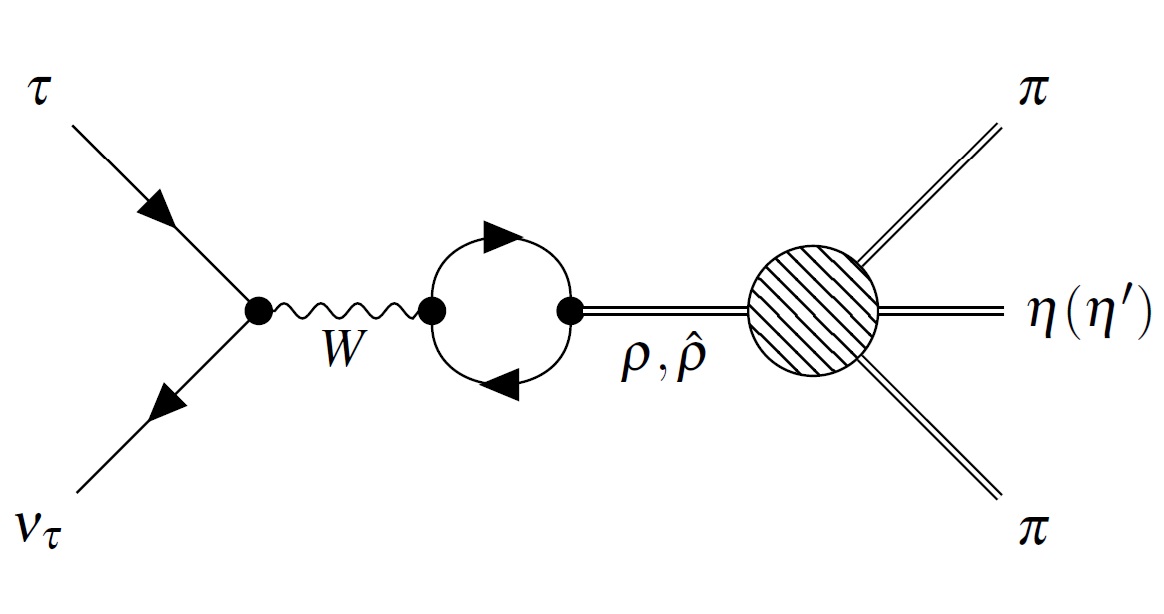
Decays τ → ππηντ and τ → πηηντ in the extended Nambu–Jona-Lasinio model
In the framework of the extended Nambu–Jona-Lasinio model, the processes τ → ππη(η′)ντ and τ → πηη(η′)ντ are considered taking into account mesons in the ground and first radially excited intermediate states. It is shown that in the processes τ → ππη(η′)ντ the vector channel is dominant, and in the processes τ → πηη(η′)ντ the main contribution is given by the axial-vector channel. The scalar meson a0 plays a dominant role in processes with two η mesons in the final state. The significance of the relative phase between the ground and first radially excited states for these processes is shown. The obtained results for the τ → ππηντ process are in satisfactory agreement with the recent experimental data from BaBar and CMD-3, which differ from the averaged values given in the PDG tables.
Categories
LATEST NEWS
All News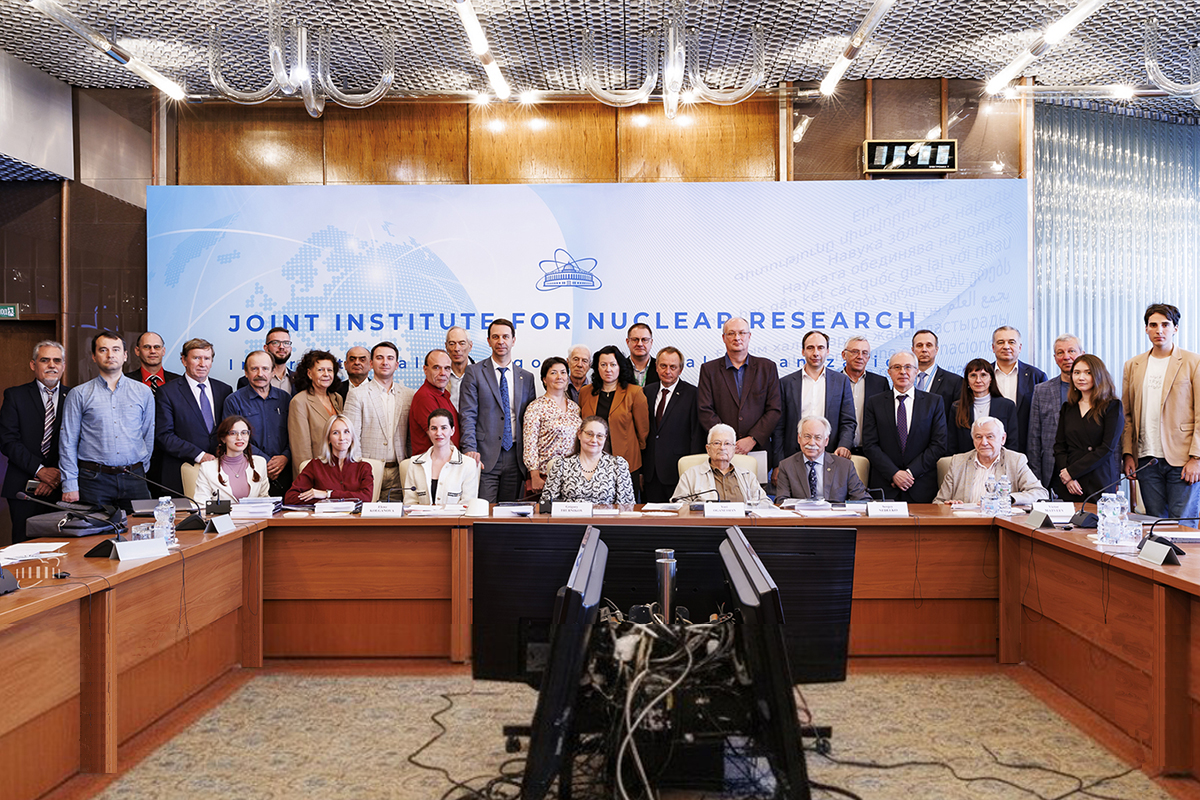
On 16 September 2025, the first meeting of the International Scientific Avisory Board (ISAB) of the Natural Science Review journal, published by the Joint Institute for Nuclear Research, took place at the JINR International Conference Centre in a hybrid format.

In honour of the upcoming 70th anniversary of the Joint Institute for Nuclear Research, which will be celebrated on 26 March 2026, Natural Science Review is launching the submission of articles for the journal's Special Issue.
Dear colleagues,
I am honoured to welcome you to the first issue of the Natural Science Review scientific journal. The appearance of this journal is an important event in the professional life of the entire scientific community of researchers working in the fields of natural, engineering, and related sciences.