
Archives

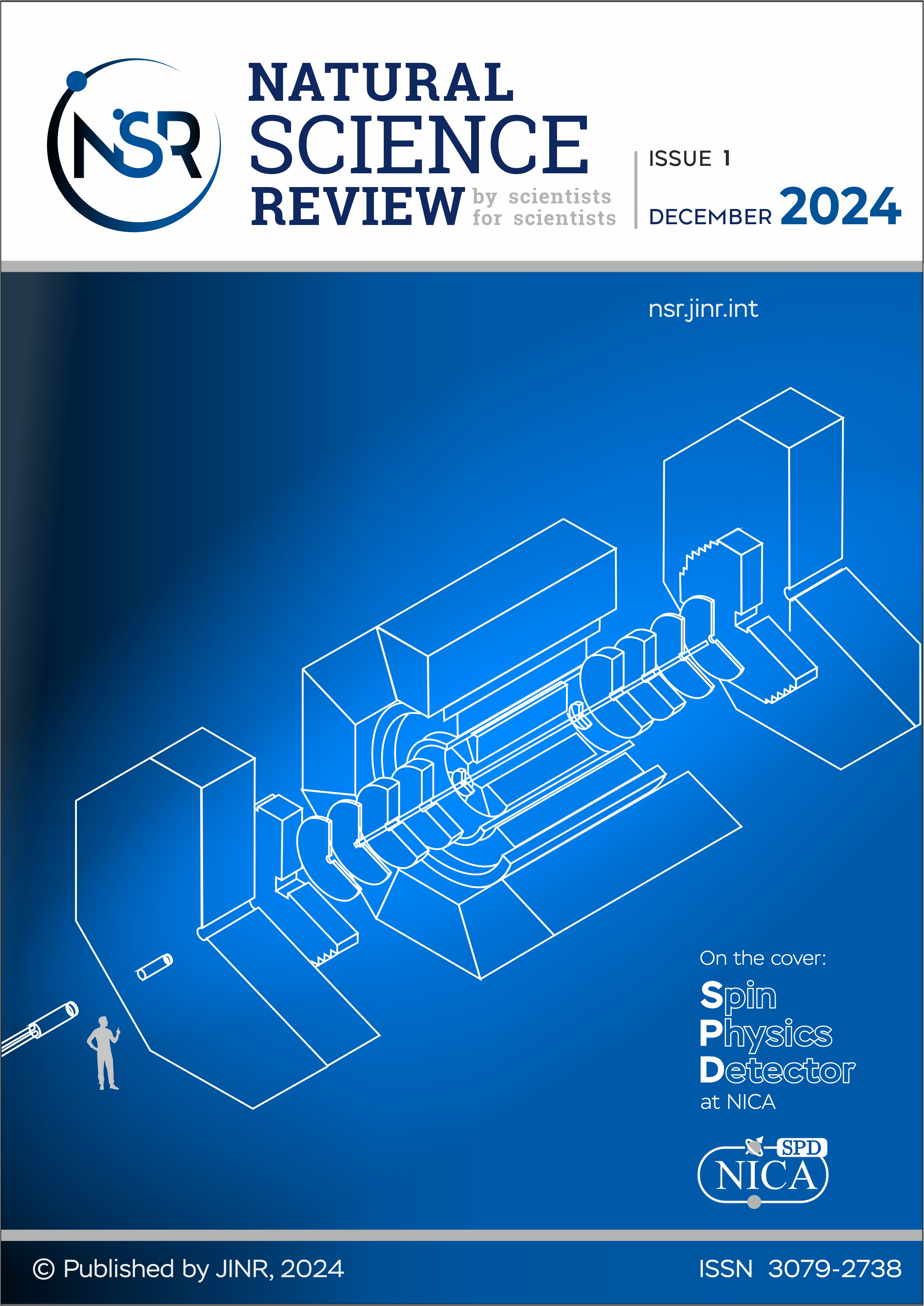
Open issue January — March 2026

Published 30 December 2025
article_cover

High Energy Nuclear Optics of polarized nucleons and nuclei: research at the Nuclotron-M/NICA complex

Refracton of particles (nucleons, nuclei, γ-quanta) in matter with polarized protons (nuclei) results in revealing coherent quasi-optical phenomenon of nuclear spin precession of particles (nuclei) in the pseudomagnetic field of matter with polarized spins and the phenomenon of birefringence of particles (nuclei) with spin S ⩾ 1. These phenomena can be observed and studied at the Nuclotron-M/NICA complex. The similar effects for γ-quanta could be observed at the LINAC accelerator.Quasi-optical coherent phenomena of spin rotation and dichroism are not caused by strong interactions only, the T-odd P-odd, T-odd P-even, and T-even P-odd interactions also contribute. Limits on the values of these contributions at the energies available at the Nuclotron-M/NICA complex can be obtained by investigating all these phenomena. When studying polarized particle collisions, it is necessary to consider possible influences of quasi-optical phenomena of spin rotation and spin dichroism caused by nuclear precession and birefringence.

article_cover

Spin Phenomena in Quantum Chromodynamics

The theory of spin effects (with the particular emphasis on T-odd ones) in QCD and its development in JINR is reviewed, including some personal recollections on the joint work with A.V. Efremov. The analysis of the sources of imaginary phases and respective cuts in hadronic kinematic variables leads to the effective character (non-universality) of T-odd distribution functions, contrary to universality of T-odd fragmentation functions. In particular, the model calculations of DIS with explicit T-violations can be used to predict the oscillations of T-odd polarizing fragmentation function. The comparison of polarization effects in hadronic and heavy-ion collisions is addressed.

article_cover

Computational schemes based on the continuous analogue of Newton’s method in the numerical study of complex physical systems at JINR

The Continuous analogue of Newton's method (CANM), developed at JINR since the 1970s, is one of most important areas of research at Laboratory of Computing Techniques (LCTA) -- Meshcheryakov Laboratory of Information Technologies (MLIT). CANM and its generalization are powerful tools for the effective numerical solution of nonlinear problems within a wide range of complex physical systems studied at JINR. This review article provides a general framework for the CANM-based approach, the main stages in the development and applications of CANM for solving various types of nonlinear problems that have been on the agenda in different years. The results of the development and application of CANM-based iterative methods, obtained over the past 20 years, are presented in more detail. 


Corrected:

17 March 2026 (the revision date was initially misspelled ( 17 January 2026), the correct spelling is 17 February 2026)

17 March 2026 (the acceptance date was initially misspelled ( 26 January 2026), the correct spelling is 26 February 2026)

article_cover

Statistical field theory of forced magnetohydrodynamic turbulence

We review the results of applying the statistical field-theoretic approach to the problem of fully developed turbulence in nonrelativistic three-dimensional magnetohydrodynamics (MHD), which have been obtained over the past forty years. The review covers both general aspects of the physics of MHD turbulence and the necessary mathematical machinery of statistical field theory, including elements of renormalization theory and the renormalization-group (RG) method. The approach is illustrated using a stochastic model of stationary, locally homogeneous, fully developed three-dimensional MHD turbulence in the general case of a medium with broken spatial parity (helical MHD). In this model, RG techniques make it possible to establish the existence of several infrared-stable scaling regimes and to calculate the critical dimensions of various composite operators, the infrared asymptotics of correlation functions, and the amplitude factors in scaling laws, as well as to incorporate the effects of compressibility, anisotropy, etc.

For an important class of helical MHD systems, the field-theoretic approach provides an elegant formulation of the fundamental problem of large-scale turbulent dynamo action — namely, the generation of a large-scale magnetic field ⟨b⟩ = B (where b denotes magnetic fluctuations) at the expense of the energy of turbulent fluctuations — via the decay of the initial unstable vacuum state ⟨b⟩ = 0 as a result of dynamical spontaneous symmetry breaking in the spirit of the Coleman-Weinberg mechanism, followed by stabilization of the theory in the vicinity of the new ground state ⟨b⟩ = B (the dynamo regime). The field-theoretic formulation we developed, together with a generalization of the standard Feynman diagrammatic technique to the dynamo regime, not only makes it possible to treat within a unified framework the existing theoretical approaches to helical magnetohydrodynamics (kinematic MHD, large-scale dynamo theory), but also extends the RG formalism to the dynamo regime, which — unlike closure procedures still common in dynamo theory — is particularly well suited for studying statistically stationary turbulent states. The richness of MHD physics in the dynamo regime is illustrated both in the emergence of new effects (Goldstone-type corrections to Alfvén waves, anisotropic corrections associated with the transport of the large-scale field) and in the theoretically predicted strong dependence of the magnetic energy-spectrum slope on the degree of mirror-symmetry breaking.

article_cover

The 8Be nucleus and the Hoyle state in dissociation of relativistic nuclei

Having become observable since the pioneering era of cosmic ray physics fragmentation, the events of relativistic nuclei in nuclear emulsions highlight the potential of this method to study extremely cold ensembles of H and He nuclei, thereby advancing the physics of nuclear clustering and, potentially, expanding nuclear astrophysics. Following the presentation of the progress of this method and orientation to the current problems, this review presents the key results and generalizations of the BECQUEREL experiment at JINR, obtained in the study of unstable nuclear states in the relativistic dissociation of a wide variety of nuclei. The productivity of this method is ensured by record-breaking spatial resolution and full sensitivity to relativistic fragments. According to invariant masses based on the most accurate measurements of emission angles in the extremely narrow fragmentation cone, the contributions of the decays of 8Be(0+), 8Be(2+), 9Be(1.7), 9B, 6Be, 12С(0+2) or the Hoyle state and 12C(3) have been identified now. The increase in the contribution of 8Be(0+) with the multiplicity of accompanying α-particles, followed by 9B and 12C(0+2), has been established. The structure of these states and the diversity of parent nuclei without the influence of the initial energy assume the coalescence of α-particles and nucleons which appear in dissociation. The initial density and duration of the secondary interaction of the latter may be sufficient up to the lowest-energy fusion reactions. Such a scenario requires low-energy physics concepts to interpret the relativistic fragmentation. The usage of automated microscopy for the analysis of irradiation beams from the JINR NICA accelerator complex becomes a modern basis to apply the nuclear emulsion method which has become fundamental in the physics of the micro-world.

article_cover

Optical transmittance of silica aerogel

This paper presents the investigation of aerogel Cherenkov radiation detectors and the optical characterization of aerogel samples within the framework of the SPD experiment at the NICA accelerator complex, which is under construction at the Joint Institute for Nuclear Research (Dubna, Russia). The transmittance of aerogel samples was measured at the A. Alikhanyan National Science Laboratory (AANL) (Yerevan Physics Institute). Longitudinal transmittance measurements were performed for two distinct aerogel samples. Data analysis and visualization of results were carried out using the OriginPro 8.5 and ROOT software packages. The obtained results were compared with analogous studies performed at other research centers in order to evaluate the reliability, consistency and accuracy of the measurements.

article_cover

Study of low-energy QCD in meson reactions with the Coulomb field of atomic nuclei

This paper reviews the development of theoretical and experimental studies of low-energy QCD parameters starting from early investigations at the JINR Laboratory of Theoretical Physics and ending with modern measurements at CERN. We summarize the historical background and the pioneering theoretical approaches used at JINR to calculate meson parameters in various hadronic models which have laid the foundation for the experimental proposal to investigate the pion polarizability via radiative scattering off nuclei. The first observation of the Compton effect on the pion and the first measurements of the charged pion polarizability and the γ → 3π constant performed with the U-70 accelerator are discussed as key milestones enabling quantitative studies of the meson structure and highlighting their impact on the low-energy QCD phenomenology. Continued advances in theoretical predictions have underscored the need for higher-precision experimental data and motivated new measurements carried out with pion beams in the COMPASS experiment at CERN. Finally, we outline the prospects for future studies within the AMBER experiment where kaon beams will enable a precision determination of kaon polarizabilities and related low-energy constants further advancing our understanding of dynamics of the strong interaction.

article_cover

ZFITTER: Theoretical calculations and precision tests of the Standard Model

The development of the ZFITTER computer code is described in the context of high-precision tests of the Standard Model during the LEP era. The features of the code that allowed it to become a standard tool for the theoretical interpretation of electroweak observables are analyzed. Prospects for further development of ZFITTER and its contribution to research projects at future electron–positron colliders are discussed. Numerical illustrations are provided of the effects of parameter shifts and the addition of new results for higher-order radiative corrections.

cover

A research synthesis on heavy metals as emerging atmospheric pollutants: a systematic review and bibliometric analysis (1973-2024)

Atmospheric heavy metals are persistent, bioaccumulative, and toxic pollutants capable of long-range transport, posing significant ecological and public health risks. This review synthesizes five decades of research (1973–2024) on emission sources, transport mechanisms, deposition pathways, and monitoring approaches, supported by a bibliometric analysis of 1642 Scopus-indexed articles. Anthropogenic activities, including industrial operations, mining and smelting, vehicular emissions, and agricultural inputs, remain dominant contributors, while volcanic eruptions, geothermal activity, sea-spray aerosols, and soil-dust resuspension constitute important natural sources. Once emitted, metals associate with particulate matter (e.g., PM2.5, PM10), undergo atmospheric circulation, and are deposited through dry and wet processes, enabling transfer from urban centers to agricultural systems and remote environments. Urban areas exhibit the highest deposition loads, agricultural landscapes show substantial foliar uptake, and remote ecosystems display clear signatures of transboundary transport. Advances in analytical and biomonitoring techniques, including Atomic Absorption Spectroscopy, Inductively Coupled Plasma Mass Spectrometry, X-Ray Fluorescence, and moss-based bioindicators, have improved detection sensitivity. Mosses enhance sensitivity by acting as natural, long-term integrators of atmospheric deposition: their high surface-area-to-mass ratio, absence of cuticles and root systems, and direct uptake from precipitation and aerosols enable efficient accumulation of trace metals, revealing low-level and chronic deposition signals often missed by short-term instrumental air sampling. Bibliometric results reveal exponential growth in publications and strong collaboration networks centered in Asia, Europe, and North America, with underrepresentation in Africa, South America, and Central Asia. Key research gaps include limited long-term health assessments; insufficient real-time and low-cost monitoring technologies; low-resolution source apportionment; and minimal attention to emerging contaminants globally.

Vol. 2 No. 5 (2025)

Published 31 December 2025
articlecover

New variants of N = 3, 4 superconformal mechanics

We construct superconformal mechanics with N = 3 and N = 4 supersymmetries that were inspired by analogy with the supersymmetric Schwarzian mechanics. The Schwarzian, being another system with superconformal symmetry, provides insight into the field content of supersymmetric mechanics, most notably, on the number and properties of the fermionic fields involved. Adding more fermionic fields (four in the N = 3 case and eight in the N = 4 case) made it possible to construct systems possessing maximal superconformal symmetries in N = 3 and N = 4, namely osp(3|2) and D(1, 2; α). In the case of N = 4 supersymmetry, we explicitly construct a new variant of N = 4 superconformal mechanics in which all bosonic subalgebras of the D(1, 2; α) superalgebra have a bosonic realization. In addition, the constructed systems involve the so(3) currents whose parameterization is not fixed, which allows one to consider different underlying geometries.

A century of the Bose–Einstein condensation concept and half a century of the JINR experiments for observation of condensate in superfluid 4He (He II)

This short review is devoted to the celebration of two major events in quantum physics. The first one is the birth of the concept of Bose–Einstein condensation (1925) and the second is the experimental proof that it does exist and appears in liquid 4He simultaneously with superfluidity below the λ-point (1975).
Both of these events are tightly related to the Bogoliubov theory of superfluidity (1947). The existence of condensate in the system of interacting bosons is the key ansatz of this theory. Therefore, the experiments started at JINR-Dubna in 1975 confirmed this prediction of the Bogoliubov theory that superfluidity of liquid 4He (He II) should emerge at the same time as the Bose–Einstein condensation.

Corrected:
13 November 2025 (the captions to Figures 1 and 2 were changed)
26 November 2025 (changes were made in formulas (53) and (55))

cover

Complex rational Ruijsenaars model. The two-particle case

We consider a complex rational degeneration of the hyperbolic Ruijsenaars model emerging in the limit ω1 + ω2 → 0 (or b → i in 2d CFT) and investigate the two-particle case in detail. Corresponding wave functions are described by complex hypergeometric functions in the Mellin–Barnes representation. Their dual integral representation and reflection symmetry in the coupling constant are established. Besides, a complex limit of the hyperbolic Baxter Q-operators is considered. Another complex degeneration of the hyperbolic Ruijsenaars model is obtained by taking a special ω1 ω2 → 0 (or b → 1) limit. Additionally, two new degenerations to the complex Calogero–Sutherland type models are described.

cover

Figure-8 synchrotron for polarized protons and deuterons at the NICA accelerator complex

The paper considers a possibility to use the figure-8 synchrotron as a replacement of the Nuclotron for acceleration of polarized proton and deuteron beams at the NICA accelerator complex. The synchrotron arcs are placed inside the NICA collider tunnel. The presented design enables preservation of polarization for any ion species (p, d, 3He, etc.) in the entire energy range of the synchrotron. Because of its shape, the ring operates in the spin transparency mode. The direction of polarization is controlled by a spin navigator which uses weak solenoidal fields. The synchrotron can also be used as a storage ring for high precision experiments with polarized beams beyond its use as an injector to the collider. The results of numerical simulations of spin dynamics for acceleration of protons and deuterons are presented. 

cover

Complexity of Radon transforms

For the reconstruction problem, the universal representation of inverse Radon transforms implies the needed complexity of the direct Radon transforms which leads to additional contributions. In the standard theory of generalized functions, if the outset (origin) function which generates the Radon image is a pure-real function, as a rule, the complexity of Radon transforms becomes in question. In the paper, we discuss the Fourier slice theorem analyzing the degenerated (singular) points as possible sources of the complexity. We also demonstrate different methods to generate the needed complexity at the intermediate stage of calculations. Besides, we show that the introduction of the hybrid (Wigner-like) function ensures naturally the corresponding complexity. The discussed complexity not only provides the additional contribution to the inverse Radon transforms, but also makes an essential impact on the reconstruction and optimization procedures within the framework of the incorrect problems. The presented methods can be effectively used for the practical tasks of reconstruction problems. 

Vol. 2 No. 4 (2025)

Published 30 September 2025
cover

Development of the k0-standardized cyclic neutron activation analysis using short-lived radionuclides at the Dalat research reactor

An optimized k0-standardized neutron activation analysis method incorporating cyclic irradiations (k0-CNAA) for short-lived radionuclides (SLRNs) has been developed at the Dalat research reactor. This paper highlights precise reactor parameter characterization using a cyclic irradiation system, simple sample preparation, and advanced calibration of HPGe detector-based gamma-ray spectrometry for SLRNs’ rapid multielement determination. By targeting SLRNs such as 77mSe, 110Ag, 20F, 179mHf, 52V, and 46mSc, with half-lives from seconds to minutes, the method enables quantification of elements essential for biological and environmental research. The in-house developed “k0-Dalat” software, featuring high automation, supports complete analysis. Method accuracy was validated using certified reference materials (SMELS-I, NIST-SRM-1566b, NIST-SRM-2711a), achieving deviations under 8% from certified values. Detection limits ranged from 0.1 to 1.9 mg/kg for target elements in biological samples, confirming the method’s high sensitivity and suitability for similar matrices.

cover

Progress in the design and modeling methods of the MSC230 superconducting cyclotron for proton therapy

With the emergence of the FLASH irradiation method in proton therapy, the need for high-current accelerators has grown significantly. Addressing this demand, the Joint Institute for Nuclear Research (JINR) has initiated the development of the MSC230, a compact isochronous cyclotron designed to produce high-intensity proton beams at 230 MeV for advanced biomedical research. Currently, the technical design of the cyclotron is in progress at D. V. Efremov Institute of Electrophysical Apparatus. Modifications during this phase often necessitate additional calculations, resulting in updates to the magnetic field configuration and beam dynamics. This article details the design methodologies and computational tools employed in the MSC230 project.

cover

Decays τ → ππηντ and τ → πηηντ in the extended Nambu–Jona-Lasinio model

In the framework of the extended Nambu–Jona-Lasinio model, the processes τππη(η′)ντ and τπηη(η′)ντ are considered taking into account mesons in the ground and first radially excited intermediate states. It is shown that in the processes τππη(η′)ντ the vector channel is dominant, and in the processes τπηη(η′)ντ the main contribution is given by the axial-vector channel. The scalar meson a0 plays a dominant role in processes with two η mesons in the final state. The significance of the relative phase between the ground and first radially excited states for these processes is shown. The obtained results for the τππηντ process are in satisfactory agreement with the recent experimental data from BaBar and CMD-3, which differ from the averaged values given in the PDG tables.

cover

Shadow in the Galactic Center: Theoretical Concept – Prediction – Realization

General Relativity (GR) was created in November 1915, and since its creation this theory has undergone many tests. The first realistic cosmological models were proposed in the works of Friedmann, written in the 1920s. For a long time, Friedmann’s cosmological works were actually banned in the Soviet Union due to philosophical reasons, since the models where the birth and evolution of the Universe occurs were considered ideologically unacceptable. Due to great achievements in relativity and cosmology and due to increasing interest in these branches of science in the last decades, we recall the development of relativistic astrophysics and contribution of Russian researchers to these studies. Since one of the world leaders in physical cosmology A. A. Friedmann passed away in September 1925, it is reasonable to outline the main achievements of physical cosmology over the past 100 years. We also discuss observational and theoretical achievements in confirmations of relativistic observational predictions for black holes, including the closest supermassive black hole in our Galactic Center. We outline the evolution of black hole shadow from the purely theoretical concept to observable quantities for supermassive black holes in Sgr A* and M87*.

NSR plot high resolution

Comparative analysis of enriched mesenchymal stem cells conditioned medium fractions obtained by ultrafiltration

This study provides a comparative analysis of various components of mesenchymal stem cells (MSC) conditioned media (CM) obtained using serum-containing and serum-free culture methods, revealing significant differences in their composition and potential clinical applicability. Serum-containing CM exhibits significantly higher levels of total protein, non-vesicular RNA, exosomes, and nanoparticles compared to serum-free CM, reflecting the contribution of both the MSC secretome and residual fetal bovine serum components. Ultrafiltration-based fractionation (0.2 µm–50 kDa) allows the isolation of fraction enriched in exosomes and proteins, preserving the functionally significant components of the MSC secretome. This strategy effectively captures small vesicles and mid-sized proteins while excluding larger or smaller biomolecules, enhancing utility for targeted analyses. The presented data underscore the need for context-driven CM selection and provide information for choosing the optimal strategy for obtaining the MSC secretome balancing yield, purity, and regulatory demands in MSC research and therapy.

Vol. 2 No. 3 (2025)

Published 30 June 2025
cover

The concept of a superconducting spin flipper – neutron decelerator for a UCN source at a pulsed reactor

The work is devoted to the development of a conceptual design for a gradient spin flipper — neutron decelerator, which is the main component of a designed UCN source for a pulsed reactor. In close cooperation between the JINR group and SuperOx, a preliminary design of a stationary gradient magnet for the adiabatic spin flipper has been developed. A thorough calculation of the magnetic field configuration has been performed. The movement of neutrons in the magnetic field generated by the designed magnetic system has been simulated, and the deceleration time of neutrons in the spin flipper has been analyzed. 
 
The results obtained give grounds for hope that the idea of creating a UCN source based on pulsed accumulation in a trap using non-stationary neutron deceleration is feasible.

cover

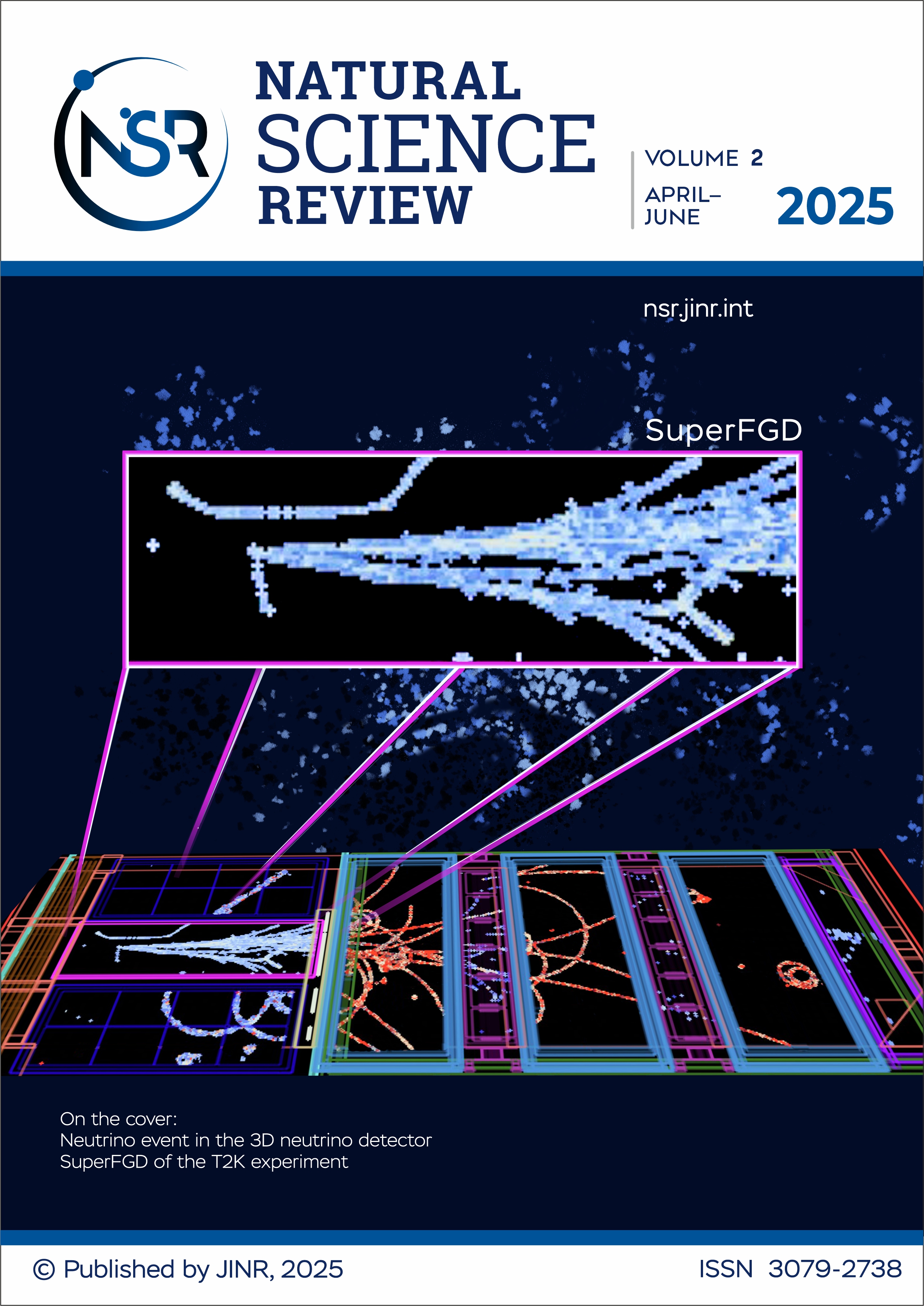
3D segmented neutrino detector SuperFGD

The near neutrino detector ND280 of the long-baseline accelerator experiment T2K has been upgraded to improve the precision of measurement of the neutrino oscillation parameters. A key component of the upgrade is a novel segmented plastic scintillator detector, Super Fine Grained Detector (SuperFGD), made of approximately 2 million optically isolated 1 cm3 cubes read out by three orthogonal wavelength-shifting fibres and multi-pixel photon counters. The SuperFGD provides 3D images of neutrino interactions by tracking the final-state charged particles including protons down to a threshold of about 300 MeV/c. Due to the fine segmentation and the sub-nanosecond time resolution, the SuperFGD is able to detect neutrons from neutrino interactions and to reconstruct their kinetic energy by measuring the time of flight. In this paper, the details of the detector design, construction and performance in the T2K neutrino beam are described.

cover

Characterization of micro-SPECT system based on Timepix detector

In this work, the characteristics of a prototype SPECT system based on the Timepix readout chip, with a MURA-type encoding mask, were evaluated. The setup has a small FoV and can be used in preclinical studies of drugs on small laboratory animals. Despite many existing test protocols developed and described in pertinent documents of national standard bodies and IAEA recommendations, they are not suitable for microtomographic systems based on semiconductor pixel detectors due to different detector technology, high spatial resolution and small area of interest. To measure their characteristics, special phantoms were developed, with a small “hot region”.

Such micro-SPECT parameters as spatial resolution, contrast, linearity, and system efficiency were studied using 99mTc source. The detector calibration and data preprocessing are described.

cover

Bogoliubov method in description of nuclear rotation

The problem of identifying and extracting the dynamic variables associated with symmetry transformations from the full set of dynamic variables is considered. It is demonstrated that employing a boson representation of bifermion operators enables the problem to be solved using the canonical transformation of dynamic variables proposed by N. N. Bogoliubov. The results obtained justify the application of the cranking model for the description of the rotational excitations of nuclei.

articlecover

On BRST Lagrangian formulation for massive higher-spin fields in 4D Minkowski space

We give a brief overview of the BRST approach to the gauge-invariant Lagrangian formulation for free massive higher-spin bosonic fields, focusing on two specific aspects. First, the theory is considered in four-dimensional flat space in terms of spin-tensor fields with two-component undotted and dotted indices. This leads to a significant simplification of the whole approach in comparison with the one where the fields with vector indices were used, since now there is no need to introduce a constraint responsible for the traces of the fields into the BRST charge. Second, we develop an extremely simple and clear procedure to eliminate all the auxiliary fields and prove that the BRST equations of motion identically reproduce the basic conditions for irreducible representations of the Poincáre group with a given mass and spin. Similar to the massless theory, the final Lagrangian for massive higher-spin fields is formulated in triplet form. The BRST formulation leads to a system of fields that are clearly subdivided into the basic spin s field, Zinoviev-like auxiliary fields, Singh–Hagen-like auxiliary fields, and special BRST auxiliary fields. The auxiliary fields can be partially eliminated by gauge fixing and/or using the equations of motion. This allows one to obtain formally different (with different numbers of auxiliary fields) but equivalent Lagrangian formulations.

Vol. 2 No. 2 (2025)

Published 31 March 2025
cover

Quantum groups and Yang-Baxter equations

This introductory  review is devoted to the newest section of the theory of symmetries -- the theory of quantum groups.
The principles of the theory of quantum groups are reviewed from the point of view of the possibility of their use for deformations of symmetries in physics models. The R-matrix approach to the theory of quantum groups is discussed in detail and is taken as the basis of the quantization of classical Lie groups, as well as some Lie supergroups. We start by laying out the foundations of non-commutative and non-cocommutative Hopf algebras. Much attention has been paid to Hecke and Birman-Murakami-Wenzl (BMW) R-matrices and related quantum matrix algebras. Noncommutative differential geometry on quantum groups of special types is discussed. Trigonometric solutions of the Yang-Baxter equations associated with the quantum groups GLq(N), SOq(N), Spq(2n) and supergroups GLq(N|M), Ospq(N|2m), as well as their rational (Yangian) limits, are presented. Rational R-matrices for exceptional Lie algebras and elliptic solutions of the Yang-Baxter equation are also considered. The basic concepts of the group algebra of the braid group and its finite dimensional quotients (such as Hecke and BMW algebras) are outlined. A sketch of the representation theories of the Hecke and BMW algebras is given, including methods for finding idempotents  (quantum Young projectors) and their quantum dimensions. Applications of the theory of quantum groups and Yang-Baxter equations in various areas of theoretical physics are briefly discussed.

This is a modified version of the review paper published in 2004 as a preprint of the Max-Planck-Institut für Mathematik in Bonn.

cover

New classical Hall-type effect in the absence of magnetic field

The non-Markovian two-dimensional dynamics of charge carriers in a dissipative non-magnetic medium is studied. The possibility of observing a new classical Hall-type effect in the absence of a magnetic field is predicted.

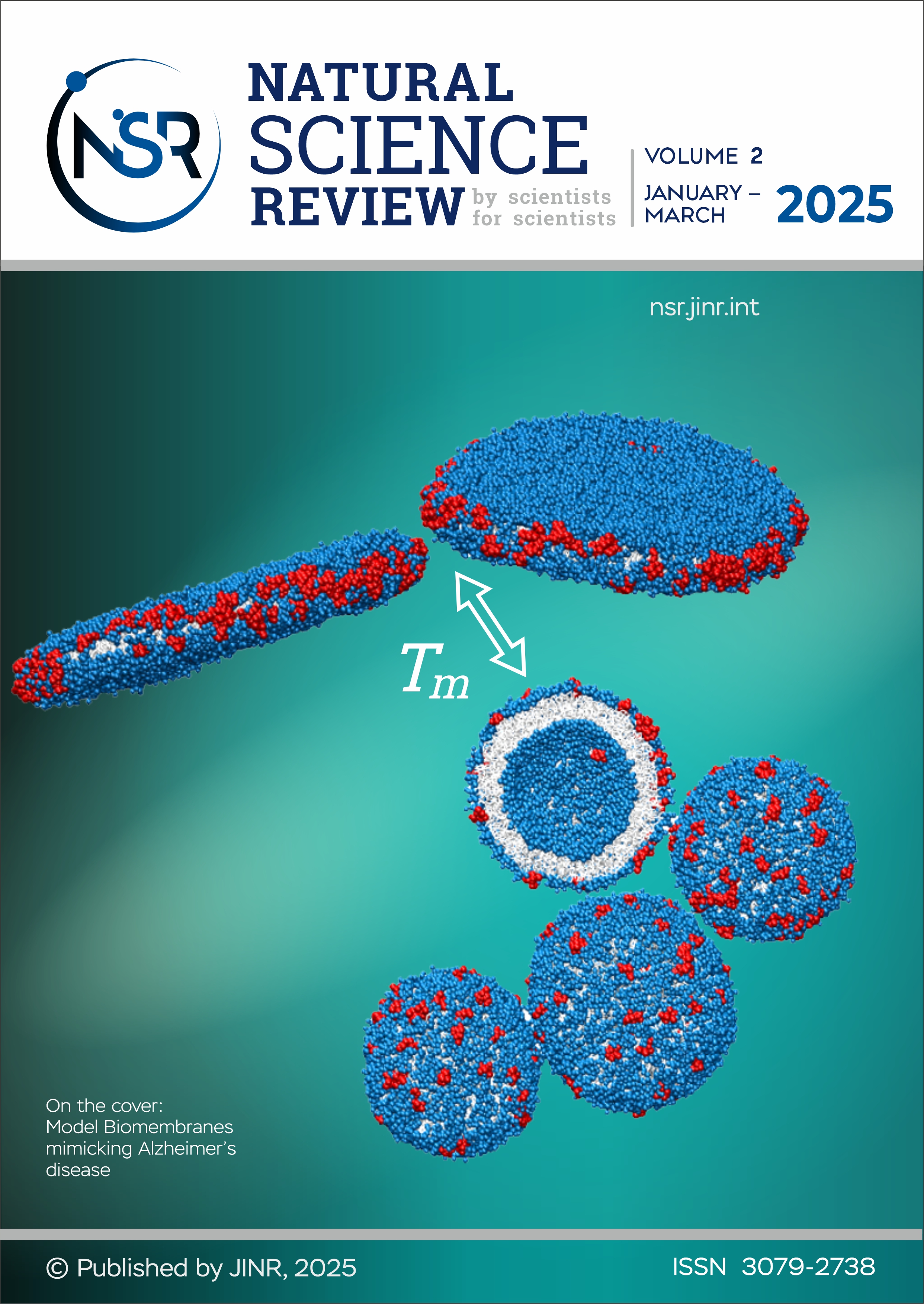
Lipid membrane destabilization induced by amyloid-beta peptide in the systems mimicking preclinical Alzheimer’s disease

The amyloid-beta peptide (Aβ peptide) is proposed to play a central role in the onset of Alzheimer’s disease (AD). The pathology is associated with the fast accumulation of neurotoxic amyloid aggregates in brain tissues, though the fundamentals of the disease’s progression remain unsolved. It is noted that the preclinical stage of AD may play a crucial role in its further irreversible development. Namely, interactions between lipid membranes and Aβ-peptide molecules incorporated therein at relatively low concentrations should be under a close attention. In this review, we discuss recent works devoted to studying the lipid peptide interactions with a specific focus on the lipid membrane reorganizations caused by Aβ (25–35) peptide in the preclinical AD mimicking conditions. The interactions observed are believed to be important in understanding the mechanisms of the Aβ-peptide destructive effects on lipid membranes and the corresponding onset of the disease. The methods of applied nuclear physics have proven remarkably relevant in such research. The scattering methods provided instrumental information on a level of supramolecular assemblies, while spectrometry allowed obtaining information on the molecular level. Finally, molecular dynamics simulations provided details unachievable by experimental approaches, though the validation role of the latter cannot be undermined. Altogether, the recent advances in research results prove these complementary approaches the most appropriate for tackling the complex issues of biomembrane interactions.

cover

Efficient pipeline for plant disease classification

Accurate identification of disease and correct treatment policy can save and increase yield. Different deep learning methods have emerged as an effective solution to this problem. Still, the challenges posed by limited datasets and the similarities in disease symptoms make traditional methods, such as transfer learning from models pre-trained on large-scale datasets like ImageNet, less effective. In this study, a self-collected dataset from the DoctorP project, consisting of 46 distinct classes and 2615 images, was utilized. DoctorP is a multifunctional platform for plant disease detection oriented on agricultural and ornamental crop. The platform has different interfaces like mobile applications for iOS and Android, a Telegram bot, and an API for external services. Users and services send photos of the diseased plants in to the platform and can get prediction and treatment recommendation for their case. The platform supports a wide range of disease classification models. MobileNet_v2 and a Triplet loss function were previously used to create models. Extensive increase in the number of disease classes forces new experiment with architectures and training approaches. In the current research, an effective solution based on ConvNeXt architecture and Large Margin Cosine Loss is proposed to classify 46 different plant diseases. The training is executed in limited training dataset conditions. The number of images per class ranges from a minimum of 30 to a maximum of 130. The accuracy and F1-score of the suggested architecture equal to 88.35% and 0.9 that is much better than pure transfer learning or old approach based on Triplet loss. New improved pipeline has been successfully implemented in the DoctorP platform, enhancing its ability to diagnose plant diseases with greater accuracy and reliability.

Vol. 1 No. 1 (2024)

Published 28 December 2024

Letter from Editor-in-Chief

A letter dedicated to the publication of the journal's first issue.

cover

Technical Design Report of the Spin Physics Detector at NICA

The Spin Physics Detector Collaboration proposes to install a universal detector in the second interaction point of the NICA collider under construction (JINR, Dubna) to study the spin structure of the proton and deuteron and other spin-related phenomena using a unique possibility to operate with polarized proton and deuteron beams at a collision energy up to 27 GeV and a luminosity up to 1032 cm−2 s−1. As the main goal, the experiment aims to provide access to the gluon TMD PDFs in the proton and deuteron, as well as the gluon transversity distribution and tensor PDFs in the deuteron, via the measurement of specific single- and double-spin asymmetries using different complementary probes, such as charmonia, open charm, and prompt photon production processes. Other polarized and unpolarized physics is possible, especially at the first stage of NICA operation with reduced luminosity and collision energy of the proton and ion beams. This paper is dedicated exclusively to technical issues of the SPD setup construction.

Corrected:

5 February 2025 (the surname of one of the authors was initially misspelled (M. Bolsunovskya), the correct spelling is M. Bolsunovskaya).

23 April 2025 (the surname of one of the authors was initially misspelled (A. Seleznev), the correct spelling is A. Selezenev).

cover

Three-loop moments and spectral density of photonpolarization function in QED

We calculate three-loop photon spectral density in QED with N different species of electrons. The obtained results were expressed in terms of iterated integrals, which can be either reduced to Goncharov’s polylogarithms or written in terms of one-fold integrals of harmonic polylogarithms and complete elliptic integrals. In addition, we provide threshold and high-energy asymptotics of the calculated spectral density. It is shown that the use of the obtained spectral density correctly reproduces separately calculated moments of corresponding photon polarization operator.

cover

Cosmological constant due to quantum corrections to the effective potential

Using the generalized renormalisation group formalism, we calculate quantum corrections to the effective potential in α-attractor models describing the inflationary stage of the Universe evolution. We demonstrate that quantum corrections lead to a change in the initial classical potential, changing its value at the minimum, which can be interpreted as a manifestation of the cosmological constant or dark energy.

cover

Computational testing of independent component analysis for linear optics measurements at the NICA Booster

The accelerator complex NICA is at the stage of assembling and commissioning. A series of successful runs at the injection complex were carried out using various types of ions. It is planned to continue the linear optics measurements at booster synchrotron, for which several methods are considered. The first one is based on the analysis of turn-by-turn data of the beam orbit going from beam position monitors. The independent component analysis is used for the data processing and results to computation of betatron and synchrotron tunes, beta-functions, phase advances and dispersions. Other methods use orbit response matrix measured with alternate kicks by dipole correctors. Accuracy of optics restoration depends on the technical feasibility of betatron tunes and orbit measurements. Various methods should be firstly accommodated to the accelerator and tested using computational model in order to conclude their potentials and form requirements for future experiments with the beam. The paper describes implementation of independent component analysis to the computer model of the NICA Booster.

NA64

Search for KS,L oscillations and invisible decays into the dark sector at NA64

The decays KS,L invisible have never been experimentally tested. In the Standard Model (SM), their branching ratios for the decay into two neutrinos are predicted to be extremely small, Br (KS,Lνν̄) ≲ 10−16. We consider several natural extensions of the SM, such as two-Higgs-doublet (2HDM), 2HDM and light scalar, and dark mirror sector models, that allow one to enhance the Br (KS,Linvisible) up to a measurable level. We briefly discuss the possible search for KS,Linvisible decays and KS,L oscillations into the dark sector at the NA64 experiment at CERN with the sensitivity to Br (KS,Linvisible) ≲ 10−7−10−5.

Development of Superconducting Accelerator Magnets at JINR

The article presents an overview of the work carried out at the Joint Institute for Nuclear Research in Dubna since the early 1970s aimed at creating superconducting (SC) magnets for charged particle accelerators. The specified studies made it possible to build the world’s first SC heavy-ion fast-cycling synchrotron — the Nuclotron; magnets for the SIS100 synchrotron of the FAIR project; magnetic systems of the SC Booster and collider of the NICA complex. It also resulted in a development of SC winding for magnet of the medical cyclotron for proton therapy MSC-230, a model magnet for the Chinese HIAF collider project with a record (up to 10 T/s) rate of magnetic field change, a 3-MJ energy storage device based on high-temperature superconductor (HTS), and a concept of magnets for the New Nuclotron made of HTS material for operation at a winding temperature of about 50 K.

cover

Photon and neutron-based techniques for studying membrane dynamics and protein aggregation in lipid–protein interactions

Lipid–protein interactions are central to maintaining the structural and functional balance of biological membranes, influencing a wide array of cellular processes. These interactions, however, become pathological in neurodegenerative diseases (NDDs), such as Alzheimer’s, Parkinson’s, and Huntington’s diseases. In these disorders, the misfolding and aggregation of proteins like amyloid-beta (Aβ), alphasynuclein (α-syn), and mutant huntingtin (mHTT) disrupt the lipid bilayer, compromising membrane integrity, fluidity, and signaling. In this review we explore the critical role of lipid–protein interactions in NDDs, emphasizing how protein misfolding leads to toxic aggregates that embed into membranes, triggering neurotoxic events. Advanced spectroscopic techniques have been instrumental in studying these molecular interactions. Photon-based methods, including Förster resonance energy transfer (FRET), circular dichroism (CD), and Raman spectroscopy, provide real-time insights into protein aggregation and lipid membrane dynamics. Neutron-based techniques, such as neutron reflectometry and small-angle neutron scattering (SANS), further enhance the resolution of lipid–protein interactions, particularly in the context of neurodegenerative aggregation.
Moreover, the review highlights the significance of lipid microdomains, particularly cholesterol-rich lipid rafts, which act as platforms for protein aggregation, influencing disease progression. Therapeutic strategies aimed at targeting these lipid–protein interfaces are also discussed, with a focus on how spectroscopic insights have driven the development of drugs that stabilize membrane integrity or prevent toxic aggregation. Finally, the integration of spectroscopy with computational models, such as molecular dynamics (MD) simulations, is proposed as a promising approach to further unravel the complex dynamics of lipid–protein interactions, providing a more complete picture of disease mechanisms.